Scandinavian Furniture: What to Check Before Buying a Sofa You Cannot Sit On
Buying a sofa is not quite like buying a coffee table, although both can appear in the same showroom catalogue. A sofa is a large, heavy, upholstered object that must fit through your home, clear the lift, turn through the corridor, support your body, and still look right beside the solid wood furniture you already own. If you are furnishing a Singapore HDB flat or condo in Tampines, Bedok, or Punggol, measurements and delivery logistics matter as much as fabric colour.

The phrase “a sofa you cannot sit on” can mean two things. It may describe a showroom piece that is beautiful but too deep, too soft, or too narrow for the way your household actually lounges. More commonly in compact homes, it means a sofa that physically cannot reach the room where it belongs. Either way, the purchase should begin with a tape measure, a floor plan, and a realistic account of how the sofa will be used.
At MIDHILL, we build and prepare Scandinavian furniture around practical dimensions, solid wood construction, and repeatable finishes. The aim is not to sell a decorative object that creates a delivery problem. It is to make sure the sofa, bed frame, dining table, wardrobe, nightstand, or marble table you select can live comfortably in your Singapore home for years.
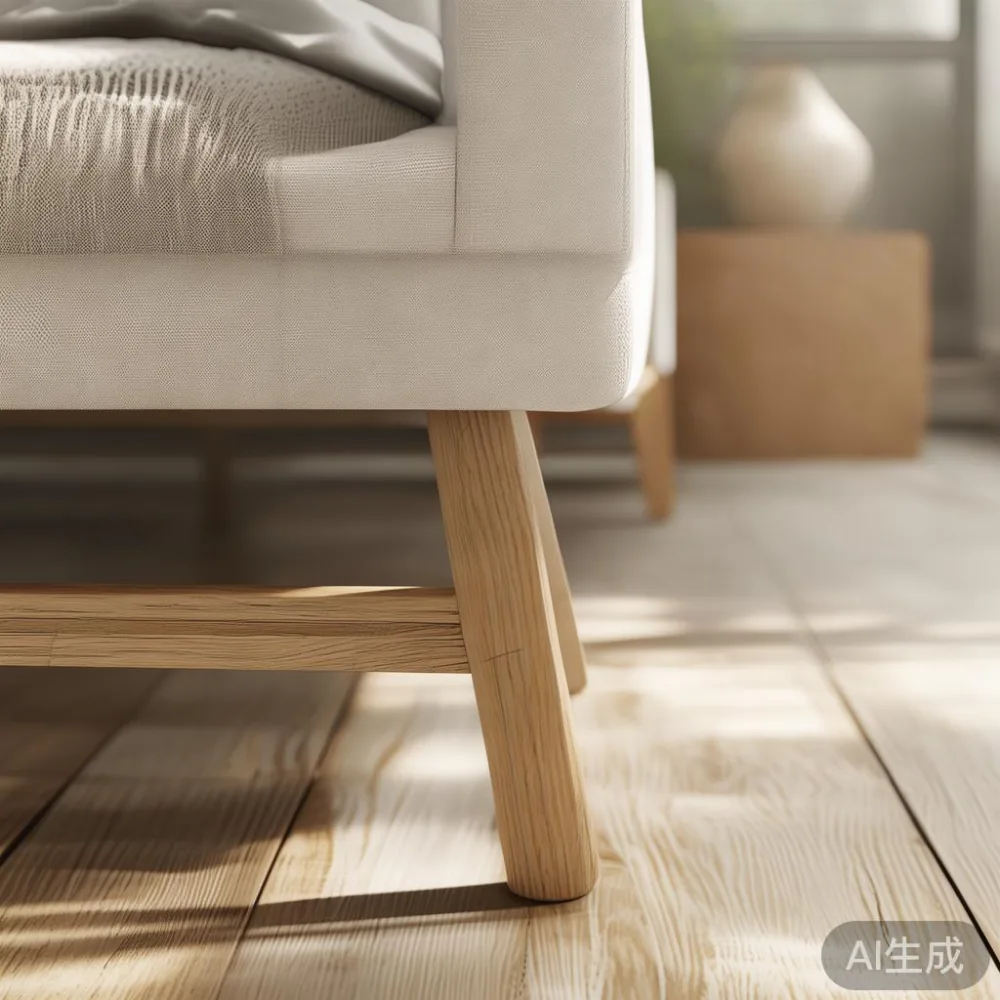
How do I know if a sofa will fit through my HDB door, lift, and corridor?
<Start with the route, not the sofa. Measure the narrowest point at every stage: the entrance door, common corridor, lift opening, lift interior, landing, bedroom or living-room door, and any sharp turn. Record both width and height, because a sofa can pass horizontally but fail vertically when the lift ceiling is lower than its packaged height.
For example, an HDB lift with an internal opening of 80 cm and internal dimensions of 130 cm wide by 140 cm deep may accept a compact sofa, but not if the boxed package is 125 cm wide and the corridor includes a right-angle turn. A common-home lift with an 85 cm opening gives more room, while a luxury condo lift may be roomier but have a restricted parking-to-lobby route. Lift dimensions should be confirmed with the building management or a site visit; the sofa manufacturer cannot guarantee access to a private building.

Measure the sofa in its shipping form. Add 2–5 cm of clearance on each dimension rather than assuming the product dimensions are identical to the carton dimensions. Padded arms, protective foam, and a wooden or metal base can make a sofa several centimetres wider than its finished frame. A 210 cm sofa may need a 220 cm package, while a modular design packed in two boxes may offer more flexibility than a single fixed frame.
For households in Punggol or Tampines, ask the delivery team whether the sofa is delivered fully assembled or partly assembled. A sofa that separates into two seats can often clear an 80 cm opening more easily. A solid wood sofa with detachable legs may lose 12–18 cm in height, but the frame and arm sections still need to turn through the corridor. Record the lift capacity too: a 180 kg sofa may be manageable as two pieces, while a 95 kg single module may still exceed the safe manual-handling limit for a small team.
Take photographs of the route on the same day as the delivery. They help when there is a blocked bin chute, a renovation, or a parking restriction. If the sofa cannot be unpacked outside the unit, delivery may need to be rescheduled, which can add 3–7 days and a second handling charge. Clarify whether the quoted delivery includes carrying the sofa upstairs, placing it in the room, removing packaging, and assembling the legs.
What seat depth and firmness should I choose for everyday comfort?
A sofa can fit perfectly and still be uncomfortable. The seat depth determines whether an adult can sit back, lounge, or reach the coffee table. A 48–52 cm usable seat depth suits many adults and preserves space in a compact living room. A 58–62 cm depth feels generous for stretching out but can leave the back of the legs unsupported when the sofa is used as a formal seat. Sofas marketed as “deep lounge” models are often more appropriate for a larger family room than a 450–600 sq ft HDB living area.
Check the seat height as well. A finished seat height of 40–43 cm works for many Singapore adults and makes standing up easier than a very low 35 cm sofa. The internal seat width should provide at least 55 cm per person for ordinary sitting. For a family that regularly watches television, test the sofa with your normal posture: feet on the floor, back supported, and the remote within reach. A soft seat that compresses deeply may look relaxed in the showroom but become difficult to rise from.
My colleague visited a client’s Tampines flat last month and tested a sofa that had looked excellent online. The frame measured 218 cm wide, but the seat was only 47 cm deep and 38 cm high. The client’s 74 cm mother could sit on it briefly, yet she could not place her feet flat without sliding forward. We compared it with a lower-profile alternative measuring 202 cm wide, 51 cm deep, and 41 cm high. The second sofa used 16 cm less floor width and gave her a more supportive position. That practical test was more useful than any material description.
Try the sofa for at least 10 minutes. Check whether the back supports the shoulders, whether the arms are high enough to lean on, and whether children can climb onto it without using the back as a step. If you already own a marble table, a solid wood dining table, or a low Scandinavian coffee table, the sofa should relate to their height rather than sit as an unrelated block.
Is a solid wood sofa frame strong enough for Singapore homes?
A solid wood sofa frame can provide good stability and a firmer feel than a frame made only from thin panels, but “solid wood” does not remove the need for specifications. Ask whether the structural members are hardwood, what species is used, how the joints are made, and whether the warranty covers structural movement or frame failure. A meaningful 10-year structural warranty should be different from a general product promise that covers only fabric or manufacturing defects.
For a family sofa, look for a frame that can support a stated load rather than a vague claim that it is “strong.” Check the floor-contact points and the number of legs. Four or six legs can distribute weight better than a design with only two central support feet. If the sofa includes storage or a pull-out mechanism, test the extension with 2–3 people’s weight represented by ordinary household movement; do not use the storage compartment as a step.
Humidity is part of the Singapore equation. Solid wood can move slightly as relative humidity changes, so the construction should allow controlled movement while preventing looseness at the joints. Ask about the finish: a properly applied coating should be easier to maintain than bare timber. MIDHILL’s lifetime refinishing policy gives owners a practical path for restoring a frame or visible timber surface when wear eventually appears, rather than treating the first scratch as the end of the sofa’s life.
For a coordinated interior, the same discipline applies to a bed frame, dining table, wardrobe, or nightstand. A European light luxury approach may use upholstered surfaces, brass-toned details, and pale timber, while American light luxury often leans towards generous proportions and relaxed comfort. Post-modern light luxury can pair clean Scandinavian furniture with sculptural accents. In each case, the materials should meet the room’s daily demands, not merely create a styled photograph.
How do I compare sofa fabrics and warranties before paying?
Request the actual fabric composition and care instructions before ordering. A sofa for a condo may face sunlight, air-conditioning, pets, and occasional spills; a sofa for a family HDB flat may see more frequent use. “Performance fabric” is not a regulated category, so look for the composition, rub count where available, pilling information, cleaning method, and treatment against stains. Check whether the cover is removable, whether replacement cushions are available, and what the warranty excludes.
Read the warranty as a buyer, not as a copywriter. Confirm the period: 5, 10, or more years may be offered for different parts. Check whether the frame, springs, foam, fabric, and mechanisms have separate terms. “Lifetime refinishing” should be understood in context: it should describe refinishing eligible wood surfaces, not unlimited replacement of cushions or accidental damage. Ask MIDHILL for the written terms and confirm that the product you order is covered under the stated policy.
Price should also be compared with the complete offer. A sofa listed at SGD 1,680 may exclude delivery, assembly, lift booking, and GST; a listed price of SGD 1,890 may include some or all of those items. Singapore’s prevailing GST is 9%, so the final amount should be shown clearly. MIDHILL provides free shipping over US$350 for eligible international orders, but Singapore delivery and access charges should be quoted separately rather than inferred from a threshold stated in another currency.
Return terms matter because upholstery can look different in your own light. A 14-day return window is useful if you can assess the sofa without damaging its packaging or fabric. Confirm who collects a returned sofa, whether it must be repackaged, and whether the lift booking is refundable. A returned item must be in a resaleable condition, so do not remove tags or use it as a trial sleeping surface.
Will a sofa delivery plan fit my Singapore schedule?
Allow for a realistic delivery window rather than treating a single date as a promise. A stock item might arrive in 7–14 days after confirmation, while a made-to-order sofa or a special fabric may require 6–10 weeks. Peak moving periods, holidays, and building renovations can add several days. Ask for the estimated dispatch date, the expected transit period, and the latest date by which the item should leave the workshop.
Singapore’s weather can affect an open-truck delivery, so confirm protective wrapping and whether delivery is curbside or room-of-choice. For a condo, identify the loading bay, parking permit, service lift, and maximum vehicle dimensions. For an HDB flat, check whether the sofa can be carried from the void deck without obstructing the corridor or breaching the building’s moving guidelines.
The same delivery discipline is useful when considering the best Japandi bed for 2026. A low bed may look simple, but its boxed dimensions and turning radius still matter. Searches for a European light luxury bed vs Japandi bed often compare appearance, yet access should be checked with the same care. A compact Modern for small living room layout is incomplete without a route plan for the sofa.
How should I match a new sofa to the rest of my furniture?
Choose the sofa first if it is replacing an existing piece, then take colour and scale measurements to the dining table, bed frame, wardrobe, nightstand, and marble table nearby. Scandinavian furniture often works well with pale oak, ash, warm white walls, and simple textiles, but the floor finish and daylight can change how a fabric appears. Order physical swatches where possible and view them at different times, including under the warmer evening light used in the living room.
Measure the circulation space. Leave at least 75–90 cm between the front of the sofa and a coffee table when people need to walk through. If a walkway is only 60 cm, a shallower sofa or a compact table may be more practical. Keep curtains, ventilation grilles, and sockets accessible. A sofa should not cover a floor register or press against a wall that needs moisture inspection.
For style planning, a practical guide to how to style European wardrobe in bedroom can be connected to the sofa through the same timber tone. If you are also researching under 2000 Mid-century modern furniture, check whether the sofa’s legs and silhouette agree with that period rather than mixing unrelated profiles. For Singapore buyers comparing pieces, MIDHILL coffee table wholesale enquiries can be useful for matching scale, though a showroom consultation remains worthwhile before committing to a large upholstered order.
Ask whether MIDHILL furniture orders include a material specification, care guidance, and recorded warranty documents. Keep the invoice, delivery photographs, and packaging details. After delivery, inspect corners, cushions, and legs within 24 hours, then report transit damage before the sofa is used heavily.
What should I check on delivery day?
Before the team unwraps the sofa, photograph the carton, the route, and the lift. Check the model, colour, dimensions, and visible accessories against the order. If there is damage, record it before assembly and ask the delivery team to note the condition on the delivery record.
After placement, check that all legs are secure, the sofa sits level, cushions align, and mechanisms operate. Sit on the front, centre, and back of each seat. Walk around it to inspect the frame and finish. A small cardboard shim under one leg may correct a floor irregularity, but persistent rocking should be reported before acceptance.
Finally, read the care instructions and register the warranty. Keep the sofa away from direct afternoon sun where possible, rotate cushions monthly, vacuum the seams gently, and address spills according to the fabric guidance. Solid wood furniture, including a solid wood sofa with timber legs, can remain in good condition when its construction and environment are considered from the start.
The right sofa is not simply the one with the most attractive photograph. It is the one that fits your route, matches your posture, suits your room, and has clear material and warranty terms. Measure first, test second, and buy only when delivery day has been considered as carefully as the living-room styling.