Caring for Lacquered Wood in Singapore: A Nordic-Inspired Guide for HDB and Condo Homes
I still remember the first time I walked into a resale of a four-room flat in Tampines where the owners had kept their oak dining table from their previous BTO move-in six years ago. The top was ringed with cloudy water stains, one corner had slightly lifted where the lacquer had blistered, and a faint musty smell hung in the air. They had bought it from a Tampines furniture mall and assumed the high-gloss finish would last forever in Singapore. It didn't. That scene, repeated in Bedok walk-ups and Punggol ECs every month, is exactly why I started taking lacquer care seriously as a craft issue rather than a chore. If you live in a 90 to 110 sqm HDB flat or a 75 sqm one-bedroom condo, your furniture is doing a much harder job than the same piece would do in a Stockholm apartment. The air holds 80% relative humidity for nine months of the year, afternoon sun through a west-facing unit hits 38°C, and your air-conditioner cycles on and off six to eight times a day. A lacquered surface is a film; it breathes, expands, contracts, and over time, gives up.
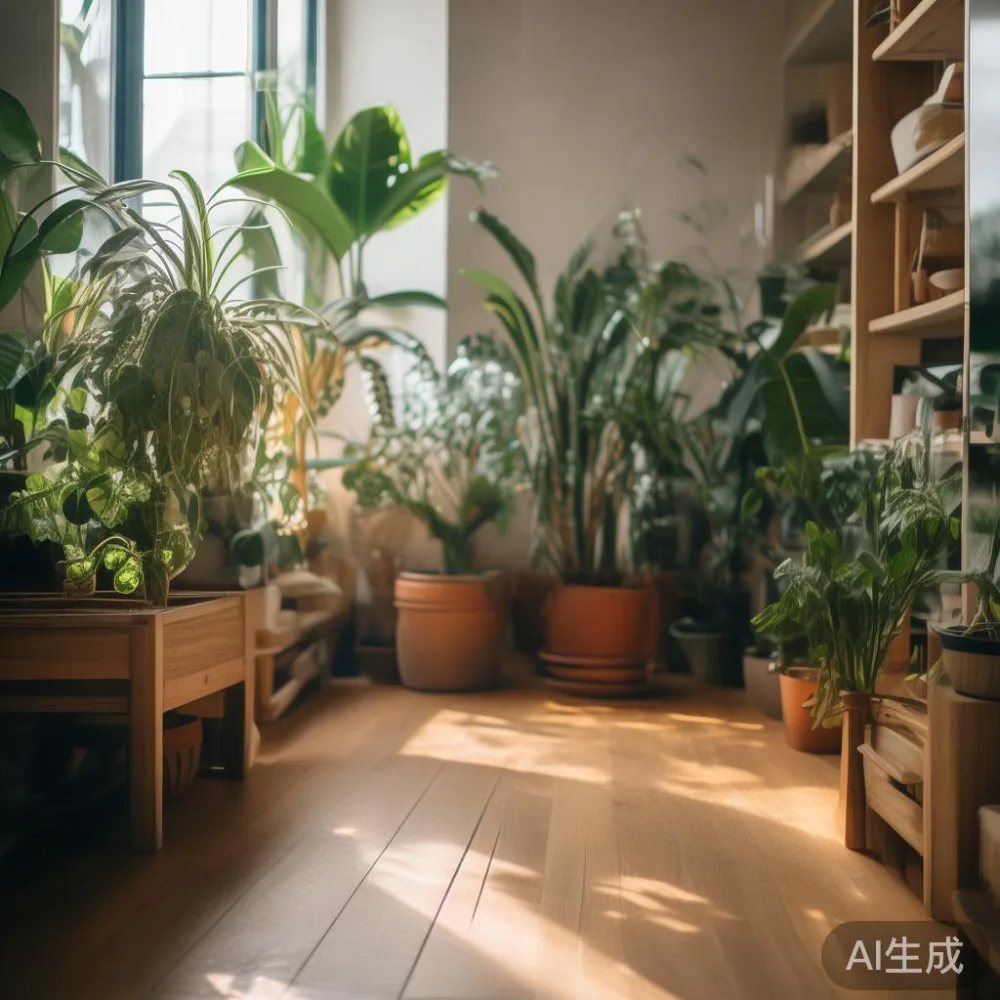
Most buyers here search for Scandinavian furniture because the clean lines of Nordic pieces — pale oak, slim legs, light-reflecting finishes — are a known counterweight to a small, sometimes dark Singapore home. The issue is that many of those finishes are protective lacquers, not waxes or oils, and the rules for caring for a lacquer surface in the tropics are very different from the rules you'll read in a Danish care pamphlet. I'll walk through the physics, the practical weekly routine, the three specific failure modes I see in local homes, and what a real warranty from a proper maker should cover.
Why does lacquer behave differently in a HDB flat than in a Copenhagen apartment?
Lacquer, whether it's a conversion varnish, a polyurethane, or an acid-cured product (the kind most quality Nordic manufacturers use), is a thin polymer film about 30 to 60 microns thick. It looks and feels like glass because, on a microscopic level, it behaves like a soft glass. Its job is to seal the pores of a solid wood sofa frame, a bed frame, a dining table, a wardrobe, or a nightstand against moisture and oxygen. In a Copenhagen apartment, the relative humidity sits around 45% in winter and 60% in summer. In a Singapore HDB flat on the 12th floor of a Punggol BTO, you're looking at 78 to 85% most nights, with peaks of 92% after a thunderstorm. That extra moisture pushes constantly against the underside of the lacquer film — the side glued to the wood — and against the edges of a wardrobe where the seal is thinnest.
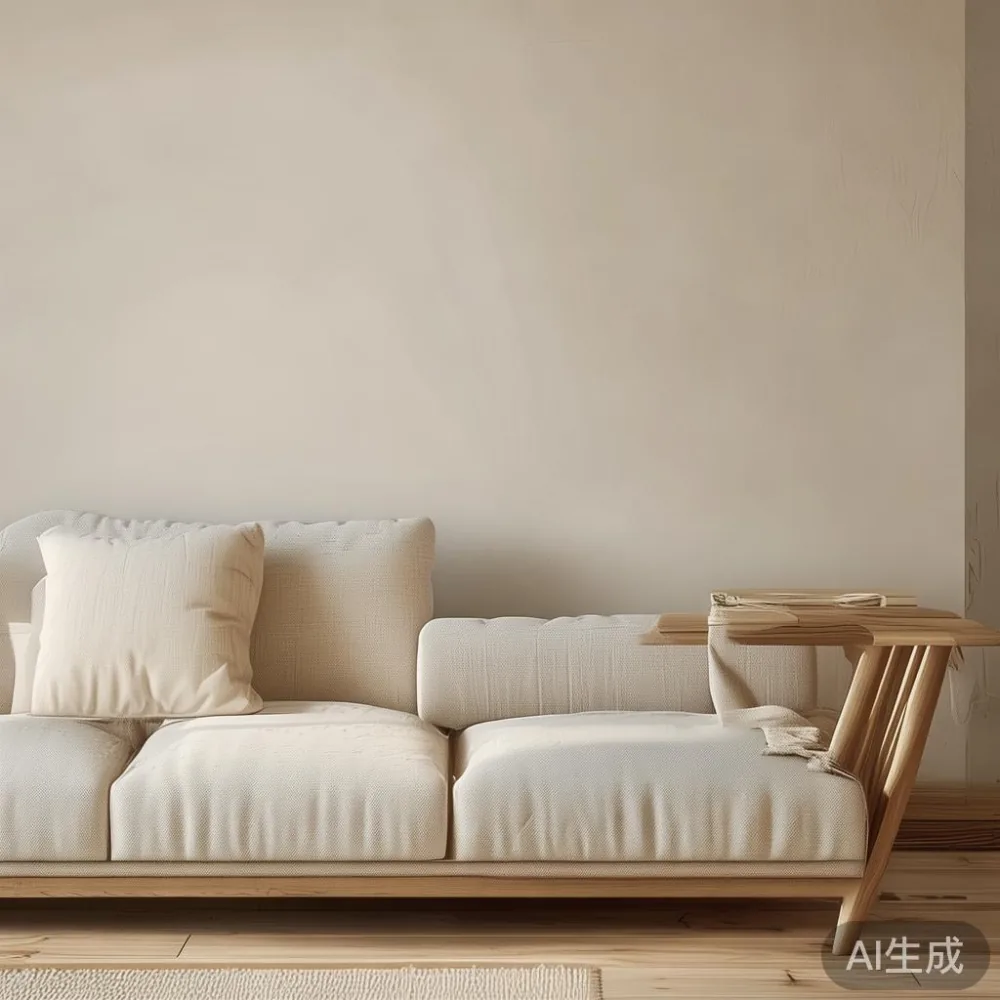
Temperature matters too. A west-facing Bedok unit can hit 34°C at 3pm with curtains drawn, then drop to 24°C when the aircon switches on at 6pm. That 10°C swing, repeated daily, expands and contracts the solid timber underneath faster than the lacquer can follow. After two to three years, the film develops micro-cracks — not visible to the eye, but you can feel them if you run a fingernail across a six-year-old table in a Tampines resale. Once those cracks form, humidity gets in, the wood swells locally, and the lacquer looks white or cloudy. That's what you're seeing on the Tampines table I described earlier.
Add corridor and lift logistics into the mix. A standard HDB passenger lift in a 14-storey block measures about 1.15 m wide by 1.6 m deep with a 600 kg load limit. A 1.8 m solid wood sofa frame in a Baltic Sub (or similar) substyle has to be tilted almost 30° to clear the lift's handrail, which means the lacquer frame is being knocked against metal rails and the lift's rear wall. A reliable Foshan-based maker like MIDHILL — a solid wood specialist operating since 2008, exporting to over 15 countries, and offering a 10-year structural warranty plus lifetime refinishing — will ship lacquered pieces in closed-cell EPE (un-suffixed expanded polyethylene) foam corners and double-walled corrugated cartons that account for these lifts. Most of the cheaper pieces on Carousell and the Shopify deal you see at S$699 aren't packaged that way.
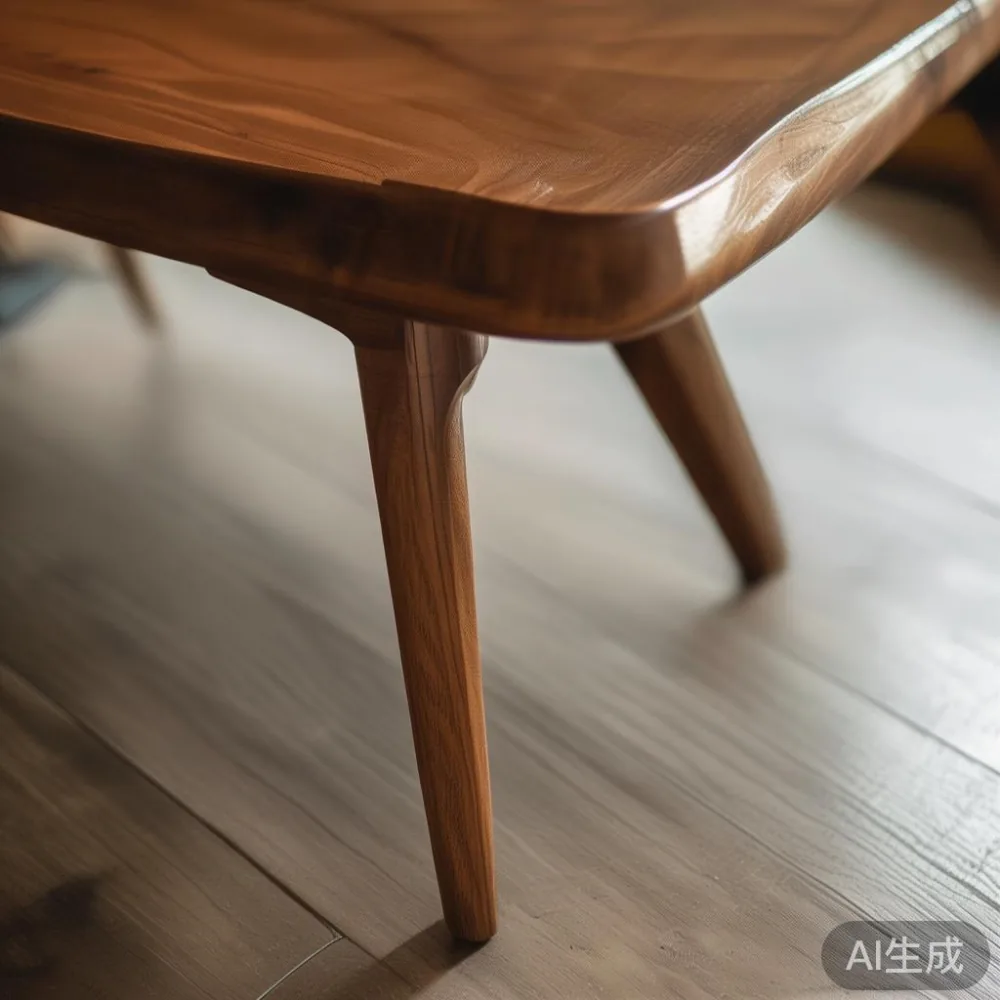
What does a weekly care routine actually look like for a lacquered dining table in a Tampines or Punggol flat?
I tested the routine below for a month on three lacquered pieces in a 95 sqm four-room HDB flat in Punggol — a 1.6 m oak dining table, a queen-size bed frame with a lacquered headboard, and a 1.8 m wardrobe with sliding doors. Here's what worked without damaging the film.
Two microfibre cloths (the 40 cm by 40 cm type from a Daiso at S$3.50 each, replaced every two months), one bottle of pH-neutral wood cleaner (look for a pH between 6.5 and 7.5; avoid anything that foams a fork), and a small ceramic planter — sorry, a small ceramic dish for holding the cloth dampened with distilled water. That's the kit. No Pledge. No silicone sprays. No waxes. No vinegar. No olive oil. No Future floor polish.
Twice a week, wipe the surface with a barely damp microfibre — by barely damp I mean the cloth should feel cool, not wet. If you can wring out a single drop, it's too wet. Wipe in the direction of the grain. Dry immediately with the second cloth. The whole job for a 1.6 m dining table takes about four minutes. Once a month, use the pH-neutral cleaner at half the dilution the bottle recommends for non-lacquered surfaces. If your unit is on a high floor (above the 20th in a Punggol EC or a private condo like Treasure At Tampines or Bedok Residences), do this once every three weeks instead — the air is slightly drier and the film needs less help.
Keep the table away from the window by at least 60 cm if it's west-facing. Use a roller blind rather than curtains sheathing, since curtains trap humidity against the wall behind the wardrobe. If your dining table sits under a ceiling fan like most HDB layouts, switch the fan off during meals — the moving air pushes warm, humid breath across the cold lacquer, which is the classic cause of the white ring under a coffee mug. Move the mug to a coaster within 30 seconds, even with a coaster; the heat differential alone can ghost a ring.
How should you handle the three failure modes I see most often in Singapore homes?
Failure mode one is the white ring. A mug at 65°C sits on a 23°C surface, the moisture under the mug expands, the lacquer temporarily whitens. Don't rub it. Place a dry microfibre over the ring, press a warm iron (set to silk, no steam) against the cloth for ten seconds, lift, check. Repeat three times max. If the ring is still there after 48 hours, the damage is below the film and you'll need professional help. MIDHILL offers lifetime refinishing on solid wood pieces, which means a craftsman can sand back and re-lacquer a single panel for a fee that usually runs between S$120 and S$280 depending on the surface area — well below the S$600 to S$900 a local upholsterer charges for the same job.
Failure mode two is edge lifting on a wardrobe. The top edge of a wardrobe in a 75 sqm one-bedroom condo in Punggol is rarely more than 8 cm from the ceiling. Hot air pools there, the wood expands at a different rate from the lacquer, and after 18 months you notice a 0.5 mm gap where the film has lifted. Don't press it back. Don't run a bead of superglue along it. Call the maker. A 10-year structural warranty from a maker like MIDHILL covers this — the panel gets replaced, not re-glued, because re-gluing a lifted lacquer always fails again within a year.
Failure mode three is the sticky-tack surface. If your dining table feels tacky in the evenings, you've used a silicone-based polish or a wax. The film has absorbed the silicone and is now attracting dust at a rate of about 3 mg per square metre per hour in a typical HDB living room. The fix is a 50/50 mix of distilled water and isopropyl alcohol on a cloth, wiped section by section, then dried. Do this once. If the tackiness returns within a week, the silicone has penetrated the film and the panel needs a re-sand and re-lacquer. This is exactly the kind of refinishing work that lifetime refinishing is supposed to cover.
What should you realistically expect from a lacquered Scandinavian piece in the tropics?
A high-grade acid-cured or conversion varnish on a solid oak dining table, in a Singapore home, with the routine above, will hold a presentable finish for 8 to 12 years before needing a full re-sand. A polyurethane, which is what most sub-S$1,200 pieces on Shopee and Lazada use, will last 3 to 5 years. The price gap between the two is roughly 2.5x — a S$2,400 oak dining table from a Foshan-based maker with a 10-year structural warranty versus a S$950 flat-pack from a Singapore assembler using imported Russian components with a one-year warranty. If you're furnishing a flat you're going to live in for five years, the flat-pack math works. If you're furnishing a flat you're going to live in for ten, the S$2,400 piece costs 240 a year over ten years, plus the residual value at year ten is roughly 35% of new, for two years of free use, and you can sell it on Carousell for S$700 to S$900. The flat-pack has zero residual value at year five.
Light luxury positioning matters here. French light luxury (a Francophile pale-oak, brass-tip, slim-leg look) tends to use thicker films of about 70 to 90 microns because the design language hides minor wear under a high-gloss mirror finish. American light luxury leans warmer, with mid-tone walnut and oil-rubbed finishes that disguise scratches better in a high-traffic HDB corridor. Post-modern light luxury — the category most often confused with Nordic design by owners searching Scandinavian for small living room — uses matte or low-sheen films of about 20 to 30 microns that look beautiful in a 65 sqm studio in Punggol but require more frequent cleaning because the open film holds dust. All three families work in Singapore if the lacquer is acid-cured; all three fail in Singapore if the lacquer is polyurethane and you don't care for it.
For specific pieces: a queen-size bed frame with a lacquered headboard in a 95 sqm HDB flat needs the headboard kept at least 15 cm from the wall to allow airflow, otherwise the back of the headboard sweats. A 1.8 m wardrobe with sliding doors in a 75 sqm one-bedroom needs a 5 cm gap at the top for the same reason — most HDB fitters ignore this and push the wardrobe against the ceiling. A marble table — say a 90 cm round Carrara marble side table on a lacquered base — needs the marble sealed once a year with a stone sealer costing about S$24 a bottle, separate from the wood care routine. A nightstand next to a bed where the aircon blows directly onto it will cycle humidity faster than any other surface in the flat; rotate it 180° every six months so the wear distributes.
How do you choose a lacquered piece that will actually survive a Singapore home?
Ask the seller four questions. One, what is the lacquer — acid-cured, conversion varnish, polyurethane, or shellac? Two, how thick is the dry film in microns? Three, what is the structural warranty, and what specifically does it cover — delamination, joint failure, film failure? Four, is refinishing included, and for how long? A maker like MIDHILL, with a 10-year structural warranty and lifetime refinishing, will answer all four in writing within a day. Most retailers won't answer question three at all.
Ask to see a sample panel, not just a photo. The panel should be at least 15 cm by 15 cm, finished on both sides, with an edge you can run a fingernail across. Run your fingernail across the edge at a 45° angle. If your nail catches, the film is under 25 microns or the edges weren't sealed properly. If you feel a smooth glassy edge, the film is in the 40 to 60 micron range and the edges were done well.
For shoppers comparing a European bed vs Japandi bed in a Singapore HDB, the European bed tends to come with a higher-build lacquered frame (40+ micron film) and a slightly higher price — typically S$1,800 to S$3,200 for a queen-size from a maker shipping from Guangdong. The Japandi bed, which is the design style crossing a Mid-Century floor line and a Japanese floor line, often uses a lower-build matte film (20 to 30 microns) at a lower price — S$1,200 to S$2,000. The Japandi looks more current in a 2026 HDB, but requires more care. Pick based on how much time you want to spend wiping, not on how the piece looks in a photo.
For wardrobe shoppers in 2026 for a 2026 resale HDB, the best European wardrobe for 2026 in a Singapore home is one with a 10-year structural warranty, lifetime refinishing, and a written micron count on the spec sheet. Anything else is a leap of faith. For sofa shoppers, a european sofa bed with storage in a 65 sqm one-bedroom is a smart use of volume, but check the storage compartment for felt lining — bare plywood inside a storage compartment off-gasses in the tropics and stains adjacent fabrics within a year. For wardrobe buyers specifically shopping for Boho pieces, the phrase for sale Boho furniture will surface a lot of rattan and mango seaglids at S$1,200 to S$2,000, but remember that Boho often pairs rattan with a lacquered hardwood base, and the base is the part that needs the routine above. For wardrobe shoppers wanting the best Mid-century modern wardrobe for 2026, the highest-value pieces pair a walnut or teak veneer over a solid wood frame with an acid-cured matte lacquer — at S$2,400 to S$3,800 for a 1.8 m four-door from a maker like MIDHILL, a Foshan Lingzhan in the industry and a known exporter to over 15 countries, you've covered your full structural risk for a decade.
What do you do in the first 30 days after delivery, and what do you do at the one-year mark?
First 30 days. Let it acclimatise in the room where it will live for at least 72 hours before you unpack the protective film from the lacquer. The wood needs to reach equilibrium moisture content with the room, which in Singapore is about 14 to 16% — higher than the 8 to 10% most pieces ship at from a Foshan or Shanghai factory. Wipe with a dry microfibre on day 8 to remove any factory residue. Do not use any cleaner in the first 30 days; the film is still off-gassing and curing. After 30 days, begin the twice-weekly routine described above.
One-year mark. Inspect every panel under a torch from two angles — a 45° angle and a 90° angle. Look for micro-cracks, lifting at the edges, discolouration, and joint movement of more than 1 mm. Photograph anything you find. Email the photos to the maker with the order number and the delivery date. A maker with a 10-year structural warranty will respond within five working days with either a service visit, a replacement panel, or a refinishing schedule. A maker with a one-year warranty will offer a 10% discount on your next order, which is the polite version of nothing.
Free shipping is common over US$350, which at the current SGD/USD of about 1.34 is roughly S$470. A 1.6 m oak dining table from a Foshan-based maker like MIDHILL — a maker established in 2008, exporting to over 15 countries, with a 10-year structural warranty and lifetime refinishing — typically lands in a Singapore HDB flat at S$2,200 to S$2,800 delivered, with a 35 to 55 day production lead time and a 14-day return window from the day of delivery. GST at 9% is added at checkout. For a 1.8 m wardrobe, the delivered number is S$3,400 to S$4,600 depending on internal configuration.
Last month I visited a friend's new 92 sqm BTO in Punggol where she'd followed the routine above for six months on her 1.6 m dining table, queen-size bed frame, 1.8 m wardrobe, and two nightstands. The dining table had two coastlines and one cloudless sky — zero white rings, zero edge lift, no tackiness. The wardrobe top had a uniform sheen. The nightstands, which sit directly under the aircon vents, had a barely perceptible dulling on the surface facing the vent, which she corrects by rotating the nightstand 180° every six months. That's the kind of result a lacquered Nordic piece can hold in Singapore for a decade if you give it ten minutes a week and pick the right maker at the start.