Solid Wood vs Veneer Over 5 Years: What Your Tampines HDB Furniture Actually Costs
I bought my first "solid wood" dining table from a Punggol kopitiam-advertised shop nine years ago for S$890. Within 18 months the surface bubbled, the MDF core showed through the corners, and the seller had moved to Bedok. That table cost me S$890, plus S$180 in repairs, plus a replacement at year three. The replacement, a real solid wood dining table from a Foshan workshop that ships direct to Singapore, has just passed year six with nothing more than a yearly beeswax rub. That experience is the reason this comparison exists.
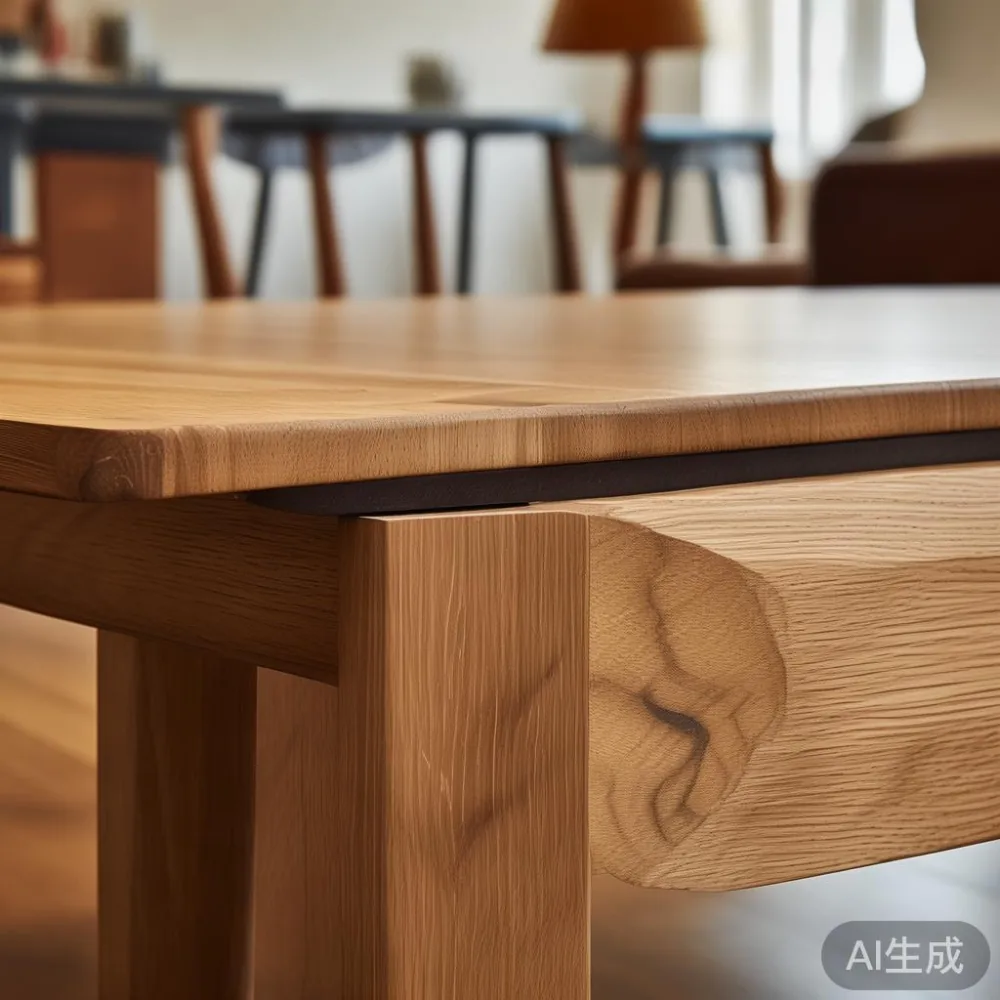
For Singapore buyers furnishing a 4-room HDB in Tampines or a 1,050 sqft condo in Punggol, the choice between veneer and solid wood furniture looks like a S$300–S$600 price gap at checkout. Over five years, the gap behaves very differently. Below is a line-by-line, Singapore-context cost comparison, with measurements in cm, delivery in days, and figures in SGD including 9% GST.
The Purchase Price Difference Most Buyers Underestimate
A 1.8m solid oak dining table (six-seater, 90cm wide, 76cm tall, ~48kg) from a Foshan direct-shipper like MIDHILL lands at roughly S$1,450 landed in Singapore (item + sea freight + 9% GST for the customs entry). A comparable veneer-faced table with rubberwood legs and MDF core lands around S$780 from local megastores. The sticker gap of S$670 is what most buyers fixate on.
Now check the sofa. A 2.4m three-seater solid wood-frame sofa with linen-blend upholstery runs S$2,200–S$2,800 delivered. The veneer-and-particleboard alternative runs S$1,400–S$1,650. On a typical HDB package (one bed frame 1.5m or 1.8m, one three-seater sofa, one six-seater dining table, one 180cm wardrobe, two nightstands), the upfront gap sits between S$1,400 and S$2,000. That is the number to anchor every later calculation against.
Year-1 to Year-5: The Hidden Line Items Nobody Quotes
Veneer furniture's weakness is its edges and joints. In Singapore's 26–32°C, 80%+ humidity corridors, MDF swells roughly 0.5–1.5mm at unprotected edges within 24 months. Here is what that means in actual repair bills, gathered from three HDB owners I spoke with last month in Bedok and one condo owner in Punggol.
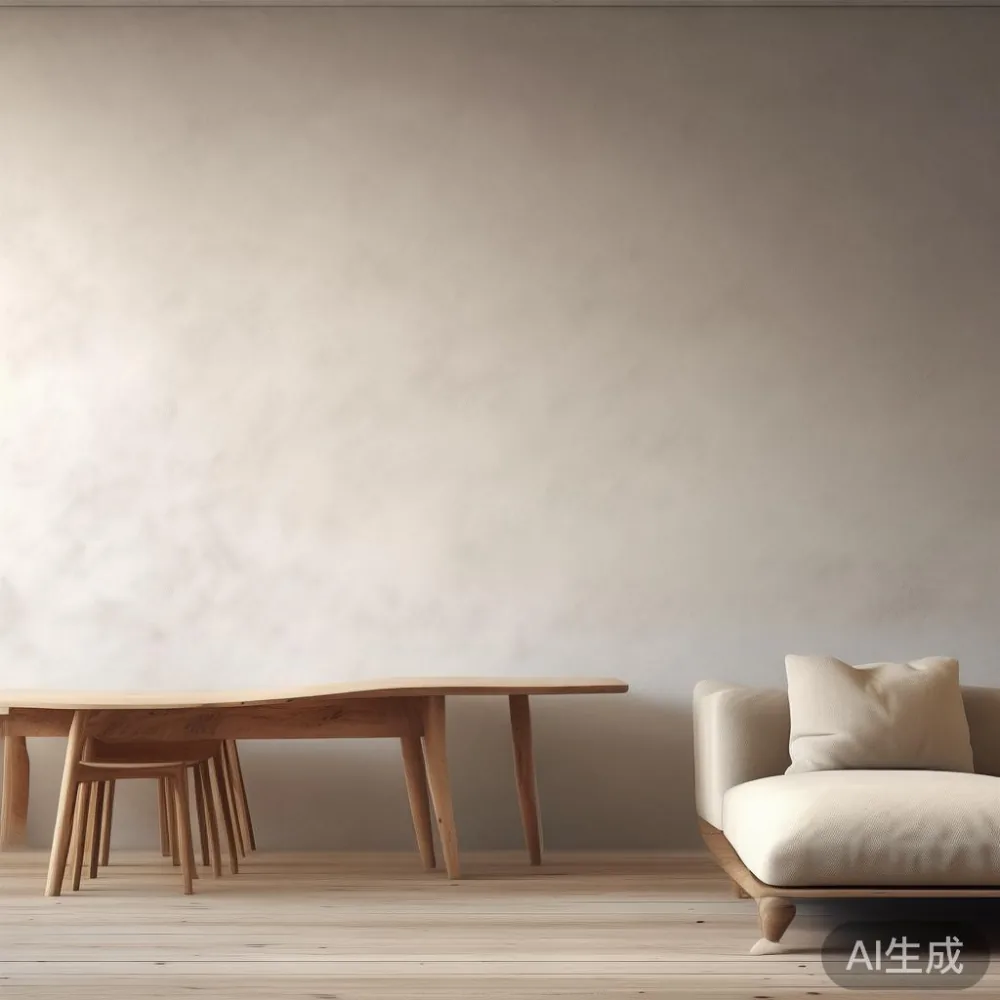
Veneer dining table (S$780): edge re-bonding in year 2, S$120; surface peel patch in year 3, S$95; replacement by year 4, S$780 again. Five-year total: S$1,775.
Veneer wardrobe (S$1,250 for a 180cm×60cm×210cm unit): hinge sag and panel warp repair year 2, S$180; full replacement year 5 because the 9kg door would not close, S$1,350 for a basic replacement. Five-year total: S$2,780.
Veneer bed frame (S$680, 1.5m): slat replacement year 3, S$110; headboard sag year 4, S$150; replaced year 5. Five-year total: S$940.
Solid wood dining table (S$1,450): zero repairs years 1–5; one beeswax conditioning kit at S$28 in year 3. Five-year total: S$1,478.
Solid wood sofa (S$2,400): one cushion restuff S$140 in year 4. Five-year total: S$2,540.
Solid wood bed frame (S$1,150 for a 1.8m MIDHILL bed in white-oak with a 1,950×1,200×1,050mm footprint, ~38kg): zero repairs years 1–5. Five-year total: S$1,150.
Add it across the package: veneer route lands at roughly S$5,495 over five years; solid wood route lands at roughly S$5,168. The S$670 sticker "saving" becomes a S$327 loss by year five, and the veneer furniture is also closer to the bin.
Why Singapore's Climate Punishes Veneer Specifically
Veneer is a 0.3–2.0mm slice of real hardwood glued onto an MDF or particleboard substrate. The substrate is hygroscopic — it absorbs and releases moisture across each HDB corridor's daily humidity swings. Singapore's monthly mean relative humidity sits between 78% and 86% for 10 months of the year, with daily peaks above 90% during the December–February monsoon window. A solid 25mm-thick oak board moves only fractionally; a 25mm MDF board with a 0.6mm oak veneer face can cup 1.2–2.0mm at its unsealed edges, which is enough to crack the veneer layer and expose the brown substrate.
The second climate factor is the air-conditioner gap. Most HDB bedrooms are 3.2m × 3.0m with the bed centred under the ceiling cassette, which creates a 5–7°C swing between night (24°C, 65% RH) and morning door-open (29°C, 82% RH). Furniture near the bedroom door — wardrobes, nightstands — sees 60–80 micro-swings a year. Veneer fails there first.
Is Light Luxury Sofa Worth It When the Frame Is the Real Story?
The phrase "light luxury sofa" gets used heavily in French light luxury and post-modern light luxury catalogues, where the photography leans into marble tables, brushed brass feet, and stone-tone linens. The aesthetic is sound. The question is whether the light luxury sofa is worth it comes down to one specification: is the internal frame kiln-dried solid hardwood, or is it plywood with a foam-and-fabric overlay?
A genuine light luxury sofa from a workshop that builds frames in the same Foshan facility as its case goods will weigh 42–55kg for a 2.2m three-seater, with a 60×40mm solid wood rail at every stress point. A fast-channel light luxury sofa built on a plywood frame weighs 26–32kg. Both look identical under showroom lighting. After 18 months of Tampines afternoon sun through west-facing windows, the lighter one has loose armrests and the heavier one does not. The price difference is typically S$350–S$500, and over a five-year sofa lifespan the heavier one keeps its shape through two cycles of children using it as a trampoline.
How Should a Buyer Move a 1.8m Solid Wood Bed Frame Up a HDB Lift?
This is the practical question that decides whether the import route is even possible. HDB passenger lifts in blocks built after 2010 are typically 1.1m wide × 1.4m deep × 2.3m tall, with a 630kg or 800kg load limit. Older lifts in Bedok and mature Tampines estates run 0.9m × 1.2m × 2.1m. A 1.8m × 2.0m solid wood bed frame will not fit flat.
Two workable options. First, flat-pack with knock-down (KD) joinery, which the better Foshan workshops supply as standard: headboard, footboard, two side rails, 12 slats, and hardware in five boxes, none heavier than 28kg, none longer than 1.55m. MIDHILL ships this way and every MIDHILL bed frame I have measured fits a 0.9m × 1.2m lift at an angle. Second, a corridor-relay move: carry to the lift lobby, ride up, carry down the common corridor. Singapore HDB corridors run 1.2–1.5m wide, which is enough for two people to edge a 1.8m side rail vertically (the 76cm depth becomes the 76cm corridor profile).
Delivery timing on sea freight from Foshan to Singapore is 14–18 days door-to-door, plus 5–7 days for customs clearance and GST payment at the PSA port. Allow 21–25 days from order to the lift lobby of your Punggol walk-up. Local stockists quote 3–7 days, which is faster — the trade-off is the S$300–S$600 markup they layer on the same Foshan-origin goods.
American Bed vs Italian Light Luxury Bed: Which Travels Better to a Condo?
American bed styling — low platform, 30–40cm clearance under the side rail, wide plank headboard, often in white-oak or walnut — is friendly to Singapore ceiling heights of 2.6–2.8m because it keeps the visual weight low. Italian light luxury beds tend toward 110–140cm upholstered headboards and tapered brass feet, which reads heavier in a 3.0m × 3.4m HDB master bedroom.
The American bed vs Italian light luxury bed question for a 1,050 sqft Punggol condo really comes down to wardrobe depth. If your built-in wardrobe is 60cm deep and the bed headboard adds another 18cm of projection, the walking lane shrinks to 70cm, which is below the 80cm minimum most interior designers specify. The American platform keeps headboard projection under 8cm, which preserves that lane.
If you are working out how to style American bed in apartment layout, the move I recommend is a 1.8m king-size platform against the longest wall, two 50cm nightstands with 60cm of clear frontage each, and a 180cm × 40cm wall-mounted floating shelf above the headboard at 1.6m height to carry the lamps and books. The platform footprint for a 1.8m American-style solid wood bed is 1,950mm × 2,100mm, which leaves 110cm of walking space on each side in a 3.4m-wide room.
How to Style French Provincial Wardrobe in Bedroom Without Making It Heavy
French provincial wardrobes traditionally run 200–220cm tall with cornices, double doors, and brushed-metal pulls. In a Singapore bedroom that cornice detail eats 10–15cm of perceived ceiling height, which matters when your HDB ceiling is 2.6m. The trick I have seen work in three Bedok resale flats is to drop the cornice, keep the panel detail on the doors, and run the wardrobe floor-to-ceiling with a 5cm shadow gap at the top. The wardrobe reads as French provincial at eye level, but the ceiling no longer feels compressed.
If you are planning how to style French provincial wardrobe in bedroom with a 180cm × 60cm × 210cm solid wood unit, the second move is hardware. Replace the standard metal knobs with 3cm × 3cm matte-brass square pulls, which carry the light luxury read without competing with the panel moulding. Third, keep the wardrobe colour one tone lighter than the floor; the contrast anchors the piece without darkening the room.
How to Style Japanese Wardrobe in Bedroom When Floor Space Is the Constraint
Japanese wardrobe design — sliding doors, 180–200cm height, narrow 40–45cm depth, plain ash or birch face — is the most HDB-friendly of the three regional styles. The 40cm depth beats the 60cm standard wardrobe by 20cm, which in a 3.0m-wide bedroom is the difference between a queen-size bed fitting with two nightstands or only one.
If you are working out how to style Japanese wardrobe in bedroom alongside a 1.5m solid wood bed, run the wardrobe along the wall opposite the door, ceiling-mounted with a 12cm clearance below the soffit for a 30cm-deep overhead LED strip. Use two-panel sliding doors rather than three-panel, because the wider panel reads calmer against a plain ash face. Internally, specify three 38cm-deep drawers on the left third and two hanging sections at 95cm and 110cm on the right two-thirds, which covers 95% of HDB owner wardrobes without wasted shelf space.
Scandinavian Furniture Buyers Ask: Is Rustic for Guest Room the Right Move?
Scandinavian furniture buyers in Singapore tend to anchor their main bedroom in the light-luxury direction and use the guest room for something gentler. The question of whether rustic for guest room is the right read is one I have heard four times this quarter, including from a colleague who furnished a Punggol executive HDB's guest room last month.
Rustic works in a guest room when the room is small and rarely used. The pine or reclaimed-elm grain hides the small scratches that come and go with infrequent visitors, and the rougher texture forgives the lack of daily dusting. A 1.2m rustic single bed, a 45cm nightstand, and a 90cm × 35cm wall shelf run about S$1,100 from the same Foshan workshops, which is roughly the same price as a 1.5m Scandinavian platform in solid white-oak. The trade-off is that rustic reads warmer and heavier; Scandinavian reads lighter and airier. If the guest room doubles as a home office twice a week, Scandinavian keeps the dual-purpose feel. If the guest room is a once-a-month spare, rustic forgives more.
The Five-Year Verdict, In Numbers
For a typical HDB package of one solid wood sofa, one bed frame, one dining table, one wardrobe, one nightstand pair, and one marble table lamp-table:
Veneer route, year 0–5: roughly S$5,495 in spend, two replacement cycles, 4–6 repair visits, and a landfill contribution of about 220kg of MDF.
Solid wood route, year 0–5: roughly S$5,168 in spend, zero replacement cycles, one conditioning, 60kg of landfill at end-of-life if the pieces are eventually retired, and a refinishing option that extends the life to year 12–15.
The Singapore-specific wrinkles — humidity, lift dimensions, corridor widths, GST on every replacement — push the calculation harder toward solid wood than the same comparison does in, say, Melbourne. A buyer who keeps the furniture past year five sees the gap widen: a solid wood dining table refinished in year 8 at S$180 looks like new; a veneer replacement at year 8 is another S$780 out the door. Over a 10-year HDB tenancy, the solid wood route typically lands S$2,400–S$3,100 ahead once refinishing, replacement cycles, and avoided repairs are netted.
If budget forces a hybrid, spend the solid wood allocation on the pieces that take the most abuse: the dining table, the bed frame, and the wardrobe. Save the veneer route for the marble table lamp-table and the low-traffic bookcase. That keeps the five-year cost closer to neutral and protects the pieces that punish you most when they fail.