How to Choose the Right Size for a Singapore HDB Living Room
Last month I visited my colleague Priya in her new 4-room BTO in Punggol. She had ordered a 3.6 m modular sofa from an online seller, and it physically would not fit through her service yard door. The courier left it at the foot of Block 622A for two days before returning it. Her actual living room, by the HDB floor plan, measured 4.2 m by 3.1 m. The numbers on the website had not matched the numbers in her corridor, lift, or doorway. That afternoon, with a tape measure and her phone calculator, we rebuilt her layout on the floor with masking tape. This guide is the version of that conversation I wish every HDB homeowner in Tampines, Bedok, Sengkang, or Woodlands could read before clicking checkout.
Why Singapore HDB rooms punish the wrong-sized sofa
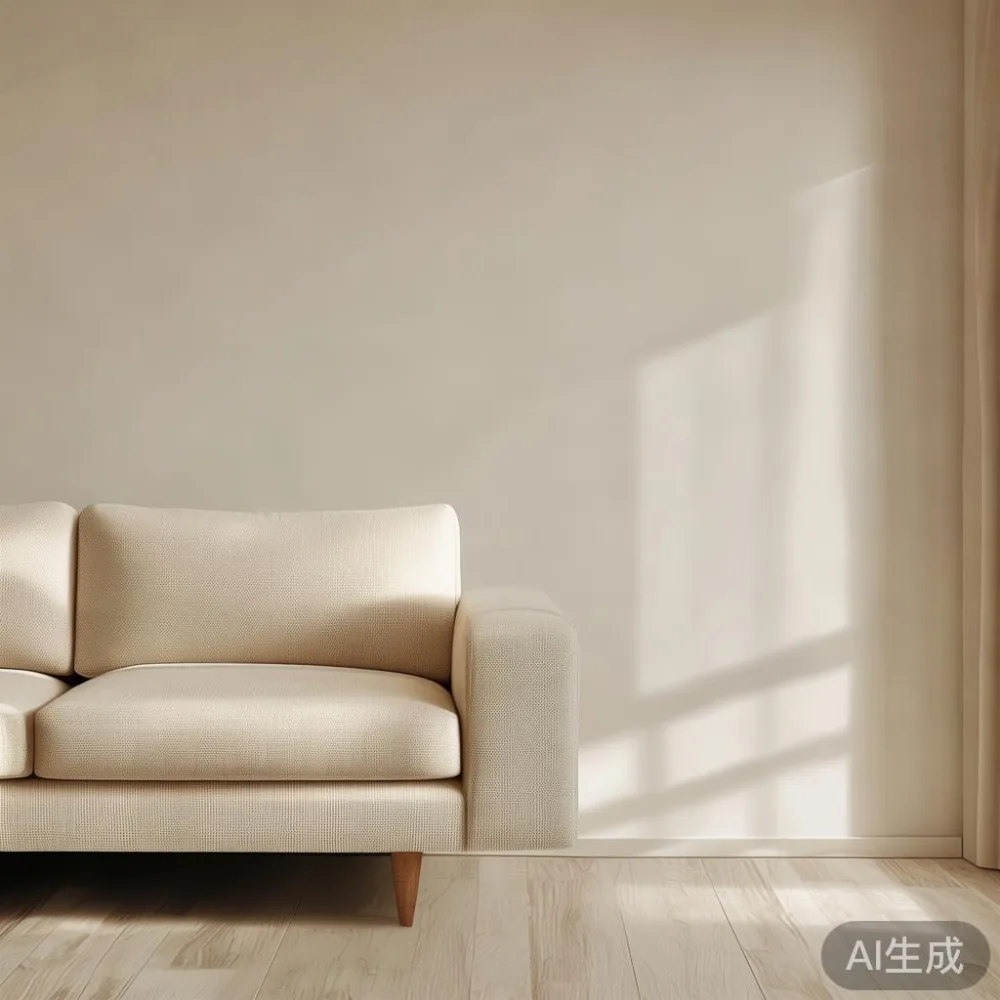
A typical 4-room BTO living room in estates like Sengkang or Punggol runs between 3.0 m and 4.5 m on the long wall. Drop in a standard 3-seat solid wood sofa at 2.2 m long, plus a 1.2 m TV console and a 1.0 m coffee table, and you have already lost 4.4 m of floor space. Walkways collapse to under 60 cm, which is uncomfortable for two adults passing each other with a cup of coffee in hand.
Scandinavian furniture solves this because the design language starts from the room outward, not from the showroom inward. Slim 8-12 cm armrests, raised legs of 15-20 cm under the frame, and lighter oak or ash finishes visually free up floor area. A 1.8 m Scandinavian-style 3-seater with a 78 cm depth usually feels lighter than a 2.0 m bulky Chinese-style sofa of similar dimensions, because the negative space under the frame keeps the eye moving.
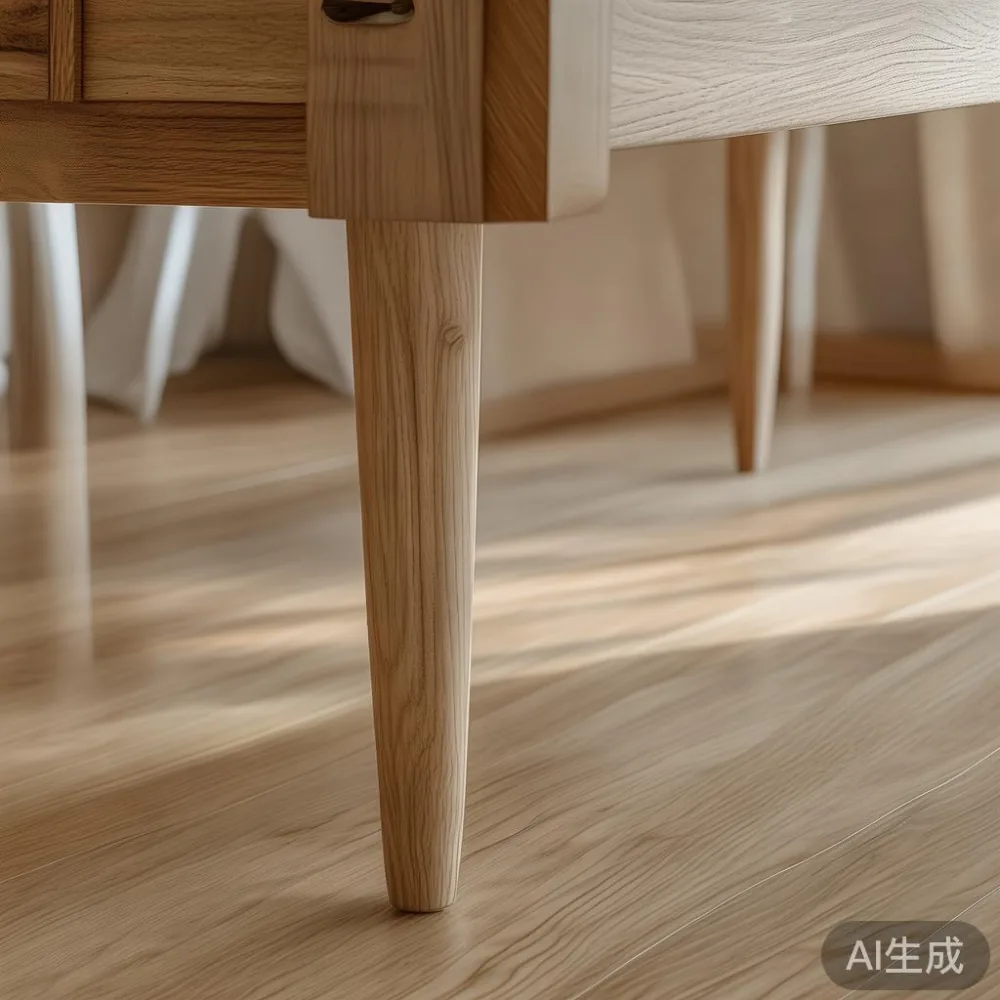
My colleague's fix was a 2.0 m 3-seater from MIDHILL's Scandinavian line in solid ash, with 10 cm arms and 18 cm legs. Total floor footprint dropped by roughly 0.6 m², which is exactly the clearance she needed to add a 90 cm round marble side table next to the armchair without crowding the walkway.
How wide is a Singapore HDB lift and corridor, really?
This is the number nobody measures before ordering. For a standard HDB passenger lift, the door opening is roughly 0.9 m wide by 2.1 m tall, and the cabin is about 1.2 m wide by 1.5 m deep. Larger goods lifts in newer blocks run closer to 1.6 m wide by 2.4 m deep, but you cannot assume your block has one. The corridor between the lift lobby and your front door is typically 1.2-1.5 m wide, and your unit's front door is around 0.9 m by 2.1 m.
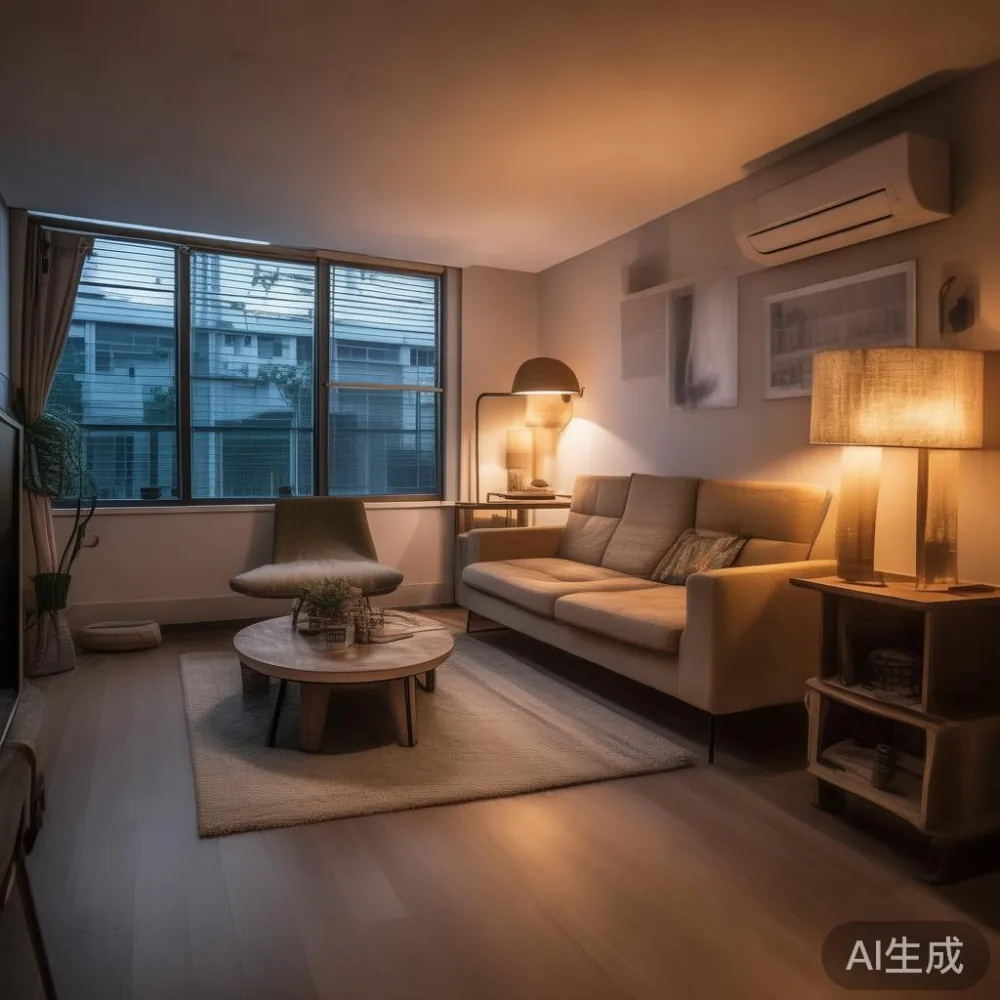
For a solid wood sofa to enter, the longest single piece should not exceed 2.05 m if it cannot be tilted. Most Scandinavian-style sofa frames ship in two boxes at 1.1-1.3 m each, which clears the lift and the corridor with about 10 cm of margin on each side. Always ask the seller for the carton dimensions in centimetres, not just the assembled size. A bed frame king size, for example, often arrives in a 2.1 m box; if your lift door is only 0.9 m, the box must be stood on its side and slid in diagonally, which is awkward above the 8th floor.
Two weeks ago I helped a buyer in Bedok North measure his lift lobby before he committed to a 2.4 m dining table. The table top alone, in its crate, was 2.45 m by 1.1 m by 0.15 m. It would not have angled through his 1.2 m corridor. We downsized him to a 1.8 m solid oak extending table, which seats 6 closed and 8 opened, and the cartons went in without a scratch.
How do I choose a minimalist furniture for a condo?
Choose minimalist furniture for a condo by measuring the room's longest wall, subtracting 120 cm for circulation, then buying the largest piece that fits the remainder in a light, raised, Scandinavian-style frame in solid wood with visible joinery.
That sentence is the rule. The 120 cm circulation figure is not arbitrary: it is the minimum two-adult walking lane between a coffee table and a sofa back, and it is what interior designers in Singapore routinely specify for condos under 100 m². If your longest wall is 3.6 m, your largest single seating piece should not exceed 2.4 m, leaving 1.2 m for a console and walkway. In a 5-room BTO at Compassvale or Canberra, where living rooms stretch to 5.0 m, you can stretch to a 3.0 m L-shape, but the depth should still stay under 95 cm to preserve TV-viewing distance of 2.5-3.0 m on a 55-inch panel.
Minimalist does not mean thin or fragile. The point is visual quiet, not structural compromise. A solid wood bed frame in oak, ash, or walnut at 28-32 mm thickness on the side rails will outlast any veneer alternative and will not visually shrink a small room the way dark, heavy carcase furniture does. For nightstands, 45 cm wide by 40 cm deep is the Scandinavian standard; anything deeper than 50 cm starts to eat into the walkway between bed and wardrobe wall.
The right size for every key piece, in centimetres
Use this as a reference grid when shortlisting Scandinavian furniture for HDB living rooms in the 65-95 m² range:
- 3-seater sofa: 1.8-2.2 m long, 80-90 cm deep, 78-85 cm seat height, 18-20 cm leg clearance.
- 2-seater loveseat: 1.4-1.6 m long, same depth and height.
- Armchair: 75-85 cm wide, 80-85 cm deep, with arm height at 60-65 cm.
- Coffee table: 110-120 cm long, 55-65 cm wide, 38-42 cm tall. A round marble table at 80 cm diameter works for tighter layouts under 12 m².
- TV console: 1.6-2.0 m long, 38-42 cm deep, 45-50 cm tall.
- Dining table for 4: 1.2-1.4 m long, 75-80 cm wide. For 6: 1.6-1.8 m long. Leave 90 cm behind each chair.
- Wardrobe (if placed in living area for storage): 1.8-2.4 m tall, 55-60 cm deep, 1.2-2.0 m wide per sliding-door panel.
- Bed frame queen: 1.6 m x 2.0 m. King: 1.8 m x 2.0 m. Headboard height: 95-110 cm keeps the room from feeling boxed in.
- Nightstand: 40-50 cm wide, 35-45 cm deep, 50-60 cm tall, aligned to the top of the mattress or 3-5 cm above.
Weight matters too. A solid oak dining table at 1.8 m will weigh 55-70 kg. A solid ash sofa frame runs 45-55 kg. These are two-person carries, not one. If you live above the 15th floor and your block only has a single goods lift shared with three other stacks, schedule delivery for weekday mornings between 10 am and 12 pm, when lift traffic in Tampines and Toa Payoh drops noticeably.
Scandinavian furniture and the light-luxury aesthetic
Scandinavian furniture has quietly become the canvas on which three light-luxury directions are layered in Singapore showrooms today. French light luxury leans on soft curves, bouclé or linen upholstery in greige and chalk, and brass-tipped legs; picture a 2.0 m sofa in cream bouclé with tapered ash legs, sitting on a hand-loomed 200 x 280 cm rug. American light luxury reads more architectural: wide track arms, low profiles, oak or walnut in a honey stain, often with a single statement marble table at 80 cm diameter as the coffee piece. Post-modern light luxury plays with asymmetry and mixed materials, such as a sofa with one rounded arm and one square arm, paired with a black metal-and-walnut side table.
What all three share is a refusal of bulk. The frames are solid wood, often kiln-dried ash or European oak at 8-12% moisture content, with mortise-and-tenon or dowel joinery. The upholstery weight sits around 350-450 g/m² for daily-use fabrics, higher for premium bouclé. In a 70 m² HDB flat, one light-luxury anchor piece, plus two supporting Scandinavian pieces, creates a layered look without the visual weight that a fully traditional setup would impose.
MIDHILL's catalogue, drawing on 17 years of solid-wood manufacturing out of Foshan and shipping into Singapore regularly, carries this Scandinavian spine across sofas, bed frames, wardrobes, dining tables, and nightstands. Their 10-year structural warranty on frames and a lifetime refinishing service on solid wood tops are practical considerations in Singapore's humidity, where untreated wood can cup or check within 18-24 months.
Budgeting in SGD and reading the fine print
Solid wood Scandinavian furniture at light-luxury quality sits in a fairly predictable SGD band in Singapore. A 1.8 m 3-seater solid ash sofa with removable covers runs S$2,400-S$3,800. A 1.6 m queen bed frame in solid oak runs S$1,800-S$2,600. A 1.8 m dining table in solid ash with extension leaves runs S$1,500-S$2,400. A 2.0 m sliding wardrobe in solid wood with lacquered panels runs S$2,800-S$4,500. A pair of nightstands in solid ash runs S$600-S$900.
Before paying the 9% GST, confirm four things in writing: (1) carton dimensions of every single box in centimetres, (2) total weight per carton so you can plan the carry, (3) the delivery window in business days, and (4) whether the price includes lift-up to your floor or only ground-floor drop-off. For HDB units above the 10th floor without a goods lift, a 3-person carry surcharge of S$80-S$120 is normal.
Returns are another number to lock in. The Singapore Consumer Protection rules give you a baseline, but retailer policy varies. Look for at least a 14-day return window for unused items in original packaging, and a 48-hour damage report clause so a cracked marble table top or chipped leg can be replaced without argument. Free shipping over a stated threshold, often S$350 to S$500 in SGD terms, is worth chasing if you are ordering more than one piece.
Care, climate, and a note on fabric maintenance
Singapore's average humidity sits between 70% and 85% for most of the year. Solid wood furniture responds to this by expanding and contracting across the grain by 1-2% across seasons. To keep a Scandinavian-style ash or oak frame stable, run the air-con or a dehumidifier to keep room humidity between 45% and 60%. Wipe spills within 10 minutes, and avoid placing a solid wood dining table or marble table in direct afternoon sun through a west-facing window, where surface temperatures can hit 45°C and stress the finish.
For fabric care on bouclé, linen, or velvet upholstery, vacuum weekly with an upholstery head at low suction, rotate cushions every two weeks, and treat stains with a pH-neutral fabric cleaner rather than soap. Customers in the UAE and other humid markets often ask about French fabric care uae routines; the same principles apply in Singapore, where air-con use keeps indoor humidity closer to Gulf-air-conditioned indoor levels than to outdoor Singapore readings. For marble table tops, seal with a penetrating sealer every 12 months and coast all cups; acid in fruit juice will etch a calcite surface within minutes.
If a finish dulls or a joint loosens over the 5-10 year mark, a lifetime refinishing offer turns what would be a S$300-S$600 refurbish elsewhere into a scheduled service. That is one of the quieter economics of buying solid wood Scandinavian furniture from a maker with a long operational track record, and it is why the right size, chosen carefully now, keeps paying back across the next decade.