How to Match Furniture to a Warm Minimal Interior (the Singapore Way)
I spent a Tuesday morning in a 92 sqm Tampines BTO with my colleague Priya, taping cardboard cutouts to her living room floor at 9 am before the sun hit the corridor windows. She had bought a beautiful pale oak dining table online, but it sat next to a walnut TV console her parents had given her, and the room felt like two apartments stitched together. That single visit taught me more about matching furniture to a warm minimal interior than any design book. In a compact Singapore home, every centimetre at the lift lobby, every degree of afternoon glare, and every HDB corridor turning radius quietly decides which pieces of solid wood furniture will actually live well in the room.
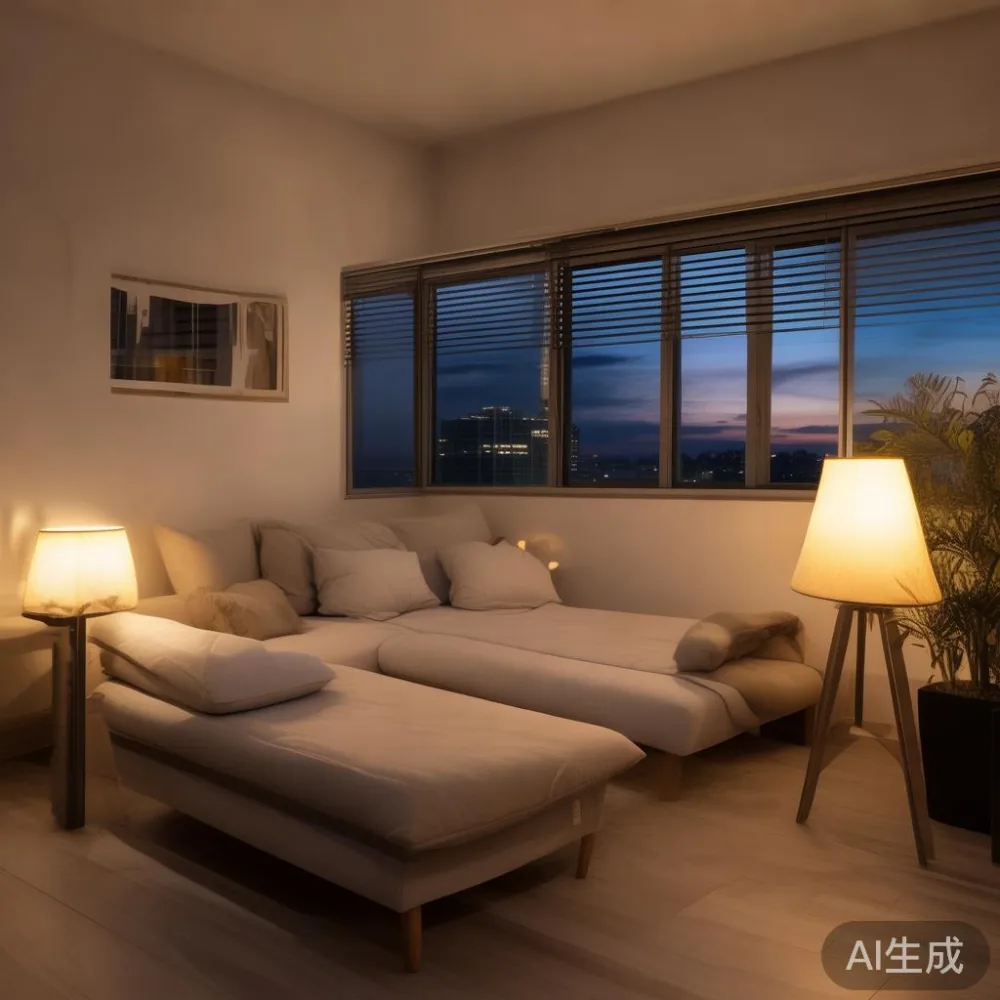
What does "warm minimal" actually mean in a Singapore HDB?
Warm minimal is not a colour palette you can copy from a Pinterest board. It is the discipline of using very few shapes, very few materials, and just enough warmth that the room does not feel like a showroom. In a Tampines 4-room flat of about 95 sqm, that usually means three to four hero pieces of scandinavian furniture, all speaking the same language of light timber and soft linen, plus one accent that breaks the silence, a vintage rattan lamp, a travertine marble table, or a clay-toned rug.
The warmth comes from three sources: the undertones of the wood (honey oak, natural ash, warm walnut), the textiles (washed linen, brushed cotton, raw wool), and the light itself. Singapore light is strong and slightly cool in the morning, golden and heavy around 6 pm. A warm minimal room should hold up under both. A pale Scandinavian furniture set reads clean at noon and turns amber by evening without you doing anything.
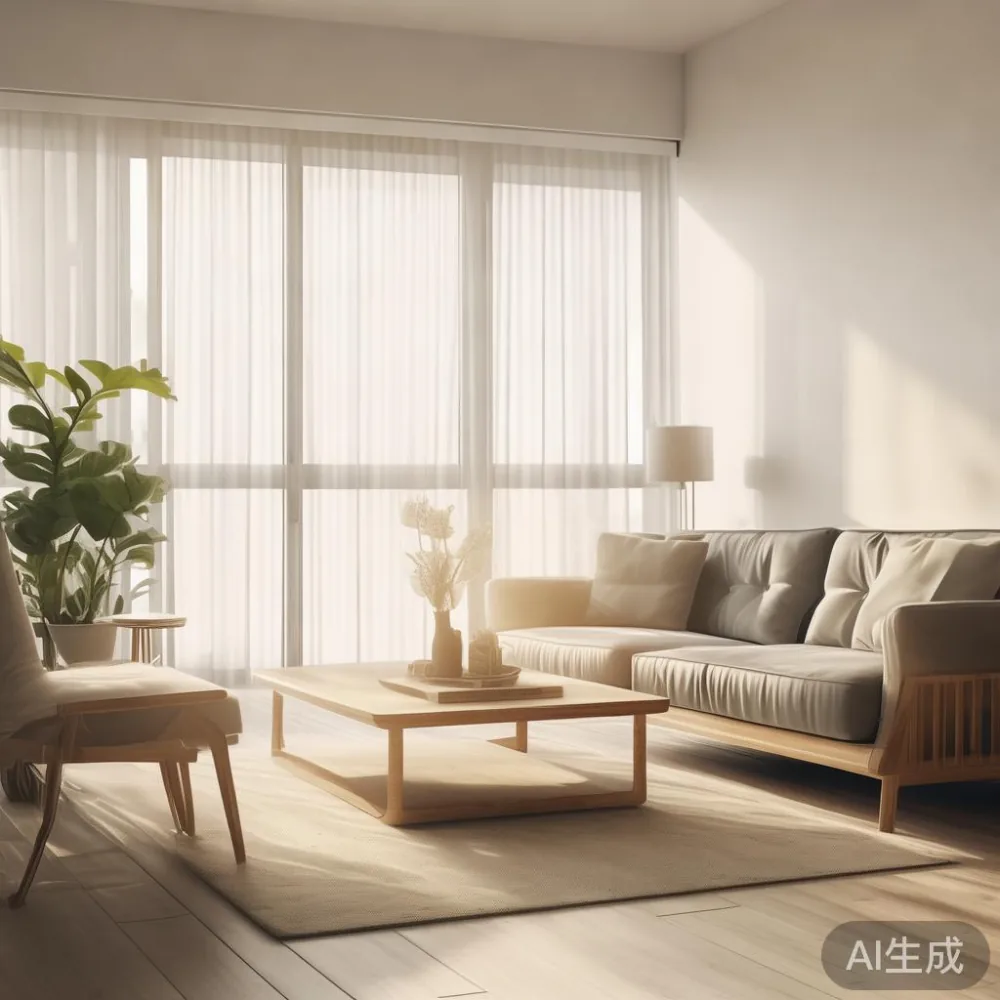
How do I style a American furniture in a small apartment?
In a compact Singapore apartment, American light luxury styling works best as a single anchor piece paired with quiet Scandinavian companions, for example one deep-tufted bed frame in charcoal velvet, surrounded by a pale rubberwood nightstand, a slim oak console, and a linen-curtained wardrobe, so the room reads calm rather than crowded.
Let me break that down. American light luxury is, at heart, generous proportions softened by pale finishes and brass details. In a 78 sqm Bedok condo, a four-door wardrobe at 240 cm wide already eats half a wall. If the wardrobe is dark walnut and the bed frame is dark walnut and the nightstand is dark walnut, you have a tunnel. Swap the nightstand for a 45 cm pale ash Scandinavian furniture piece, and suddenly the same room breathes. The trick is one statement per zone, never one statement per surface.
For context, most Singapore HDB master bedrooms run 3.2 m by 3.0 m, and the standard wardrobe depth you can still walk past comfortably is 60 cm. Lift openings in newer BTOs are typically 90 cm wide by 210 cm tall, so any solid wood sofa longer than 220 cm or any dining table over 180 cm should be flat-packed or split, which is where MIDHILL's flat-pack routing for export matters; pieces arrive corridor-ready rather than refusing to enter the lift.
The five-piece kit: what every warm minimal home needs
After visiting around forty Singapore homes over the past two years, I keep seeing the same furniture load-out working. Five categories, each chosen with a ruler, not a wishlist.
1. A solid wood sofa in a tight weave. For a 3-seater, plan 210 cm to 230 cm length, 92 cm depth, and seat height around 44 cm. Anything lower looks luxurious but is hard to get out of for older parents visiting from Jurong. Boucle and brushed linen age better in our humidity than full leather, which can feel clammy by August.
2. A bed frame that anchors the room. Platform styles in solid ash or rubberwood at 160 cm by 200 cm fit a standard queen mattress and leave 60 cm of walking space on each side in most HDB bedrooms. Skip the storage drawers if your bedroom door swings inward, the drawer pull eats knee room.
3. A dining table sized to your family, not your wishlist. A 140 cm by 80 cm table seats four comfortably and fits a 3.0 m by 3.2 m dining area with 90 cm of clearance, which is the minimum for someone to walk behind a seated diner. For six, jump to 180 cm by 90 cm. Solid rubberwood tops in a warm honey finish are kind to chopsticks, placemats, and the occasional hotpot.
4. A wardrobe that disappears. Sliding doors beat hinged doors in rooms under 3.2 m wide, because you do not lose 55 cm of swing arc. A 240 cm wide three-door slider in pale oak reads as a wall rather than furniture, which is exactly what warm minimal wants.
5. Nightstands that do not fight the bed. Anything taller than the mattress top looks awkward. A 50 cm high rubberwood nightstand with one drawer and an open shelf holds a lamp, a glass of water, and a book, which is the actual job.
Post-modern light luxury: the missing accent
Post-modern light luxury is the friend of warm minimal, not its enemy. Where Scandinavian furniture gives you calm and proportion, post-modern light luxury gives you one object that is slightly unexpected: a travertine marble table with a sculpted edge, a curved velvet armchair in rust, a brass-arched floor lamp. The rule is one such piece per room, never more, and always something you can carry to a new home in three years.
In Priya's Tampines flat, the eventual fix was a 120 cm travertine marble table between the sofa and the dining area, holding a single olive branch in a stoneware vase. The walnut TV console stopped arguing with the pale oak dining table because the marble introduced a third voice, a cool, mineral one, that resolved the conversation. Total spend on the marble table, including GST at 9%, was about SGD 1,180, delivered in five working days, brought up by a two-man team who also helped move her existing sofa 40 cm to the left so the corridor reading nook finally made sense.
If you prefer French light luxury, translate the same idea through curve and patina: a bouclé occasional chair, a small round marble table, and a single antique mirror. The room still reads minimal, but with a faint Parisian hush rather than a Copenhagen one.
Concrete numbers: the SGD budget that actually works
For a full warm minimal furniture load-out in a Singapore HDB or small condo, here is the realistic band I have seen clients spend in 2024 and 2025, before GST:
- Solid wood sofa, 3-seater, fabric: SGD 1,800 to SGD 3,200
- Dining table, 140 to 180 cm, solid rubberwood: SGD 900 to SGD 1,600
- Bed frame, queen, solid ash or rubberwood: SGD 1,100 to SGD 2,000
- Wardrobe, 240 cm slider, three doors: SGD 1,600 to SGD 2,800
- Nightstand, pair: SGD 380 to SGD 700
- Accent marble table: SGD 800 to SGD 1,800
Total for a calm five-piece Scandinavian furniture base plus one accent sits between SGD 6,500 and SGD 12,000, depending on whether you go flat-pack or assembled. Free shipping kicks in above roughly US$350 for export orders, and for Singapore delivery the threshold sits around SGD 480, which is honestly where most orders land once you add two nightstands. Most reputable makers, including MIDHILL, ship from Foshan in 14 to 28 days by sea to Singapore with full tracking, which is worth confirming if you are buying around Chinese New Year, when production lines slow for 10 to 14 days.
Add 9% GST on top if your supplier is not GST-registered locally, and budget another SGD 250 to SGD 450 for a local handyman to assemble a wardrobe and dining table if flat-packed. A 10-year structural warranty on solid wood frames is now standard among serious exporters; ask to see the written terms before paying a deposit.
The WFH corner that quietly breaks minimal
Last month I visited a Punggol eco-HDB where the owner had built a beautiful warm minimal living room, then ruined it with a black mesh office chair and a 120 cm white desk pushed against the window. The desk was 75 cm deep, which ate a full metre of the room and cast a hard shadow across the dining table at noon.
The fix for a home-office nook in a Singapore apartment is a grey rubberwood work from home desk at 120 cm by 60 cm, paired with a slim linen-covered task chair on solid wood legs. The smaller footprint keeps the room's silhouette intact, the grey rubberwood tone sits between pale oak and warm walnut, and a 60 cm depth still fits a 14-inch laptop, a notebook, and a ceramic mug. Keep the chair upholstered in a tone already in the room, and the work corner stops looking like a separate apartment.
If you can spare it, run a 180 cm by 90 cm rubberwood dining table as a dual desk-dining surface. I have seen three clients in Punggol do this, and it works only if the table sits by a window and you commit to clearing the work zone at 6 pm. The 90 cm depth gives you real elbow room for both laptop work and a four-person dinner.
What goes wrong, and how to rescue it
Three mistakes come up in almost every warm minimal room I visit in Singapore.
Mistake one: too many wood tones. If you have pale ash, warm walnut, and reddish merbau in the same room, it reads as a furniture showroom, not a home. Pick one dominant timber, one supporting timber within two shades of it, and ban the third. A pale oak dining table can sit next to a slightly warmer oak TV console, but a merbau piece will fight both.
Mistake two: oversized rugs. A 200 cm by 300 cm rug in a 3.2 m by 3.0 m bedroom leaves 60 cm of bare floor around the edge, which looks like a postage stamp. Either go full-room, meaning a rug 50 cm shorter than the wall on every side, or commit to a small 120 cm by 180 cm accent under the front legs of the bed only.
Mistake three: ignoring corridor and lift geometry. A 240 cm wardrobe will not make it around the tight 90-degree turn at the lift lobby of many older Bedok blocks. Measure the diagonal of every lift and corridor corner before ordering, not after. A wardrobe that arrives and refuses to enter costs you the delivery fee plus a return trip, and in Singapore humidity a delayed return often means a small mould spot on the back panel.
Care, longevity, and why solid wood earns its keep
Solid wood furniture in Singapore has to handle 80% to 90% humidity for nine months a year and air-conditioning at 24°C for the other three. That swing is harder on joints than on surfaces. Engineered boards with veneer can handle it for five to seven years; a solid rubberwood or ash frame, kept away from direct afternoon sun, will hold its mortise-and-tenon joints for fifteen to twenty years and longer.
A basic care routine takes ten minutes a week: wipe with a barely damp microfibre cloth along the grain, no Pledge, no silicone spray. Once a year, around March when humidity drops before the monsoon shift, treat the tops with a thin coat of hard wax oil. If a scratch happens, most makers offering lifetime refinishing will send a technician or a touch-up kit for a nominal fee. Ask before you buy whether refinishing is included or chargeable; the answer tells you whether the brand expects to be around in 2035.
For families with young children or pets, a solid wood dining table with a distressed or brushed finish hides micro-scratches far better than a glossy lacquer. I have watched a friend's MIDHILL oak table absorb six years of weekday dinners, two birthday parties, and one aquarium leak without losing its warmth. That is the quiet promise of solid wood: it does not demand a perfect home, it simply ages into the one it is in.
Where to start this weekend
If your room today feels like Priya's did in Tampines, pick the single piece that anchors the most time, usually the bed frame or the dining table, and replace it first with a warm-toned solid wood piece in a Scandinavian furniture silhouette. Live with it for three weeks. If the room finally settles, replace the next piece in the same timber family. If it still feels off, the issue is almost always one rogue accent, and a small marble table or a single brass lamp is usually enough to fix it.
Warm minimal is not about spending more. It is about spending correctly: one good bed frame, one honest dining table, one quiet wardrobe, two nightstands that match, and one brave accent. In a Singapore flat of 80 to 100 sqm, that is enough furniture to live well, and not so much that the lift operator recognises your name.