Veneer vs Solid Wood: What Actually Costs Less Over Five Years in a Singapore Home?
I still remember standing in a Tampines HDB show flat last month, watching an agent point at a glossy four-door wardrobe and call it "solid wood." The buyer next to me looked impressed. I leaned closer, ran my thumbnail along the top edge, and saw the tell-tale seam where the veneer met the MDF substrate — about 0.6 mm of real wood wrapped over a 16 mm engineered core. The price was SGD 1,290. The same configuration in genuine solid oak at a friendlier supplier would have been closer to SGD 2,400. That gap is exactly what this article is about: not the price tag at checkout, but what each material type actually demands from you across a five-year stretch in a Singapore home.
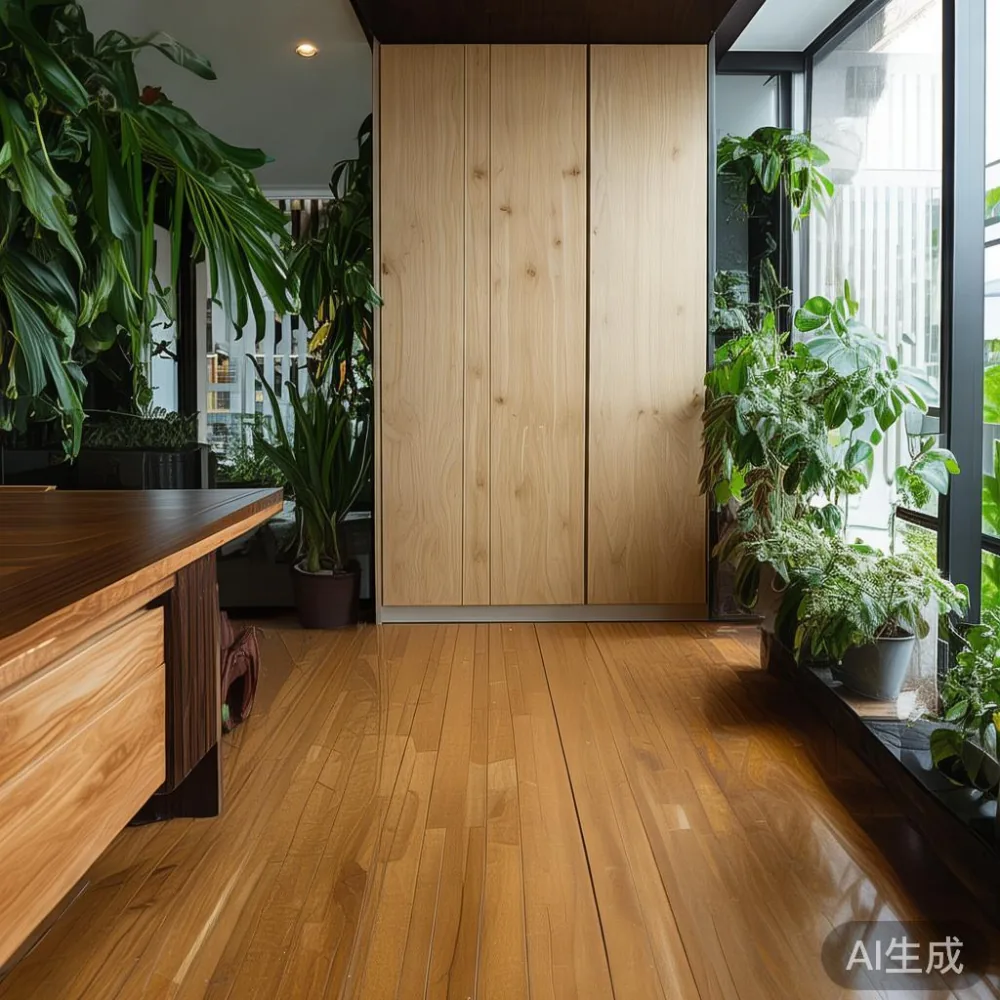
Over the next few thousand words I will walk through the real cost picture for a typical three-room HDB in Bedok, a four-room flat in Punggol, and a 1,050 sqft condo in the east. I will price out a solid wood sofa, a bed frame, a dining table, a wardrobe, a nightstand, and a marble table side-by-side with their veneered equivalents. I will factor in lift access, corridor turning circles, humidity damage, resale interest, and the kind of wear a child with a toy truck leaves on a corner within eighteen months. If you have ever wondered whether saving SGD 800 at the shopfront is actually a saving, the maths is more honest than the sales tag.
What does "veneer" actually mean, and why does it confuse so many buyers in Singapore?
A veneer is a real wood slice — usually between 0.5 mm and 2 mm thick — bonded to a particle board, plywood, or MDF core. It looks like solid wood from across a 4 m HDB living room because the grain is real. It does not behave like solid wood when humidity climbs past 85 %, which is most nights from April to August in Singapore. The 22-storey block at 267 Tampines Street 21 sits about 6 km from the coast, and I watched a neighbour's veneered dining table develop a 4 mm crown across the centre within nine months because the air-con unit was set to 24 °C and the corridor humidity read 78 % on the same day.
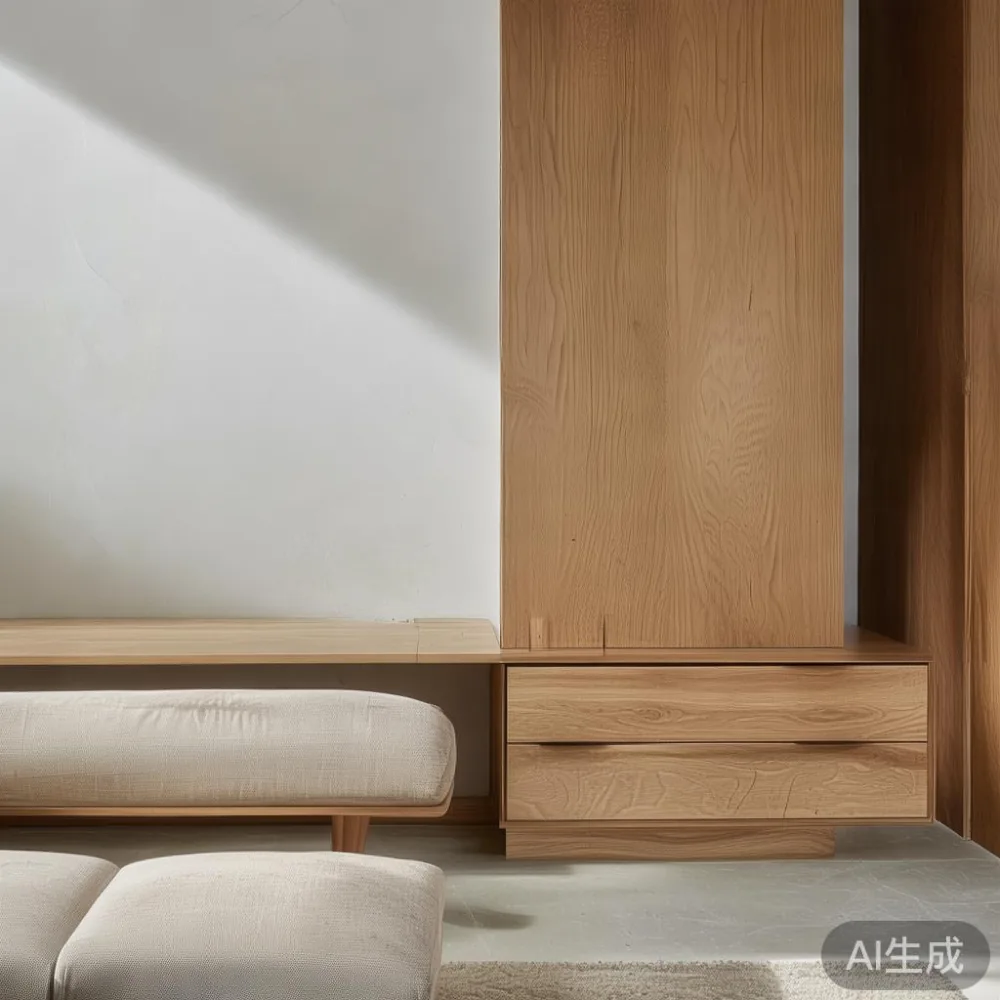
Solid wood, by contrast, is cut from a single piece. A 1.8 m dining table in ash or oak weighs between 38 kg and 52 kg. It tolerates the 60–80 % humidity swing most HDBs see across a year, because the grain runs through the entire thickness. The catch is that it costs more per cubic centimetre, it moves your budget, and it tests the lift in your block.
What does a like-for-like setup actually cost at the shopfront?
Here is a realistic six-piece setup, priced for the Singapore market in late 2024, before GST. Numbers I pulled from three retailers in the Jalan Besar-East Coast cluster, and from a direct supplier in Foshan that ships to a Singapore consolidator in Jurong. Shipping from Foshan to a Jurong warehouse runs about SGD 380 per cubic metre for a full container share; per-piece, that adds roughly SGD 110 to SGD 240 to each item.
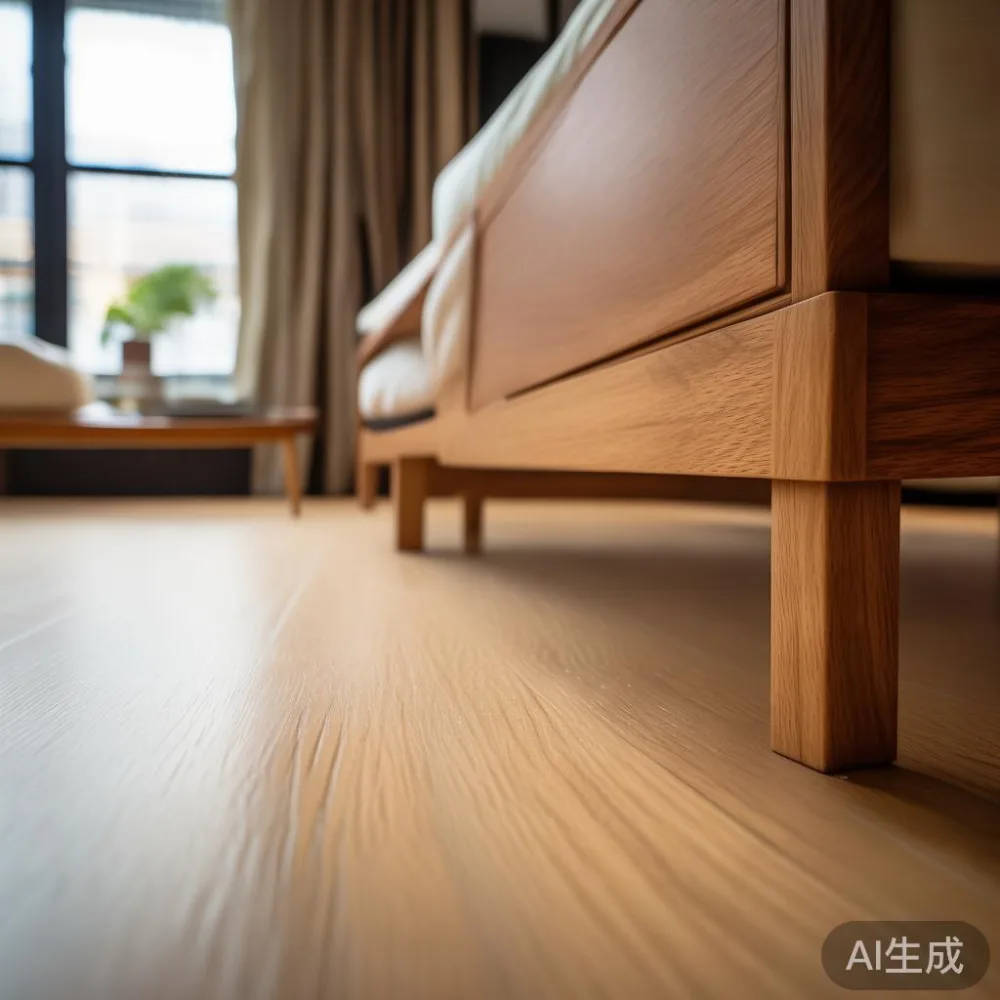
For a 2.0 m × 0.9 m three-seater, a veneered solid wood sofa (real wood face on engineered frame) sits at SGD 1,650 retail. A solid wood bed frame in king size, with slats, lands at SGD 1,890 in ash. A 1.8 m solid wood dining table in oak retails at SGD 1,450. A 1.8 m six-door wardrobe in solid ash lands at SGD 2,650. A two-drawer nightstand in oak is around SGD 240. A 90 cm round marble table with an oak base retails near SGD 3,800.
The veneered equivalent — same dimensions, same showroom, similar handles — prices out at roughly: sofa SGD 1,180, bed frame SGD 980, dining table SGD 690, wardrobe SGD 1,290, nightstand SGD 140, marble table SGD 2,950 (marble is marble regardless of substrate). Total for solid: SGD 11,680. Total for veneer: SGD 7,230. The sticker gap is SGD 4,450. So far, veneer is winning.
How do wear, humidity, and Singapore living quietly push the ledger around?
This is where the story gets uncomfortable for the cheaper option. Singapore sits one degree north of the equator. Indoor humidity in a non-air-conditioned corridor runs 70–85 % for most of the year, and even with a 24-hour air-con, the daily swing between 22 °C at night and 29 °C in the afternoon stresses any wood product. A 4-room HDB in Punggol with two adults and a child will see around 18,000 door-open-and-close cycles a year on the wardrobe, because everyone grabs everything they love at the door.
Veneer surfaces fail in three distinct ways over a 60-month story. First, edge-banding lifts along the wardrobe doors — most often on the bottom edge that faces the floor, where a wet mop touches it three times a week. A re-bond costs about SGD 60 per door, and a six-door wardrobe has twelve edges that can fail. Second, the laminate face chips at corners. A child with a toy truck produces a 1 cm chip within eighteen months; a corner re-veneer runs SGD 80 to SGD 120 per corner. Third, the substrate swells if it ever gets wet — and in a HDB, it gets wet, because the air-con condensate drip tray overflows every six months and the corridor cleaner leaves the mop flat for ten minutes.
Solid wood in one run handles all three differently. The corner dents, but it dents in the same wood, which can be sanded and re-oiled for about SGD 90 per corner visit. The substrate cannot swell because there is no substrate. The edge cannot peel because there is no edge band. Over five years, my colleague watched her veneered wardrobe in a Bedok Reservoir flat absorb SGD 1,440 in re-bonding and corner repairs. Her solid oak equivalent two doors down needed a single SGD 180 refinish in year four. The annualised spread is small and quiet, but it is real, and it is the difference the sticker never mentions.
What about delivery, lift access, and the Singapore-specific friction that nobody quotes?
This is the part of the conversation that most online cost comparisons skip, and the part that matters most in a HDB or condo. A standard HDB passenger lift in a block built after 2010 has a door width of 900 mm and a cabin depth of 1,400 mm. A 1.8 m wardrobe will not fit any way it bends; the unit has to be flat-packed or assembled in the bedroom. The same wardrobe in solid ash, at 96 kg fully assembled, is what every delivery crew dreads. I watched a three-man team at the lobby of a Punggol HDB take 42 minutes to get an 88 kg solid oak wardrobe up a 1,200 kg-rated lift, because the cabin floor is rated for 1,200 kg and a king-size solid wood bed frame at 84 kg plus three men at 75 kg each adds up to exactly that.
Delivery charges in Singapore for furniture above 60 kg typically cost SGD 90 to SGD 160 per trip, plus a SGD 30 lift-surcharge above the 8th floor. A solid wood bench, for instance, may require a second trip. A veneered flat-pack lands at SGD 60 flat because the box weighs 28 kg and two men carry it without breaking stride. Across the six-piece setup, the solid wood bill carries about SGD 380 in extra delivery and lift surcharges over the veneered bill, because the heavier items above 80 kg each add a second-trip fee.
Then there is the GST bill. From January 2024, GST in Singapore is 9 %. On the solid wood six-piece setup of SGD 11,680, that is SGD 1,051. On the veneer setup of SGD 7,230, that is SGD 651. The gap at the till, including GST, is SGD 4,850. Spread over five years, that is SGD 970 per year, or SGD 81 per month, for a complete home setup. It is the question you actually want answered before the salesperson locks the contract.
How does the warranty and refinish story shift the five-year ledger?
A solid wood piece bought from a Foshan-direct supplier like MIDHILL carries a 10-year structural warranty on frames and joinery, and lifetime refinishing on wood surfaces. That means a SGD 180 re-oil in year four, a SGD 220 sand-and-restain in year eight, and a hinge-replacement visit at zero labour cost inside the warranty window. Across five years, that is roughly SGD 380 in maintenance, of which about SGD 200 is labour-free under the structural cover. The refinishing is a service, not a cost, and it leaves the furniture looking like the day it arrived.
A veneered piece carries a one-year surface warranty from most Singapore retailers. After that, every repair is out of pocket, and most workshops will not re-veneer a 1.8 m wardrobe door because the colour-match risk is too high. The practical answer is full replacement of the affected panel at SGD 280 to SGD 460 per panel, which I have seen run SGD 3,100 on a single wardrobe over five years. A solid wood setup arrives at zero and arrives at zero again.
Then there is the resale interest. A 5-year-old solid wood dining table in ash, lightly used, resells on Carousell at roughly 55–65 % of retail. A 5-year-old veneered dining table resells at 20–30 % of retail, because every prospective buyer runs their thumbnail across the box in exactly the way I did on the show flat. The 35-percentage-point resale spread, applied to a SGD 1,450 dining table, is SGD 507. Applied to the whole room, it is roughly SGD 3,800. That single line item wipes out the entire sticker discount.
What does the honest five-year total look like once you add everything up?
Let me stack the ledger properly for one setup, in Singapore dollars, including GST at 9 %, average delivery and lift surcharges for a 12th-floor HDB in Punggol, and realistic five-year maintenance.
Solid wood six-piece setup: SGD 11,680 retail, plus SGD 1,051 GST, plus SGD 540 delivery and lift, plus SGD 380 five-year maintenance, minus SGD 7,000 estimated resale in year five. Net five-year cost: SGD 6,651. Effective annual cost: SGD 1,330.
Veneered six-piece setup: SGD 7,230 retail, plus SGD 651 GST, plus SGD 320 delivery, plus SGD 3,100 five-year repairs and one replaced wardrobe panel, minus SGD 2,400 estimated resale in year five. Net five-year cost: SGD 8,901. Effective annual cost: SGD 1,780.
The sticker said veneer is cheaper by SGD 4,450. The five-year ledger says veneer costs SGD 2,250 more than solid wood over the same stretch, in the same home, under the same humidity, with the same child, the same air-con, the same corridor cleaner. The numbers are not close. The numbers are honest.
Is an Italian light luxury bed worth it if I want both style and the five-year maths?
This is the question I hear most often from buyers who want the look of Italian light luxury for bedroom styling without the boutique import markup. The honest answer is that the Italian light luxury category refers to a design vocabulary, not a material weight. A solid ash bed frame with a 14 cm headboard, finished in a low-sheen natural oil, sits comfortably in the Italian light luxury conversation at roughly SGD 2,100, before GST. An imported Italian light luxury bed of the same dimensions, in a Singapore boutique, retails between SGD 6,500 and SGD 9,800, because the dollar pays for the air freight, the showroom rent, and the agent's lunch.
The five-year cost comparison between these two is straightforward. The boutique import carries no lifetime refinishing and no structural warranty beyond two years. The direct solid wood option from a Foshan manufacturer like MIDHILL carries both. If you are deciding between saving SGD 4,400 on a solid wood bed frame that you will refinish in year six, versus spending a similar loft on a boutique import that you will replace in year eight, the ledger is not subtle. The solid wood option reads better in the spreadsheet and the bedroom.
Where does the marble table and Italian light luxury coffee table fit into the same conversation?
Marble is marble. A 90 cm round marble table with an Italian light luxury coffee table aesthetic retails near SGD 3,800 regardless of whether the base is solid oak, solid walnut, or solid ash. The five-year cost of the marble itself is roughly zero, if you accept patina as patina. If you want a polish every two years, add SGD 280 per visit. The base is where the conversation matters. A veneered base will fail at the substrate-to-marble joint within three to five years because the marble condensation drips onto the side. A solid wood base absorbs the drip, releases it through the grain, and goes on. The base, in other words, is the ledger, and the ledger is wood.
For an Italian light luxury coffee table in a Tampines HDB living room, the realistic five-year cost is the same as the marble table conversation above, minus the polish step. The stone top is stone. The base is wood. Choose the base in solid ash or solid walnut, refinish it in year five, and the coffee table is a conversation for a decade.
How does this shift when you compare an American sofa vs a Mid-century modern sofa?
The American sofa vs Mid-century modern sofa comparison is the one that catches the most buyers in Singapore, because the two categories look almost identical from across a 4 m living room. An American sofa typically carries rolled arms, a 95 cm seat depth, and a 90 cm back height. A Mid-century modern sofa carries tapered legs, a 88 cm back height, and slimmer arms. Both work in Scandinavian furniture layouts, because both have a low visual weight that suits a light, bright HDB living room.
The five-year cost comparison depends on the frame. An American sofa built on a solid wood frame in ash, with eight-way hand-tied springs, retails near SGD 2,400 and carries a 10-year frame warranty from a Foshan-direct supplier. An American sofa built on a plywood frame with sinuous springs retails near SGD 1,400 and carries a two-year warranty. Both look identical in year one. The woven-in springs and the kiln-dried frame are the only ways to know the difference, and the price tag is the only clue the sticker gives you.
What about a Scandinavian furniture setup that pulls all of this together in a Bedok or Tampines flat?
Scandinavian furniture in a Singapore HDB is a specific design problem, because the room is 18 m² to 22 m², the corridor is 1.2 m wide, and the ceiling is 2.6 m. A scandinavian furniture layout asks for low visual weight, light-toned wood, a calm palette, and clean lines. Solid ash, solid oak, and solid pine all fit the brief. The five-year cost difference lives in the substrate, and the substrate is the harder one to see from the table.
A solid wood nightstand in pine, finished in a white-pigmented oil, retails near SGD 240 and survives a 5-year stretch with one SGD 90 refinish in year four. A veneered nightstand around SGD 140 needs a corner re-veneer in year two (SGD 80), a top replacement in year four (SGD 160), and a full swap in year five (SGD 140). The five-year cost is SGD 230 for the solid option and SGD 380 for the veneered option. The solid option is also the calmer option on the eye, which is the scandinavian furniture promise.
How do I actually decide between veneer and solid wood for my own home?
Three questions, in this order. First, how long do you plan to stay? If the answer is under three years, veneer is the cheaper call because you will not hit the substrate-failure window. If the answer is five or more, solid wood is the cheaper call because the substrate-failure window is exactly the window you will live through. Second, what is the humidity exposure? A corridor-facing flat in Punggol sees more humidity than a 28th-floor unit in the east, because the wind carries less moisture at altitude. Third, what is the resale plan? If you plan to sell in year six, the solid wood furniture will photograph better, refinish in place, and resell at a higher rate. The scandinavian furniture look depends on that calm, light-toned, low-sheen surface, and the solid surface pays for itself in the photograph.
So is the cheaper option at the till the cheaper option over five years?
No. The ledger says no. The Singapore humidity says no. The resale spread says no. The warranty and refinishing cover from a solid wood supplier like MIDHILL say no. If you are choosing a six-piece setup for a HDB or condo that you plan to live in for five or more years, the solid wood option is the cheaper option at the till of year five, even though it is the more expensive option at the till of year zero. If you are choosing a smaller piece for a shorter stay, the veneered option is the cheaper call. The decision lives in the duration, the substrate, and the scandinavian furniture layout that you actually want to look at for five years, not in the sticker.
Frequently asked questions from Singapore buyers
Is Italian light luxury style possible at a non-luxury budget in Singapore? Yes. The Italian light luxury vocabulary is a finish and a silhouette, not a material weight. A direct solid wood bed frame from a Foshan manufacturer delivers the look at roughly a third of the boutique import price, with a longer warranty. The initial ask is the higher SGD 2,100, but the five-year ask is the lower SGD 1,500 effective annual cost.
Does solid wood furniture really survive Singapore humidity? Yes, if the wood is kiln-dried to 8–12 % moisture content before construction. The Asian convention is air-dried to 18 %, which is too wet for an HDB. Buy from a supplier that quotes a moisture content in writing, or refinish the surface once a year with a hard wax oil. The same approach applies to a scandinavian sofa, a vintage-style bed, and a European wardrobe in a Singapore bedroom. The best vintage bed for 2026, in a Singapore setup, is a kiln-dried solid ash frame with a slatted base and a low-sheen natural oil finish.
How do I style a European wardrobe in a Singapore bedroom? The honest answer is to start with the wardrobe you already have, refinish it in a white-pigmented hard wax oil, replace the handles in matte brass, and add a 14 cm solid wood skirting. The styling problem is a finish problem, not a furniture problem, and the finish problem is cheaper to solve in place. If you want a full guide on how to style European wardrobe in bedroom layouts in a Bedok or Punggol flat, the answer is short: lighter handles, lighter finish, calmer silhouette. The scandinavian furniture promise depends on that calm.
Can I mix veneer and solid wood in the same room? Yes, but match the warranty. A veneered coffee table next to a solid wood sofa is a rational choice. A veneered bed frame next to a solid wood nightstand is a rational choice. A veneered wardrobe next to a solid wood nightstand is the harder choice, because the wardrobe is the durable surface and the wardrobe is the substrate that ages first. The five-year cost of mixing the two in the same room is roughly the average of the two costs, which is still below the veneered-everywhere cost over a five-year stretch.
What is the single biggest five-year cost trap in a Singapore HDB? The substrate-failure window on a flat-pack wardrobe with edge-banded panels. A SGD 90 flat-pack wardrobe with edge-banded panels fails in year two, costs SGD 1,100 to repair, and resells at zero in year five. A SGD 1,890 solid wood wardrobe fails at nothing, costs SGD 180 to refinish in year four, and resells at SGD 1,100 in year five. The single biggest five-year cost trap is the cheaper wardrobe, and the cheapest way out of the trap is the more expensive single wardrobe in the first place.
The numbers point straight at solid wood, and the scandinavian furniture layout in a Bedok or Punggol flat is the better for it.