Singapore Veneer vs Solid Wood Cost-Effectiveness
Choosing furniture for a Singapore HDB flat or condo is rarely a question of appearance alone. A dining table must pass through a lift and turn along a corridor, a wardrobe must fit within a bedroom wall, and a sofa must still suit the home after 5 years of humid weather, family meals and changing routines. Veneer and solid wood both belong in the scandinavian furniture market, but they create very different financial profiles.
This comparison follows a practical ownership period of 60 months. It covers purchase price, expected maintenance, replacement risk and likely resale position for a 180 cm dining table, a 160 cm bed frame, a 90 cm wardrobe, a 45 cm nightstand and a 210 cm solid wood sofa. Prices are illustrative Singapore retail estimates in SGD, inclusive of GST where indicated. Actual costs depend on dimensions, timber, finish and supplier.
For households considering scandinavian furniture, the question is not whether one material wins every category. It is which construction provides acceptable value under local conditions. For larger pieces, solid timber can justify its cost through durability. For compact storage or occasional-use furniture, carefully engineered veneer can be the more sensible allocation of a fixed budget.
What does veneer actually mean in a furniture comparison?
Veneer is a thin layer of real wood, commonly 0.6 mm to 1.2 mm, bonded to a stable core such as MDF, plywood or particleboard. It is not plastic imitating timber, although colour variation and surface quality depend on the sliced leaf. Its main advantage is uniformity. A 180 cm veneer dining table may cost SGD 1,150, compared with SGD 2,350 for a comparable solid oak dining table.
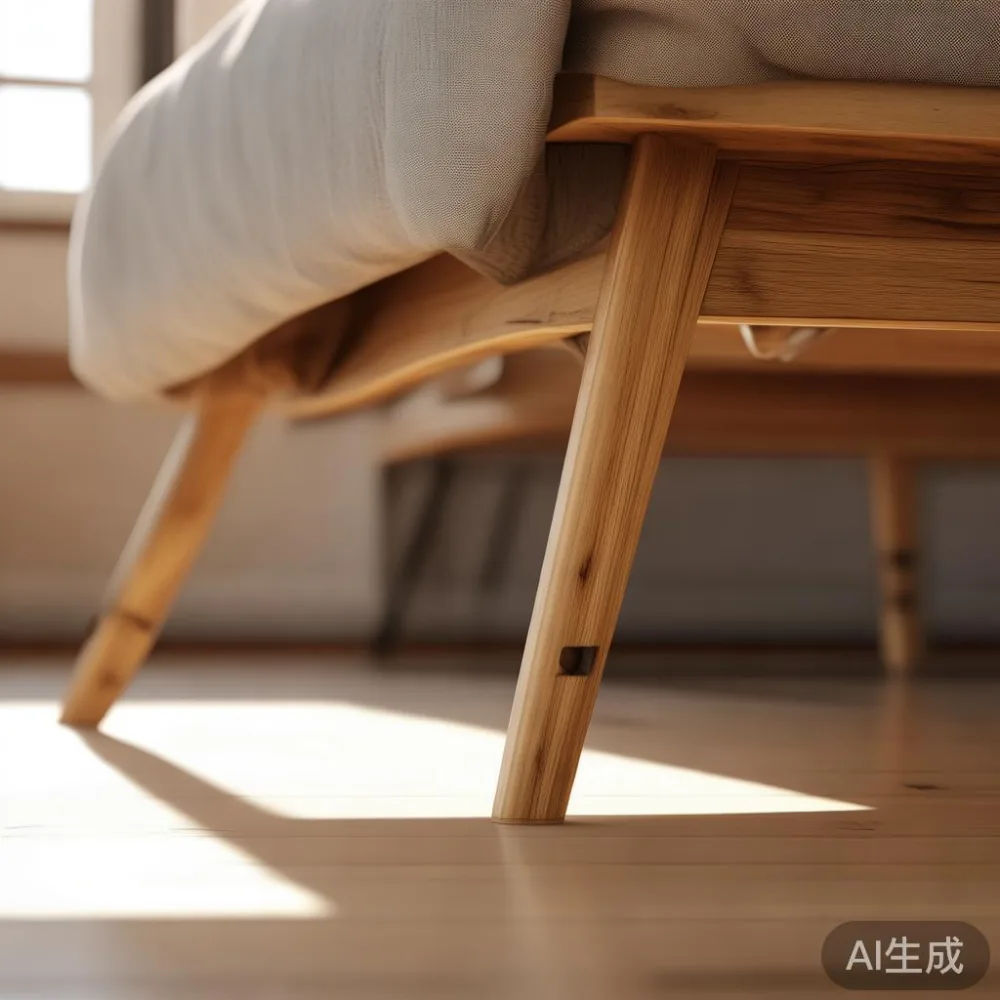
Solid wood uses timber through the visible board or structural section. A product may combine solid components with a stable internal core, so the label must be checked carefully. The 160 cm solid wood bed frame used in this comparison costs SGD 1,680; a visually similar veneer model costs SGD 1,090. The solid version usually has less edge-chipping exposure and can be repaired more readily.

Both approaches can create the restrained forms associated with scandinavian furniture. The financial difference appears over time: initial outlay, maintenance cycles, repair exposure and the likelihood of replacing the entire item. The figures below assume normal residential use rather than commercial wear.
How much do veneer and solid wood furniture cost over 5 years?
For the dining table, veneer starts at SGD 1,150 and reaches an estimated 5-year cost of SGD 1,535. That includes SGD 105 for one refinishing service, SGD 130 for two replacement hardware sets and SGD 150 for one local repair. Solid oak starts at SGD 2,350 and reaches SGD 2,705: SGD 155 for one refinishing service, SGD 100 for hardware and SGD 100 for a small surface repair.
The bed frame tells a similar story. A veneer version costs SGD 1,090, plus SGD 75 for one repair, SGD 90 for two hinge or rail kits and SGD 100 for refinishing, for a 5-year total of SGD 1,355. A solid wood version costs SGD 1,680, plus SGD 80 for refinishing, SGD 70 for hardware and SGD 60 for a minor repair, giving SGD 1,890. Its higher purchase price is partly offset by lower intervention over five years.
For the 90 cm wardrobe, veneer costs SGD 890 plus SGD 120 in hinge and runner servicing, producing a 5-year total of SGD 1,010. Solid wood costs SGD 1,420 plus SGD 95, producing SGD 1,515. A 45 cm nightstand moves from SGD 280 to SGD 355 for veneer after SGD 75 of servicing, while solid wood moves from SGD 490 to SGD 525 after SGD 35 of maintenance.
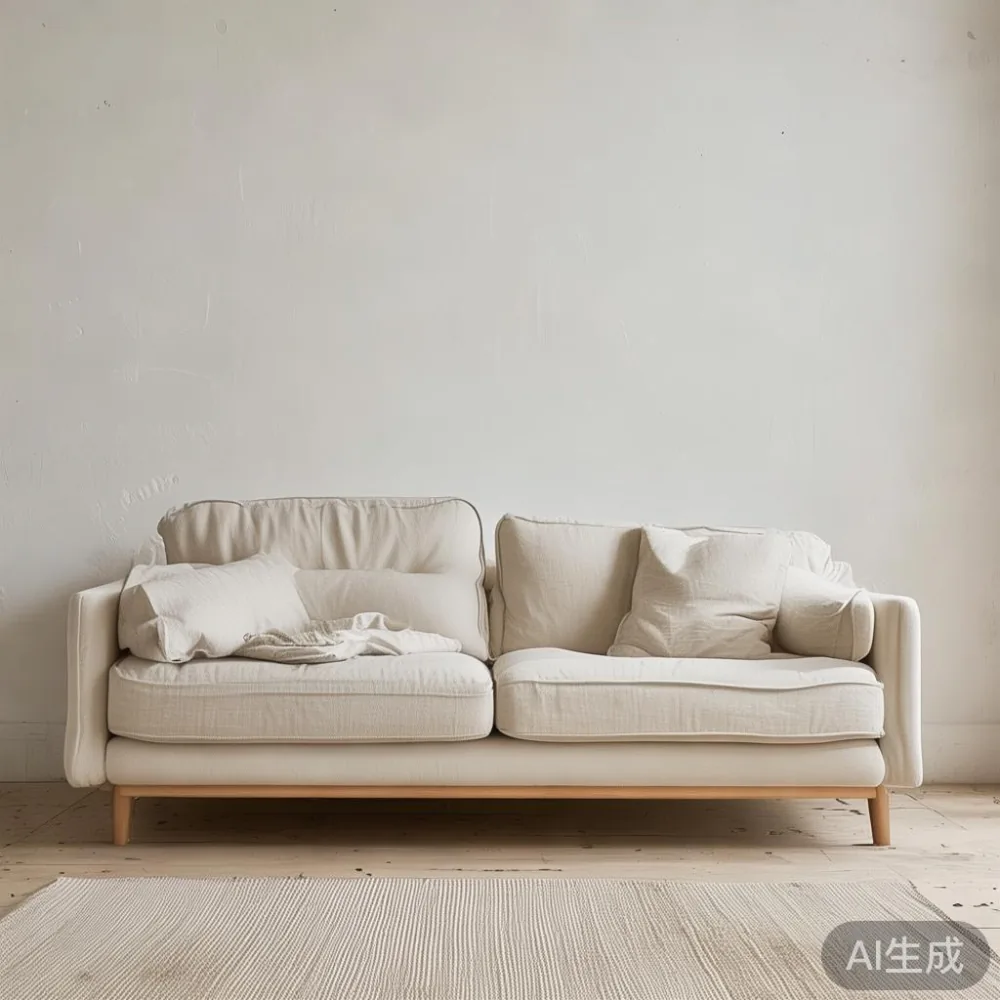
The 210 cm solid wood sofa is estimated at SGD 3,980, with SGD 230 for fabric renewal and SGD 180 for cushion or frame work over 60 months, for a total of SGD 4,390. The comparable veneer-frame sofa is SGD 2,880, with SGD 280 for fabric renewal and SGD 210 for frame or joint work, for SGD 3,370. The solid wood sofa carries a higher cost, but the saving relates to the internal structure rather than the visible upholstery.
| Item | Veneer purchase | Solid wood purchase | Veneer 5-year cost | Solid wood 5-year cost |
|---|---|---|---|---|
| 180 cm dining table | SGD 1,150 | SGD 2,350 | SGD 1,535 | SGD 2,705 |
| 160 cm bed frame | SGD 1,090 | SGD 1,680 | SGD 1,355 | SGD 1,890 |
| 90 cm wardrobe | SGD 890 | SGD 1,420 | SGD 1,010 | SGD 1,515 |
| 45 cm nightstand | SGD 280 | SGD 490 | SGD 355 | SGD 525 |
| 210 cm sofa | SGD 2,880 | SGD 3,980 | SGD 3,370 | SGD 4,390 |
Across the five products, the assumed combined 5-year cost is SGD 7,625 for veneer and SGD 11,025 for solid wood. The difference is SGD 3,400, or SGD 680 per year. That is the useful figure for a household budget, because it includes likely care rather than comparing only the receipt price.
Is solid wood cheaper to maintain in Singapore?
Not automatically. Humidity, sunlight and cleaning habits matter more than a universal rule. Singapore’s outdoor relative humidity often changes through the day, while air-conditioned interiors can become quite dry. Solid timber can move by roughly 2 mm to 4 mm across a 180 cm board as moisture changes. Quality furniture is designed to accommodate this movement with a stable frame and suitable joinery.
Last month I visited a Tampines HDB flat with my colleague to examine a solid wood dining table bought in 2021. The family had placed it beside a west-facing window. One side had faded more than the other, and two small scratches near a chair leg were easy to sand. A local repair and refinishing visit cost SGD 165; the table needed no structural replacement. A nearby veneer console had already swollen around 3 mm along one lower edge after a minor leak. Its replacement was assessed at SGD 420 because the damaged board could not be repaired cleanly.
This was one household, not a universal sample, but it illustrates the distinction. Solid wood often offers more forgiving repair options. Veneer can perform well when its substrate stays dry and its edges are protected. A low-cost maintenance plan for either material is a wipe with a damp cloth every 7 to 10 days, felt pads under all legs, and UV-filtering blinds.
For the dining table, budget about SGD 120 for veneer care and SGD 180 for solid wood care over 60 months. For the wardrobe, allow SGD 75 to SGD 120 for hinge adjustment and runner lubrication. Replace small drawer or door hardware every 4 to 5 years if a 5-year-old mechanism begins to loosen.
What about delivery, lift access and the hidden costs of sizing?
Delivery can change the cost comparison more than a minor finish difference. In Singapore, a standard HDB lift opening may measure about 90 cm to 100 cm wide and 200 cm to 210 cm high, though older blocks vary. Condo service lifts often provide around 110 cm to 140 cm of clear width. A packed dining table cannot be assumed to fit if its assembled width is 180 cm.
A 160 cm bed frame may need to enter diagonally through a 90 cm lift opening, while a 210 cm sofa may require its legs removed. Corridors and turning clearances need checking before a large model is ordered. Ask for packed dimensions in centimetres, the number of cartons, carton weights and whether the delivery team carries the item to the door or into the room.
Assume delivery within Singapore takes 7 to 14 days for in-stock scandinavian furniture. A remote surcharge or two-person carry service may add SGD 80 to SGD 220. A premium white-glove delivery with room placement can add SGD 250 to SGD 450. These charges apply to veneer and solid wood alike.
Assemble the wardrobe before deciding where it belongs. Its 90 cm width is manageable, but the fitted depth may be 58 cm to 60 cm, and the projecting door plus handle can require 64 cm of usable space. The 45 cm nightstand should have legs removable for transport. A 180 cm dining table often arrives as two 90 cm sections, each weighing 22 kg to 32 kg. This can protect the lift and make assembly more practical.
Which material offers better long-term value for HDB flats and condos?
For a compact HDB living room, a veneer sofa can free up SGD 1,020 over five years in the model above. That difference may fund better cushions, lighting or a stronger mattress. For a dining table that receives daily use, solid wood offers repairability and a reassuring sense of permanence. For a wardrobe fitted into a fixed alcove, veneer may reduce cost without compromising daily operation if the substrate and hardware are properly specified.
Consider the French light luxury style in a Tampines flat: curved profiles, a marble table and refined finishes can make veneer look intentional rather than compromised. The same applies to American light luxury, where generous upholstery and a solid wood sofa frame can suit a larger condo while a compact solid wood bed frame suits a bedroom with a 280 cm wall length.
Design planning matters. A useful comparison for living-room proportions is Post-modern for small living room, especially when a 210 cm sofa faces a 110 cm media unit and the main walkway is at least 80 cm. Another useful reference is Mid-century modern for apartment layouts, where tapered legs and a 160 cm bed frame can preserve visual space. The phrase European light luxury sofa vs Mid-century modern sofa is less useful than measuring the room, because both styles can demand similar footprints.
For material research, understanding how to choose Italian light luxury sofa requires attention to frame construction, foam density, seam construction and warranty terms, not merely the word “Italian.” A sofa labelled solid wood should identify the frame timber and whether solid wood is used for external parts, internal rails or both. Similarly, a marble table requires its top weight and base design checked against lift capacity and floor level.
Can veneer be repaired, and what should a warranty cover?
Veneer can be repaired when the core remains sound. Small edge chips may accept a matching veneer patch, while a lifted surface can sometimes be re-bonded. Deep moisture damage, delamination across a broad area or a broken substrate usually makes full replacement more economical. Solid wood can usually be sanded, filled and refinished, although severe cracking or joint movement may require specialist work.
Look for at least a 5-year structural warranty on the sofa and bed frame, and confirm whether the dining table, wardrobe and nightstand carry the same period. Structural cover is not the same as finish cover. Scratches, fading, water marks, chipped veneer and movement caused by improper moisture may be excluded.
MIDHILL states a 10-year structural warranty and lifetime refinishing for its qualifying solid wood furniture. That changes the 5-year calculation because expected refinishing can be treated as available rather than uncertain, although transport, assessment and any applicable GST may still apply. Its 14-day return policy gives households time to check dimensions and appearance, but returns can involve condition requirements and delivery charges.
Check the written terms before purchase. Record the furniture dimensions, timber or veneer specification, finish colour and serial details on the same day as delivery. Photograph 8 to 12 views, including corners and underside areas. For a 10-year structural claim, keep the invoice and maintenance history in one digital folder.
Is a marble table worth the cost compared with wood over 5 years?
A marble table sits outside the veneer-versus-timber calculation because it uses a different surface material, but it remains relevant to total living-room spending. A 100 cm square marble coffee table with a solid wood base may cost SGD 1,450 to SGD 2,600. A 180 cm solid wood dining table may cost SGD 2,350. The marble top can weigh 35 kg to 65 kg, so transport and handling need advance planning.
Over 60 months, marble may need specialist cleaning and occasional stone treatment. A practical allowance is SGD 150 to SGD 350, depending on sealant condition and the treatment used. It does not refinish like timber. A small chip may be filled by a stone worker, while a crack through the slab can make the table unsafe and expensive to replace.
For a family with children, a rounded edge and stable pedestal can reduce impact risk. For a high-rise condo, confirm floor loading requirements and whether the lift route can accommodate the packed weight. Visual preference still matters, but purchase decisions should include the 35 kg to 65 kg handling requirement and the SGD 150 to SGD 350 maintenance allowance.
How do I compare design styles without overpaying for the label?
Begin with measurements, then materials, then appearance. A 160 cm bed frame needs about 5 cm of extra width on each side for bedside access, while a 210 cm sofa may require a 240 cm to 260 cm wall. A dining table for six usually needs at least 75 cm of clearance behind each occupied chair. These dimensional checks prevent a visually suitable style from becoming an expensive fit problem.
Labels are useful only when they clarify the design language. MIDHILL French provincial sofa describes a particular visual direction, but the frame material, cushion density and seat depth determine daily comfort. Boho for small living room points toward softer forms and layered textures; a small sofa with loose cushions can work where a large sculptural version cannot. Post-modern for small living room can support a restrained layout with clean geometry and practical storage.
Allocate the budget around touchpoints. For a dining table, inspect the underside, extension hardware and joint stability. For a wardrobe, test every door and drawer. For a solid wood sofa, check the frame and cushion compression before delivery. For a marble table, inspect the slab in daylight. Product terms guide the search, but measurable construction details guide the purchase.
What is the most economical way to buy furniture for a Singapore home?
Mixing materials according to use gives a more controlled result. One workable 5-year plan combines a veneer 90 cm wardrobe at SGD 1,010, a solid wood 160 cm bed frame at SGD 1,890 and a veneer 180 cm dining table at SGD 1,535. The three items total SGD 4,435 over 60 months, compared with approximately SGD 6,110 if all three are solid wood. The saving of SGD 1,675 can be directed toward a better mattress or delivery service.
For a dining-heavy household, choose the solid wood 180 cm dining table at SGD 2,705 and a veneer nightstand at SGD 355. The same budget principle applies elsewhere: put solid timber where frequent contact and repairability matter, and use stable-core veneer where the piece has lighter duty, protected edges or constrained dimensions.
For a shared condo, measure the lift before paying for the wrong configuration. Request packed dimensions, choose an in-stock item with a 7-day delivery target when possible, and ask whether the quoted price includes GST. MIDHILL offers free shipping for orders above US$350, although international freight, duties and the exact SGD charged on local delivery should be confirmed for Singapore.
The 5-year numbers show a clear trade-off. Veneer usually lowers the starting cost and can keep the total around SGD 7,625 across the five examples. Solid wood raises the combined estimate to about SGD 11,025, but provides more repair options for heavily used pieces and supports refinishing over a long ownership period. For scandinavian furniture, the rational choice is not a blanket rule. It is a measured mix of timber construction, maintenance exposure, room dimensions and the amount of disruption each household can manage.