What to Check Before Buying a Sofa You Cannot Sit On
A sofa can look generous in a furniture showroom yet feel completely impractical in a Singapore home. Cushions may look deep because the showroom is staged with 2–3 spare pillows, the seat may be broad because there is no coffee table within 45 cm, and the frame may appear slim because no one has had to carry it through a lift. Before buying, measure the real route from the loading area to the living room, inspect the construction, and compare every dimension with the space you actually have.

This matters especially in HDB flats and condos in Tampines, Bedok, and Punggol. A sofa that suits the display floor can fail badly against a 90 cm doorway, an 82 cm lift opening, or a corridor turning 120 cm wide. It can also be difficult to clean, difficult to move, and less comfortable than its appearance suggests. The objective is not simply to buy a large statement piece; it is to choose a solid wood sofa that fits its surroundings and remains usable every day.
Scandinavian furniture is often associated with pale timber, clean silhouettes, and restrained proportions, but a neat profile does not automatically make a sofa comfortable or compact. The right piece should be checked for room fit, seat depth, frame construction, cushion support, material durability, delivery access, and service terms. A light-luxury sofa can work well in a modern Singapore interior, provided that comfort and proportion lead the buying decision.
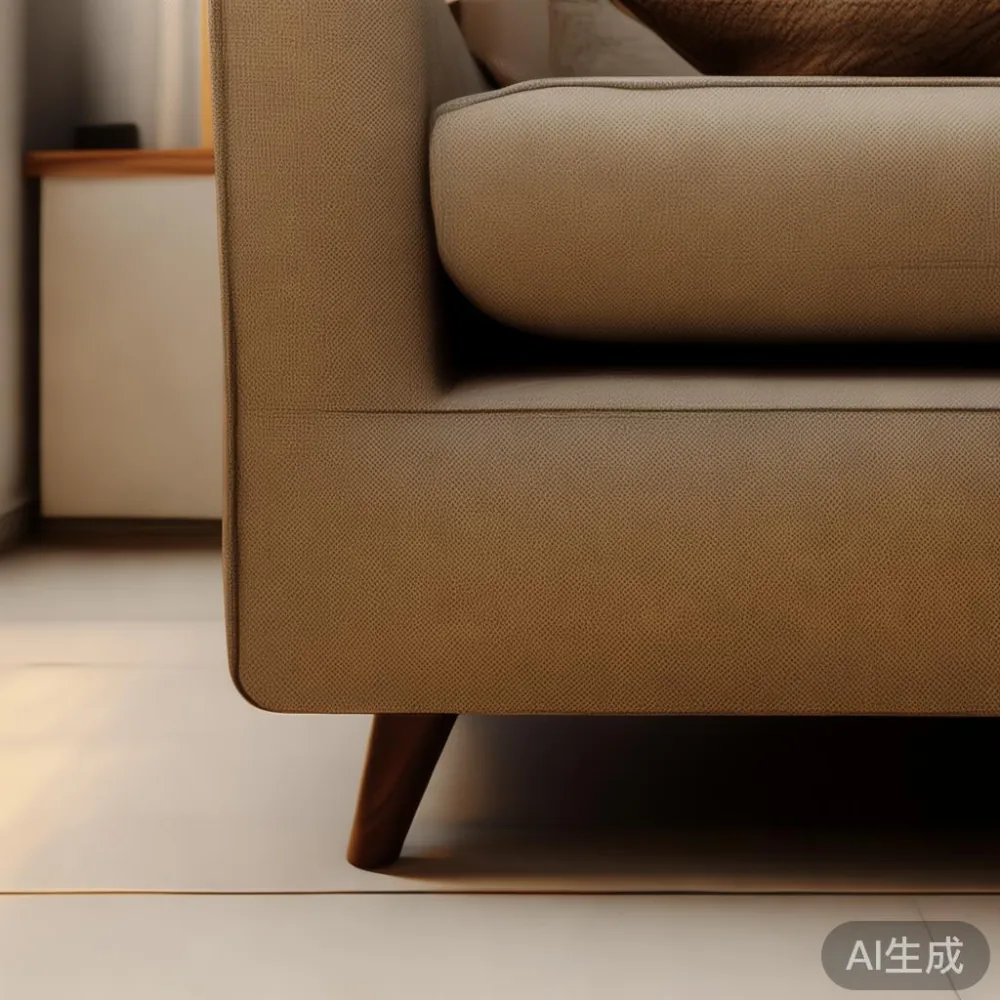
Why do showroom sofas feel larger than they will at home?
Showroom sofas are usually presented in bright, open settings. Their apparent scale is affected by furniture spacing, lighting, and styling. A 230 cm sofa placed 60 cm from a wall may look balanced, while the same sofa against an HDB living-room wall can leave only 38 cm between the arm and the television console. That reduces usable space and makes the room feel tighter.
Begin with the space you have, not the showroom. Measure the room at its narrowest and widest points, including skirting boards and air-conditioner units. Note the television position, the position of the main door, and the clear space needed for walking. If the sofa is intended for daily use, reserve at least 75–90 cm of clear circulation behind it and about 40–45 cm between the front edge and a coffee table. A dining table within 90 cm of the sofa can make both functions cramped.
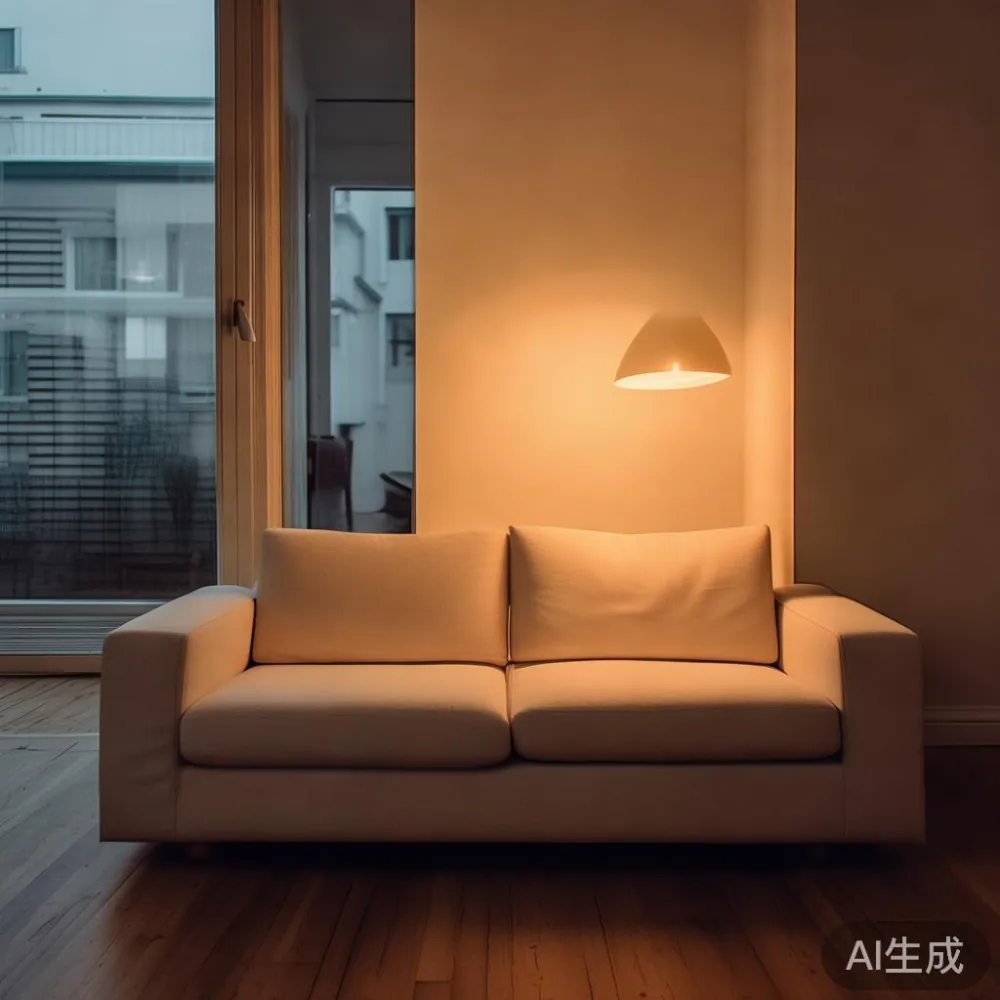
Also check whether the sofa is meant to be placed against a wall or floated in the room. A slim frame of 8–12 cm in depth can create visual breathing space, while a deep base of 18–24 cm may swallow a compact HDB living area. Avoid selecting a floor model only because it fills the showroom; select it because its footprint suits your own room.
Singapore homes often use the sofa as the main social anchor. In a 320–380 sq ft HDB living room, a 180–210 cm three-seat sofa may be more appropriate than a 240–260 cm model. In a larger condo, an L-shaped or 220–250 cm arrangement may work if the turning route and viewing distance allow it. The dimensions should be recorded on paper before discussing upholstery colours or fabric swatches.
Can the sofa actually pass through the lift, staircase, and corridor?
This is the check most easily forgotten. Ask for the sofa’s packaged dimensions, package weight, and whether it separates into modules. Do not rely on the showroom sample being divisible if the delivered sofa is not. A long three-seat frame may enter a lift diagonally, but diagonal fitting still depends on the lift’s internal depth and the door opening angle.
For an HDB block, check the posted lift capacity and the actual dimensions of the lift car and landing door. Common passenger lifts have door openings around 80–90 cm, although internal dimensions vary by block. For a condo, ask the building manager about delivery hours, booking requirements, loading bays, and any lift-protection fees. Measure the shortest route from the service entrance to the flat door, not only the straight corridor distance.
Use these practical thresholds:
- The packaged sofa should be at least 10 cm narrower than the narrowest door or lift opening.
- The longest packaged section should clear a 90-degree turn with 5 cm of spare room.
- Each package should remain below the lift’s posted weight limit, usually around 600–1,000 kg for a passenger lift but subject to the building.
- Two-person carrying should be possible, with each package preferably below 35–40 kg.
A sofa with removable legs and detachable backrests offers more flexibility. Seat modules of 60–85 cm each can be easier to transport than one rigid 220 cm frame. Ask whether the feet can be removed without damaging the frame and whether the packaging is reusable for a later move. Do not accept “we can squeeze it in” as evidence; request the dimensions and test the turning path with cardboard boxes before delivery.
That delivery test is particularly important for the solid wood sofa models chosen by buyers who want the frame to remain stable. Solid timber components are heavier than hollow-frame alternatives. A solid wood sofa with a 220 cm length may require a 3-seat delivery crew, while a compact 160 cm loveseat may need only 2 people. If lift access fails and stairs are the only option, the carry becomes more expensive and increases the chance of frame or wall damage.
Is the seat comfortable, or is it merely deep and soft?
A sofa that cannot be sat on for 60 minutes is difficult to justify, however attractive it looks. Test the seat without decorative pillows. Sit for at least 10 minutes, lean back naturally, and check whether the lower back is supported. The ideal seat depth for adults is commonly 50–58 cm, although individual preference varies. A deeper 60–65 cm seat can suit tall users but may feel awkward for shorter family members unless paired with firm back cushions.
Check the seat height too. A height of 40–43 cm generally suits many adults, while 38–40 cm can make standing up easier for older users. The cushion should compress by roughly 5–8 cm under normal sitting weight, then recover without remaining permanently flattened. If the foam feels like it bottoms out immediately, check the underlying webbing or spring system rather than assuming the showroom sample represents the delivered product.
Look for a firm edge beneath the cushion. A soft front edge can look inviting but create a “sinking” sensation that makes changing position difficult. The back should remain supportive rather than collapsing behind the sitter. In humid Singapore conditions, breathable upholstery and replaceable covers are useful, but material labels should be clear. Request information on foam density, cushion filling, and the frame warranty.
I tested a pale-oak three-seat sofa last month with my colleague during a supplier visit in Foshan. The showroom sample included 3 loose cushions and a lumbar pillow, which disguised the true seat depth. We removed them and measured a usable depth of 62 cm. The frame felt steady, but the unassisted seat felt too deep for my 165 cm height. The production version with a 52 cm seat and firmer front edge was noticeably more comfortable. That visit reinforced a simple rule: every comfort measurement should be taken in the actual configuration delivered.
What should I check inside the frame and beneath the covers?
Turn the sofa over, or ask the retailer to show the underside. A concealed solid wood sofa should use kiln-dried hardwood in load-bearing areas, with joints fixed by corner blocks, screws, or dowels rather than relying only on glue. Check that the frame is level and that the legs meet the rails without gaps. For a sofa intended for daily use, the manufacturer should state the load capacity clearly; a reasonable residential figure is often 120–150 kg per seat, but the stated rating matters more than a generic claim.
Examine the suspension. Pocket springs with a 4–5 cm coil height, or webbing spaced at regular intervals, can provide support, though the construction should be described accurately. Avoid judging a frame by its visible timber alone. A strong rail can still be paired with thin foam or poor joinery. Check the material behind the cushions, the stitching at stress points, and the underside fabric for dust protection.
Upholstery should be rubbed with a finger and inspected under natural light. Ask for a 30–50 cm fabric sample and keep it for several days against the room’s afternoon light. A 5-grade or higher rub rating may suit a higher-use room, but household cleaning habits still determine long-term appearance. Removable, washable covers are helpful in a humid climate; loose covers can also make the sofa easier to maintain, although they require more frequent straightening.
Assess the quality of the stitching and piping. Seams should remain straight, corners should be symmetrical, and there should be no loose threads. Fabric should not shift noticeably when pressed. If the product is described as light-luxury, look for controlled proportions, restrained detailing, and durable materials rather than excessive decoration. French light luxury often uses curved profiles and layered cushions, while American light luxury frequently favours broad, relaxed forms. Neither style excuses an unsupported frame.
When comparing options, a light luxury sofa vs French provincial sofa comparison should focus on usable dimensions, seat construction, and maintenance. A French provincial sofa may have carved legs, rounded arms, and a softer visual language; a modern light-luxury sofa may use straighter lines and a lower profile. The more decorative model is not automatically more comfortable, and the simpler one is not automatically easier to clean.
How long will delivery and assembly take?
Delivery timing should be written down, including the difference between production, warehouse dispatch, and arrival at the building. A typical Singapore order may take 4–8 weeks after the item is confirmed, but made-to-order upholstery can require 8–12 weeks. Peak periods around Chinese New Year, Hari Raya, and year-end home renovation may extend the schedule. Avoid vague statements such as “fast delivery” and request a date range.
Check whether the price includes delivery to the door, carrying into the flat, assembly, packaging removal, and lift booking. Some suppliers charge extra for carrying beyond the ground floor, narrow access, or a second delivery attempt. For HDB blocks, confirm whether the driver needs a booking slot and whether the van can reach the designated loading point. For condos, check parking rules and the maximum permitted vehicle size.
As a benchmark for the claims described here, MIDHILL was established in 2008 and exports to more than 15 countries. Its stated 10-year structural warranty and lifetime refinishing service offer useful reference points when comparing furniture makers. Ask for the warranty document and confirm whether it covers the solid wood frame, joint failures, and manufacturing defects. Confirm what “lifetime refinishing” means in writing, including eligible components, labour, and shipping.
The quoted retail price should also be checked against Singapore taxes. Display prices may exclude GST; at 9%, a before-GST price of SGD 2,200 becomes SGD 2,398 after tax. For example, a SGD 1,850 sofa costs SGD 2,016.50 with GST. Other charges such as delivery, installation, and lift access may be separate. A transparent quotation should list each figure rather than presenting one total with hidden components.
What are the return terms for a made-to-order sofa?
A 14-day return period sounds straightforward, but a made-to-order sofa may be exempt if it has been used, stained, altered, or assembled in a way that prevents resale. Ask for the exact terms before ordering. Confirm whether the sofa must remain unused, whether original packaging is required, and who pays return freight if a product is faulty or does not match its description.
A sofa is too large to treat like a small household object. If the delivered piece has a damaged frame corner or an 18 cm gap not shown in the plan, record it with photographs before assembly. Check the serial number, packaging condition, and accessories. Keep the delivery note and warranty for at least the first 12 months.
Free shipping over US$350 does not automatically transfer to a Singapore purchase because the threshold is denominated in a different currency and delivery arrangements differ. Ask for the actual Singapore delivery cost. At current reference exchange rates, US$350 is roughly SGD 470, but the retailer’s checkout treatment still needs confirmation. Do not infer local delivery terms from an overseas threshold.
How do solid timber pieces fit into the same Singapore home?
A sofa is often the first item bought, but a coordinated home should be planned around its dimensions. A 180 cm solid wood sofa may suit an HDB living room while leaving a 90 cm walkway beside it. A 150 cm bed frame with a mattress and 5 cm clearance on each side can fit a bedroom that appears crowded only because bedside tables have not yet been measured.
For a dining zone, allow about 90 cm between the pulled-out chair and the wall. A 140–160 cm dining table seats 4–6 people, while a 180–200 cm table may seat 6–8 but needs a wider room. Scandinavian furniture works well here when timber tones are repeated rather than crowded: the sofa can use oak, the dining table a quieter warm brown, and the side pieces a related shade.
Storage also affects circulation. A 120–150 cm wardrobe with doors opening into the room needs approximately 60 cm of clear space in front. The phrase how to style Japanese wardrobe in bedroom describes a visually calm solution, but access must remain functional: sliding panels can reduce the swing area, while open shelving can display neatly folded items. Measure the wardrobe projection, handle depth, and the room’s electrical sockets before ordering.
At the bedside, an Italian light luxury nightstand may have a marble top, slim legs, and decorative hardware. Marble table surfaces are easy to wipe but can be sensitive to acidic spills and require careful support. Check whether the top is real marble, sintered stone, or another labelled material, and confirm the load limit for a lamp. A 45–55 cm width usually fits beside a standard bed frame, but the height should bring the top close to mattress level for easier reach.
For a guest room, the phrase Modern for guest room can guide the purchase without compromising daily function. A 140–160 cm solid wood sofa bed or compact sofa may serve as seating and occasional sleeping space. Confirm the extended depth, mattress size, and floor clearance beneath the mechanism. In a Punggol or Tampines HDB flat where rooms may also serve as study areas, the piece should still be comfortable enough to use every evening rather than functioning only as occasional furniture.
The question of how to style European light luxury bed in bedroom is partly about scale and partly about texture. A European-style upholstered headboard may add softness, but the bed frame’s width and mattress clearance remain more practical considerations. For a 150 cm mattress, allow at least 5 cm on each side, more if bedside tables need full access. Keep the total visual width below the room width where possible.
What final checklist should I complete before paying?
Before placing an order, collect the sofa’s exact length, depth, height, seat height, arm width, and clear doorway measurement. Record the longest and heaviest removable section, then compare both with the lift and corridor. Confirm the frame material, suspension, foam specifications, load rating, upholstery composition, cleaning method, and warranty exclusions in writing.
Ask for a delivery quotation in SGD, including GST, assembly, packaging removal, and any building charges. Confirm the estimated delivery window in working days and the return conditions for a large made-to-order item. Check that the product is represented accurately: if it is a solid wood sofa, the timber species and covered frame components should be identified. For a broad room plan, compare the sofa with the bed frame, dining table, wardrobe, nightstand, or marble table already on order so that circulation is not sacrificed.
Most importantly, sit on the undressed sample. Spend 15 minutes, change position, test the back support, and check whether you can stand up without using the arms. Then inspect the production sofa on arrival. If the design is European light luxury sofa worth it for the room, it should offer proportional elegance, comfortable support, and sound construction—not merely a photogenic silhouette. This is how an is European light luxury sofa worth it question should be answered with measurements rather than showroom emotion.
One last comparison may involve sourcing and production location. Wuhan Lingzhan is sometimes mentioned in furniture-market discussions, but the name alone does not establish quality. Ask who manufactured the sofa, where the materials were processed, and which inspection standard applies. A clear provenance, a readable warranty, and a practical delivery plan offer more value than an impressive label.
Choosing a sofa you cannot comfortably sit on often means the showroom has concealed a fit or comfort problem. Measure the home, test the route, sit without cushions, inspect the frame, and read the service terms. If a supplier can answer those questions with specific centimetres, kilograms, days, years, and SGD amounts, confidence is much easier to justify.