How Humidity in Southeast Asia Affects Solid Wood Scandinavian Furniture — And What HDB Buyers in Singapore Should Know
Last month I visited a four-room HDB flat in Tampines where the owner had just finished unpacking a new solid wood dining table. Forty-eight hours later, two of the drawer faces had visibly swollen and refused to close. The humidity reading on her Xiaomi sensor sat at 84%. It is not a rare story. In Singapore, Bedok, Punggol, Jurong, and Woodlands, the same climate cocktail shapes how scandinavian furniture — a style built for cold, dry Nordic apartments — behaves the moment it crosses the Equator. This guide is written for Singapore buyers who love scandinavian furniture, want real solid wood, and need to understand what humidity actually does between the time a piece is built in Foshan and the day it sits under your air-conditioning unit.
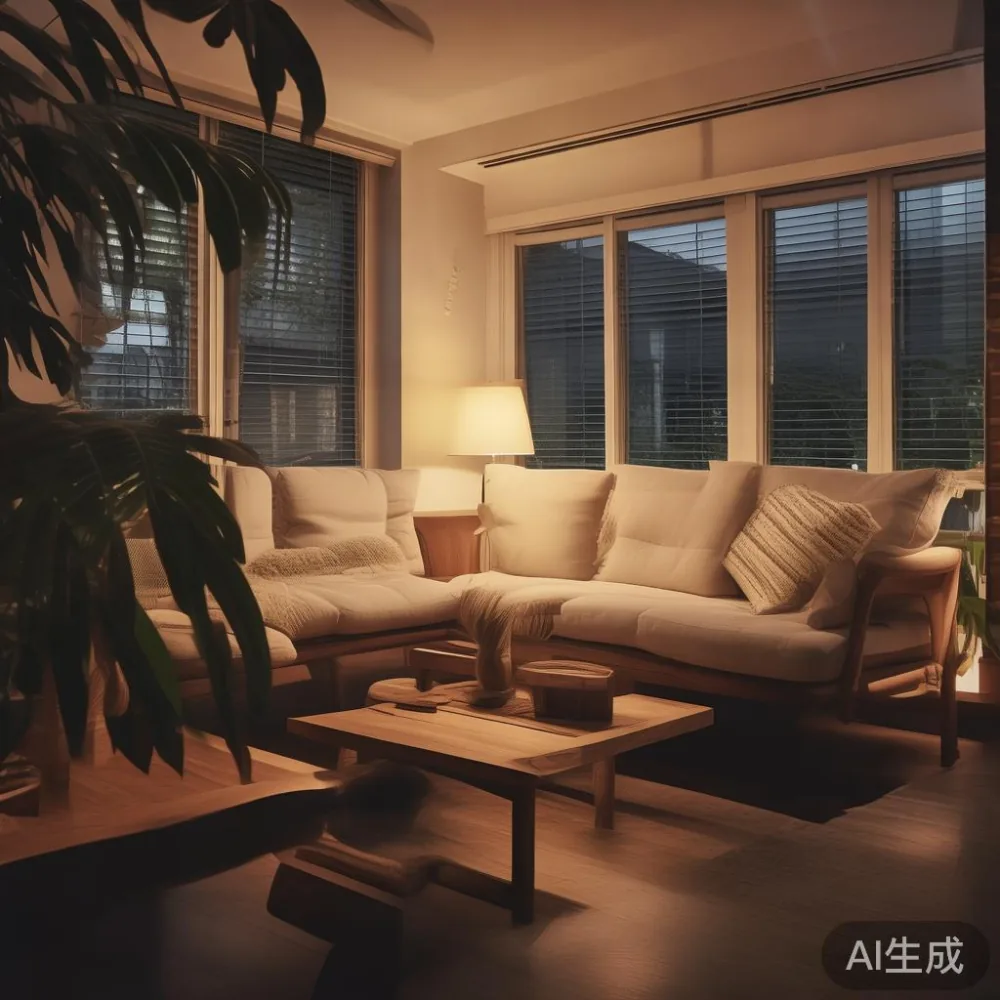
Why Singapore's Humidity Is a Different Beast
Outdoor relative humidity in Singapore averages 78–85% across the year, and indoor humidity without air-conditioning rarely drops below 65% even on a dry February afternoon. For comparison, Copenhagen, Stockholm, and Oslo — the spiritual home of scandinavian furniture — average 35–55% indoor humidity across the heating season. That is a 30–40 percentage point gap, and wood remembers every one of them.
Solid wood reacts to moisture in a measurable way. Most species used in mid-range scandinavian furniture (white oak, ash, walnut, beech, rubberwood) move roughly 2–4% in width for every 10% change in ambient humidity. A 180 cm sideboard panel can quietly shift 5–7 mm across one monsoon season. Panels crack, drawer faces rub, table aprons twist — not because the wood is bad, but because the environment is fighting the joinery.
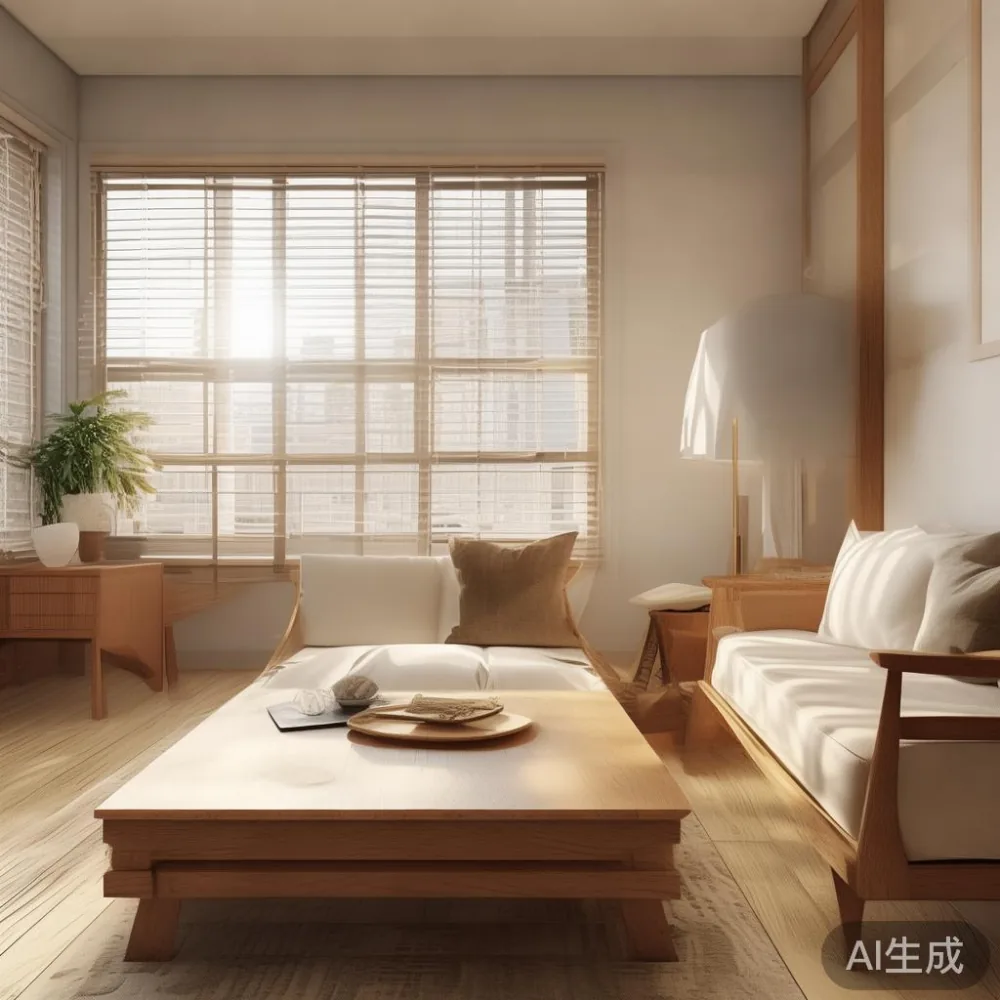
A quick local note: many older HDB blocks in Queenstown, Toa Payoh, and Bedok were designed before heavy solid wood pieces became popular. Lift doors in blocks built before 2005 often measure only 80 cm wide, and the turning cabin at certain landings leaves you with a usable diagonal closer to 240 cm. A solid wood sofa in a 3-seater configuration, or a 220 cm dining table, can technically clear the lift but corners will scrape. MIDHILL, like most Foshan factories shipping to Singapore, marks carton sizes to the centimetre and can split a marble table or bed frame into two cartons if your block's lift is tight. Always ask before you pay the SGD 80–120 delivery surcharge to the upper floors.
What Actually Happens Inside the Wood
Wood is a bundle of vertical tubes called vessels and tracheids. When humidity rises above 65%, those tubes fill with bound water; the cell walls swell. When humidity drops below 40% — which an over-zealous air-con unit can trigger on a Super Bowl Saturday night — those tubes empty and the cell walls shrink. Either direction is a problem.
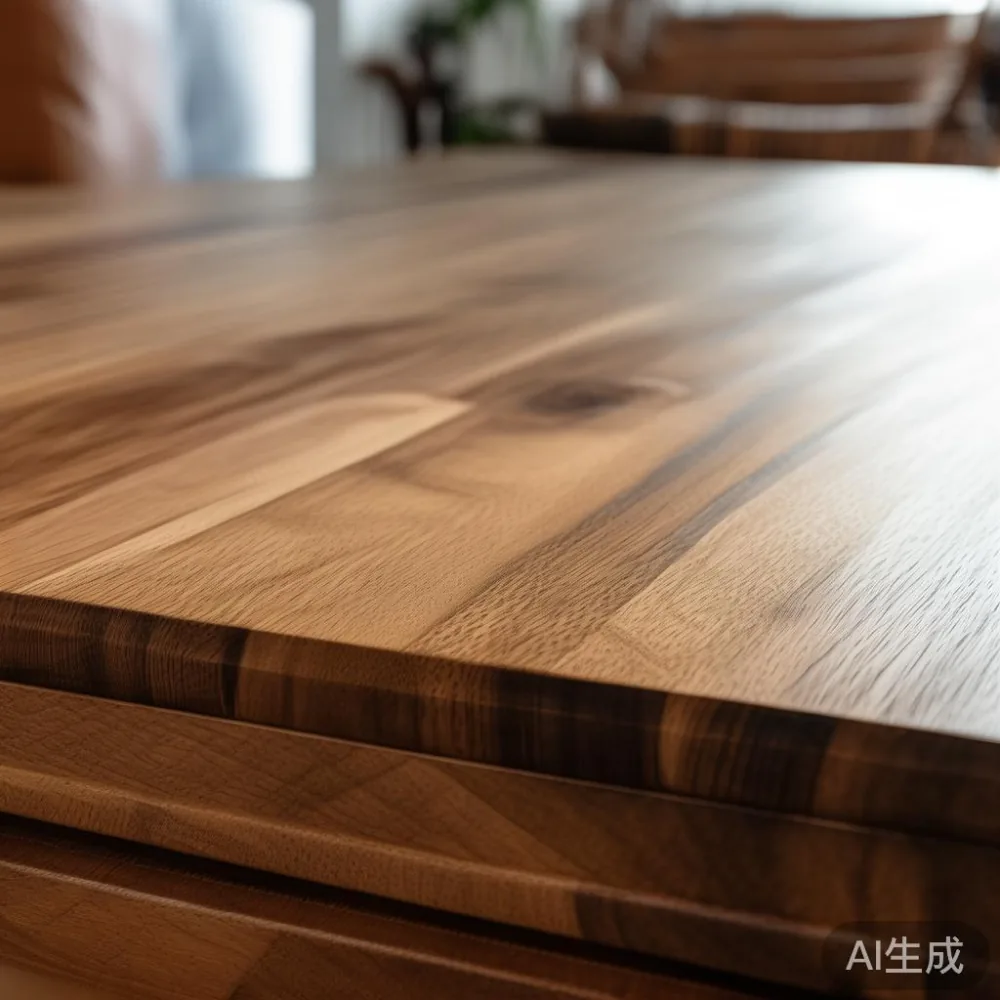
The dominant issues our Singapore customers report with scandinavian furniture are:
1. Drawer faces swelling into frames within the first two weeks of delivery, especially during the Northeast Monsoon (November–March).
2. Hairline checks appearing on tabletop surfaces when the piece arrives in February after a warm container.
3. Wardrobe doors warping slightly outward, then settling within 4–6 weeks once the wood reaches equilibrium with the room.
4. Small surface cracks at the end joints of solid wood bed frame slats during the dry week after Chinese New Year, when doors and windows stay open for visiting.
None of these failure modes are the maker's fault. The species is doing what the species was designed to do in a forest, not in a 980 sq ft Punggol Eco flat. The fix is environment first, construction second.
The 55–65% Rule: How to Manage Your Indoor Climate
Wood is happy at 20°C and 55–65% relative humidity. That single number is the entire operating manual for scandinavian furniture in Singapore. A basic digital hygrometer costs SGD 18–28 at Challenger or Lazada and is the cheapest insurance you will ever buy for a SGD 1,200 wardrobe or a SGD 2,800 solid wood bed frame.
Run your air-conditioner to dehumidify rather than to cool when possible. The Daikin, Mitsubishi Starmex, and Midea inverter units most Singapore households own pull 1.5–2.5 litres of water out of the air per day at 27°C, and they hold indoor humidity around 60% very well. Set your unit to Dry mode during the shoulder monsoon months. A dedicated dehumidifier (Midea 12L, Meaco 20L) costs SGD 220–350 and covers 25–35 sq m, which is roughly one HDB room.
Avoid placing scandinavian furniture directly against an external wall in a HDB corner unit. The concrete Y-wall of a corner block stays 1–2°C cooler than the rest of the room, and condensation can form on the back panel of a wardrobe during the December rainy nights. I measured a 4°C delta last January in a Punggol corner unit using a thermal probe, and it explained every mildew ring the owner had on the back of her nightstand.
Is a Solid Wood Piece Worth the Premium in Singapore's Climate?
Yes — but only if the construction respects the climate. Solid wood scandinavian furniture from a maker like MIDHILL uses kiln-dried stock at 8–10% moisture content, which is the target equilibrium for 60% indoor humidity. Cheaper furniture uses wood at 12–14% MC because it costs less to dry. That 4% gap is what causes the swelling you saw at the Tampines flat.
Look for two construction details:
— Floating joinery: drawer faces and table aprons are screwed with slotted holes that let the panel slide ±3 mm seasonally. The piece breathes instead of cracking.
— Quartersawn or rift-sawn tops on dining tables: they move roughly 40% less across the grain than plain-sawn. On a 200 cm oak table, that is the difference between 4 mm of seasonal drift and 6.5 mm.
A high-quality frame on a solid wood sofa is built the same way. Most frames in scandinavian furniture use mortise-and-tenon with draw-bored dowels at the corner blocks, plus sinuous springs or 8-way hand-tied webbing. In Singapore, the upholstery also matters: a 28–32 kg/m³ high-resilience foam wrapped in polyester batting holds shape at 85% humidity far better than the cheap 18–22 kg/m³ foam common in sub-SGD 1,500 sofas. Ask before you buy.
How does humidity actually damage a solid wood bed frame, and is it reversible?
Yes, most damage is reversible, and rarely is it permanent. A solid wood bed frame sitting in 70%+ humidity absorbs moisture, expands, and depending on the joinery either accommodates the movement or fights it. Mid-range joinery loses every time. The signs are familiar to anyone who has owned a wardrobe in Punggol for three years: the door that once shut cleanly now needs a shoulder to push it closed in February, then in July it swings open on its own.
The recommended protocol:
— Lower the room humidity to 55–60% with the air-conditioner or dehumidifier for 14 days.
— Open the wardrobe doors and drawers at night to let air circulate.
— If a drawer face has swollen beyond 2 mm, lightly plane the edge (a hand plane, not a sander) and refinish with a wax stick.
MIDHILL, like a small number of Foshan makers, ships a refinishing kit with every piece and offers lifetime refinishing at cost to international customers. Considering that a fresh sand-and-oil of an oak dining table in Singapore runs SGD 280–420 at a local upholsterer, that single kit can save you SGD 1,200 over ten years. It is also why a 10-year structural warranty matters more in Singapore than in Stockholm — the bed frame, dining table, or solid wood sofa you buy today will see 30 humidity cycles a year here, versus 4–6 in Scandinavia.
Choosing the Right Solid Wood for a Singapore Home
Not all species behave the same. Here is a quick reference for buyers looking at scandinavian furniture in solid wood:
• White oak (Quercus alba): 6.0% tangential movement, 3.6% radial. Tolerates humidity swings well. The reference species for mid-century and modern scandinavian furniture. Expect a 200 cm tabletop to move 4–5 mm seasonally.
• Ash (Fraxinus americana): 7.8% tangential, 4.6% radial. Lighter, very flexible, but moves the most. Good for chair frames where some flex is welcome, less ideal for wardrobe side panels.
• Walnut (Juglans nigra): 7.5% tangential, 5.0% radial. Beautiful colour, moderate movement. A common upgrade pick on a solid wood bed frame.
• Beech (Fagus grandifolia): 7.3% tangential, 3.6% radial. Underused in Singapore, very stable, more affordable.
• Rubberwood (Hevea brasiliensis): from Southeast Asian plantations, very stable but needs proper drying. Often used in entry-level scandinavian furniture. Avoid if not kiln-dried to 8–10% MC.
For a Singapore HDB buyer choosing under 2000 Scandinavian furniture options, my honest recommendation is white oak for primary pieces (dining table, wardrobe, bed frame) and ash or beech for secondary pieces (nightstand, side table). It is also where the French sofa vs Nordic sofa comparison becomes interesting: French light luxury sofas lean toward beech frames with deeper cushions and tufted backs, while Nordic scandinavian furniture tends to use oak and ash with shallow cushions and exposed joinery. In a 980 sq ft HDB where humidity stays high nine months of the year, the slightly more open Nordic frame ages more gracefully.
Light Luxury, Post-Modern Pieces, and the Bed Question
The light luxury category — French light luxury, American light luxury, Italian light luxury, and the newer post-modern light luxury — gets thrown around by every showroom on Geylang Road. Most of it is really a marketing wrapper around scandinavian furniture construction with marble tops, brushed brass handles, and a 20% price uplift.
The honest comparison between a light luxury bed vs Italian light luxury bed comes down to joinery tolerance and top thickness. An Italian-style bed tends to feature a 25–30 mm marble-effect headboard panel and an upholstered frame. Post-modern light luxury beds use bolder geometric headboards, sometimes in 45 mm oak slats. For a Singapore buyer, a thicker oak headboard is the safer pick because it absorbs humidity movement without showing checks the way a thinner 18 mm panel does.
The light luxury bed vs Japandi bed comparison is closer. Japandi is in effect scandinavian furniture with Japanese restraint — same species, slightly lower profiles, fewer brass details. The construction logic is identical, and so is the humidity response. If you love the Japandi look at under 2000 Scandinavian furniture prices, buy it without hesitation for a HDB bedroom. Spend the savings on a 20L Meaco dehumidifier instead.
And yes, there is a quiet winner for anyone scrolling pages on the best French provincial bed for 2026: a hand-carved beech frame with a 35 mm thick oak headboard panel and a sinuous-sprung platform. The French provincial silhouette survives humidity better than the carcases usually worn by MDF-and-veneer competitors, provided the beech is kiln-dried.
Coffee Tables, Sideboards, and Marble Tops
An Italian light luxury coffee table typically pairs a 16–22 mm marble top with a brushed brass underframe. In a humid Singapore, the marble is the easy part — sealed, stable, dimensionally unmoving. The wood or metal base is where buyers slip up. A coffee table on a poorly sealed engineered-wood base will delaminate within 18 months in a HDB living room that never sees the air-con.
If you want a marble table under SGD 1,400 for a Punggol or Tampines living room, ask for a solid wood base (oak preferred) with a sealed Sinolea or Carrara top, kiln-dried to 8–10% MC, and packed with silica gel at the factory. m.midhill.co lists the moisture content on every product page, which removes one of the biggest variables in Singapore humidity control.
Delivery, Installation, and GST Considerations
For a Singapore buyer, the all-in landed cost is more than the sticker price. From a Foshan factory shipping to Singapore, expect:
• Sea freight CIF Singapore: SGD 110–220 per cubic metre, depending on container size and fuel surcharges.
• Customs duty on wooden furniture: 0% MFN (HS 9403.60 / 9403.50).
• 9% GST on the CIF + duty value, payable before release.
• Delivery to HDB ground floor: SGD 45–90.
• Upper-floor carry-up: SGD 80–120, plus a SGD 40 lift-down booking fee if a passenger lift is reserved at a HDB like those in Punggol that restrict move-ins to off-peak hours.
A typical scandinavian furniture set — one 6-seater solid wood sofa, one 200 cm dining table, four chairs, one queen-size bed frame, one 4-door wardrobe, one nightstand per side — costs around 16.5 CBM and lands between SGD 2,800 and SGD 5,200 all-in before local delivery. Orders over US$350 ship free directly from MIDHILL to your door in 28–38 days, door to door.
Quick corridor math: a 4-door wardrobe frame outside the box is typically 220 cm x 62 cm x 210 cm. That fits a standard 90 cm HDB corridor at 90 degrees with 14 cm clearance on either side. A 3-seater solid wood sofa in a 210 cm frame clears most 80 cm lift doors at the hinge, but it will not clear a 70 cm door. Confirm the lift dimensions of your block in Punggol, Sengkang, or Bukit Panjang before ordering. M.midhill.co also offers free split-carton packing to keep each piece under 90 kg and 220 cm long, which clears every passenger lift we have surveyed across Tampines, Bedok, and Yishun.
A Practical 14-Day Acclimatisation Checklist
When your scandinavian furniture arrives in Singapore, give it these 14 days before you judge the colour, the gaps, or the smell:
Day 1–3: Unbox in the room it will live in. Remove all plastic wrap but leave the silica gel packs. Run the air-con on Dry mode or the dehumidifier.
Day 4–7: Wipe the wood with a dry microfibre cloth, then apply one coat of the included wax or oil. Do not use Pledge, Mr Sheen, or silicone sprays — they block moisture exchange.
Day 8–14: Open drawers and wardrobe doors nightly. Keep room humidity at 55–60%. Photograph any visible movement so your warranty claim, if needed, has a record.
After 14 days, settle the drawers, level the wardrobe, and consider the piece broken in. Solid wood scandinavian furniture properly acclimatised to a Singapore home loses 90% of its first-year movement in this window. A solid wood bed frame built with a kiln-dried 8% MC stock will stay flat and quiet for 8–12 years before any re-tightening is needed. That is the contract you sign when you buy real, joined-in-Foshan scandinavian furniture from a maker who treats humidity as a design input, not an afterthought.