Singapore HDBs: 5-Year Cost Comparison - Veneer vs. Solid Wood
I still remember the Saturday morning last month when I visited a friend's new BTO flat in Punggol. She had just received her dining table and two nightstands from an online furniture sale. The packaging looked premium, the showroom photos promised oak and walnut, and the total — including delivery to her 12th-storey unit — came to S$1,140. Three months later, two corners of the dining table had already lifted at the edges, exposing a pale grey substrate under a paper-thin oak print. Her experience pushed me to write this article: a frank, number-driven comparison between veneer and solid wood over a realistic five-year period, calibrated to the way Singapore homes actually work.
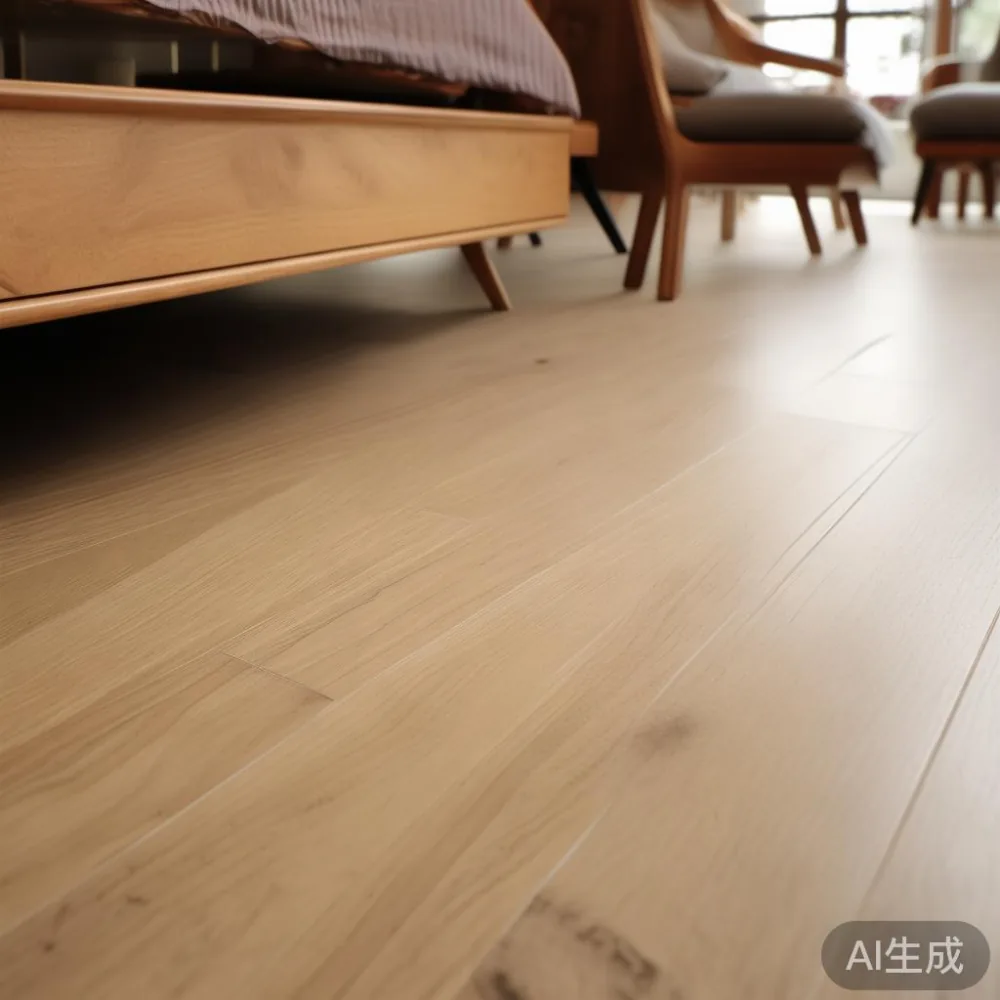
The Singapore context most cost comparisons ignore
Furniture economics here are shaped by a few non-negotiable physical realities. A standard 4-room HDB lift opening measures roughly 1.6 m wide × 2.0 m tall × 2.1 m deep, with an inner cabin close to 1.4 m × 1.8 m × 1.9 m. Corridor widths between HDB blocks typically run 1.2 m to 1.5 m. Front doors on newer BTOs are roughly 0.92 m wide. A 2.4 m wardrobe, fully assembled, simply will not fit through that envelope — and that fact alone changes the lifetime-cost arithmetic. Flat-pack veneer pieces ship in cartons between 30 kg and 80 kg; a fully built solid wood dining table can weigh 70 kg to 110 kg and often has to be hand-bombed up service corridors because the lift is too small for its disassembled crate.
Then there is the climate. Indoor humidity in Singapore sits at 65–80% year-round, with daily swings of 10–15 percentage points when the aircon cycles. Aircon rooms hold closer to 55–65%. That delta matters for any pressed-wood product with a melamine or paper overlay, because the substrate expands and contracts faster than the surface foil on top. Add the 9% GST that applies to every furniture purchase, the roughly S$80–S$180 delivery surcharge for upper-floor units in Tampines and Bedok where service lift access is restricted, and the S$40–S$90 disposal charge when a piece fails prematurely — and the headline price of any piece, veneer or solid, stops being the real price.
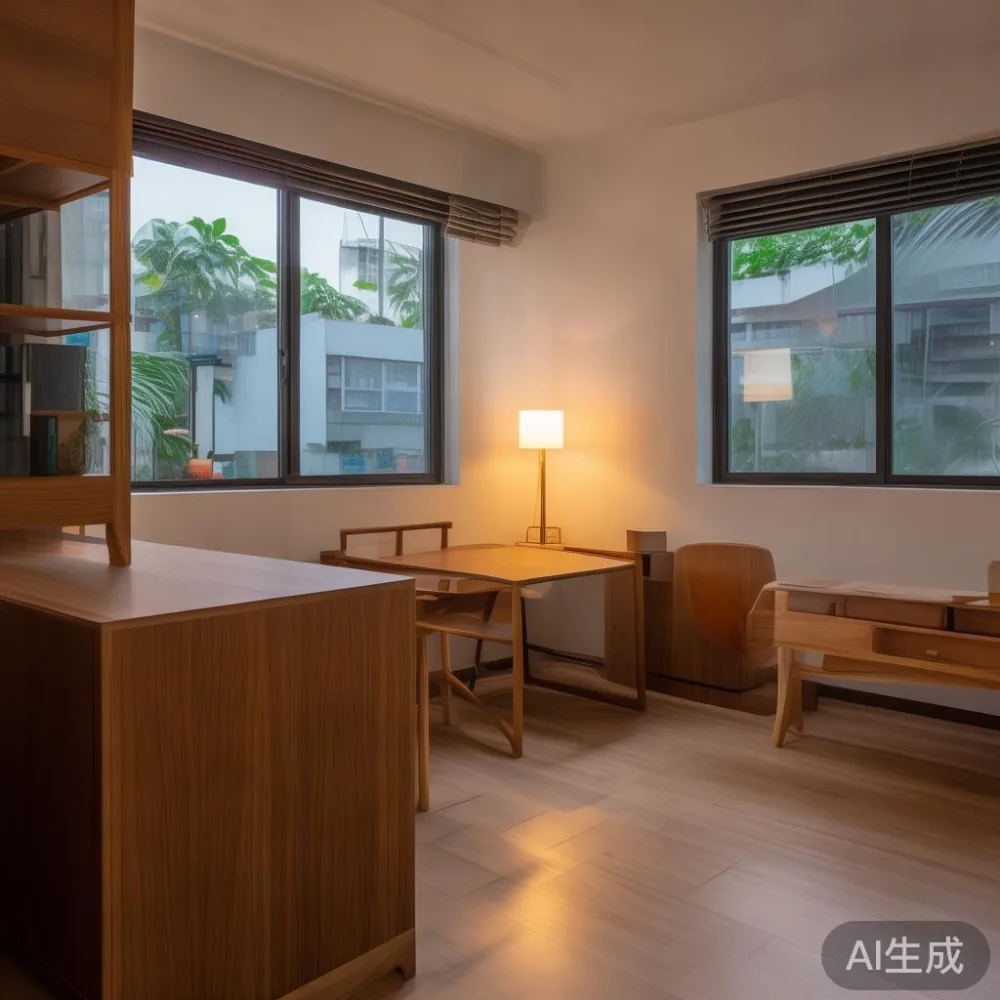
The 5-year numbers, side by side
Let me put real figures next to each other for a comparable set-up: one 1.8 m dining table, one 1.6 m × 2.0 m wardrobe, one queen bed frame, one three-seat solid wood sofa shell, and two nightstands. Prices are mid-2025 retail, post-GST, delivered to a Singapore address.
The veneer route, bought as flat-pack from a large regional chain, lands at roughly S$3,800 for the full set. Add around S$240 in delivery and corridor-handling surcharges, S$120 in basic assembly labour if you do not want to wrestle with an Allen key for six hours, and you are at S$4,160. Year two, expect a service call (S$80–S$160) when the wardrobe door starts to sag because the cam locks have loosened in the humidity. Year three, replace one nightstand drawer base that has delaminated: S$180 including disposal of the failed panel. Year four, the dining table surface has clouded where hot plates sat; light sanding and a tinted wax kit costs about S$30, or you accept the patch. Total: S$6,030 across five years if you keep repairing, or roughly S$4,800 if you write off and re-cycle at year four.
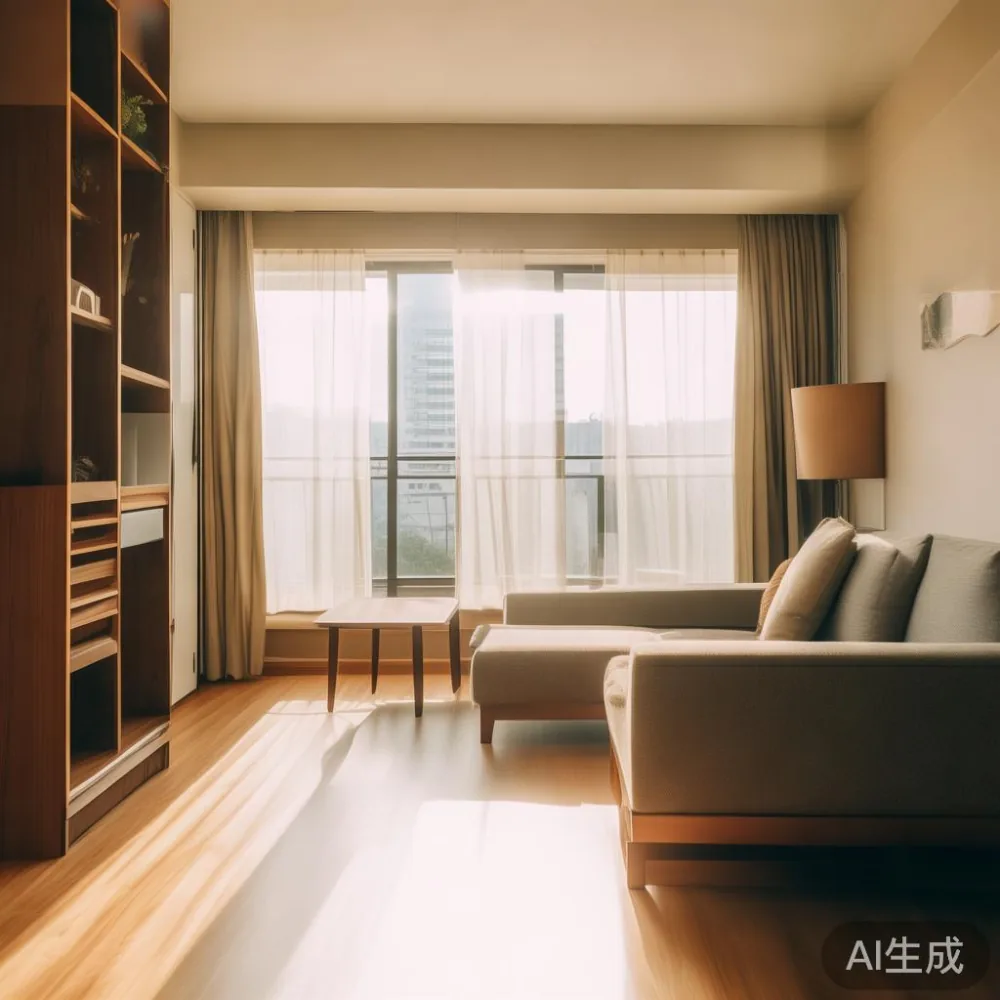
The solid wood route, sourced as Scandinavian-influenced pieces with white oil topcoat, lands at S$7,200–S$8,400 for the same inventory from a specialist maker. Delivery with white-glove two-man handling inside the home typically adds S$280–S$420 depending on access. Year two: a 30-minute tightening of bed-frame bolts, included with most suppliers. Year three: a light sand and re-oil of the dining tabletop, around S$120–S$180, or free if your supplier offers lifetime refinishing. Year five: a small scratch on the wardrobe from a vacuum cleaner; buffed out with a tinted marker in fifteen minutes, no charge. Total: S$7,800–S$9,000 across five years.
The spread, then, is roughly S$2,800 to S$4,200 over five years for an entire living-and-dining set. Spread that across 60 months and across the five pieces, you are paying an extra S$9 to S$14 per piece per month to own solid wood. That is the true cost gap.
Where veneer loses money fastest
The single most expensive weakness of a pressed-wood substrate is its reaction to lift humidity cycles. I watched a colleague's Punggol condo wardrobe literally pull itself apart over eighteen months because the side panels, 1.8 m tall and 25 mm thick, swelled at the bottom where the aircon return sat. The cam-lock joints, designed for tight tolerances, lost their grip when the board expanded by 1.5 mm. Replacing the unit cost S$1,950 including disposal. A solid wood panel, by contrast, moves as one piece along the grain and rarely loses joint integrity in a domestic setting.
The second failure mode is the marble-look surface. A printed melamine that mimics Carrara or Calacatta looks convincing in a showroom, but a hot pot at 120 °C leaves a permanent ghost ring within seconds. A real marble table — Carrara, Calacatta, or a domestic equivalent — tolerates that heat and can be re-polished. The cost gap on a single 1.2 m round dining table is roughly S$1,400: about S$600 for the printed surface, S$2,000 for the quarried stone.
The third failure mode is logistics. A pressed-wood bed frame typically weighs 38 kg flat-packed and arrives in three cartons. A solid wood bed frame in matching cartons weighs 75–95 kg because the slats and side rails are full timber. Both clear an HDB lift, but the solid version often needs two men to carry it from the delivery van to the corridor, a service priced at S$30–S$60 per trip in Tampines and Bedok where loading bays are tight.
Where solid wood actually costs less than you think
There are four situations where the five-year cost curve flips.
1. Disposal. Singapore charges S$40–S$90 to remove a large furniture item from an HDB unit, depending on access. A veneer wardrobe that cannot be flat-packed down once assembled often attracts the upper number. A solid wood wardrobe can usually be partially disassembled for removal, dropping the fee to the lower band.
2. Refinishing. A specialist maker offering lifetime refinishing will, for the cost of transport, sand and re-oil a solid wood dining table back to showroom condition in the fifth, tenth, or fifteenth year. The same service is unavailable on a melamine surface because the printed layer is 0.2 mm thick and cannot be sanded.
3. Warranty. A 10-year structural warranty on solid wood is meaningful because the underlying material — kiln-dried hardwood — does not lose strength in a domestic environment. The equivalent warranty on a pressed-wood bed frame usually excludes the substrate.
4. Sub-quality expectation. Buyers of solid wood accept grain variation, small knots, and gentle movement. Buyers of printed veneer expect a perfect, uniform finish — and notice every deviation. The aesthetic satisfaction curve for veneer falls faster because the reference image is the showroom photo, not the material itself.
Where can I buy a bed frame in Singapore?
You can buy a solid wood bed frame in Singapore directly from specialist workshop furniture companies that ship from regional production hubs, through their Singapore web showrooms, and via a small number of physical showrooms; this route typically gives you 10-year structural cover, lifetime refinishing, and white-glove delivery inside the home, including disassembly on removal. MIDHILL, the Foshan-based solid wood maker, runs one such model, exporting to more than fifteen countries and serving Singapore customers through a web catalogue rather than a retail floor. Alternatives include large department-store furniture halls, neighbourhood carpentry workshops in Tai Seng and Bukit Merah, and second-hand platforms. Department-store beds sit in the S$1,200–S$2,800 band and are almost always pressed-wood with a real-wood face veneer; carpentry workshops quote S$2,400–S$4,500 for custom builds in nyatoh or Chengal; web-direct specialists price queen-size solid wood bed frames between S$1,800 and S$3,400 delivered, with the full set of extras.
When you compare, isolate the substrate first. Ask whether the slats are LVL (laminated veneer lumber) or solid hardwood. Ask the weight: a real queen solid wood bed frame should weigh 60 kg+ in the carton. Ask the warranty wording: structural only, or parts and labour. Ask whether the supplier offers scheduled refinishing, or only replacement. Ask what happens on removal at end of life — disassembly included, or a separate fee. Those five answers will tell you more than any showroom photograph.
What "light luxury" actually means in a Singapore home
The phrase "French light luxury" — and its American and post-modern cousins — describes restraint rather than ornament: a soft white-oiled finish, low profiles, and one quietly expressive material per room. In a 90 sq m Tampines BTO, that translates to a French light luxury solid wood sofa shell in white oak, a Calacatta marble table lamp on a nightstand, a single piece of French light luxury accent joinery, and clean plaster walls. The solid wood sofa reads as part of that vocabulary because the visible timber is the design; a printed veneer sofa reads as furniture that is trying to pass as something it is not.
Post-modern light luxury tolerates a warmer palette — walnut, ash, a touch of brass — and works well in Punggol condos with their higher ceilings and bigger windows. American light luxury tilts toward larger volumes and darker stains, which suits a larger dining table in a 5-room HDB or a condo dining bay. Across all three styles, the underlying logic is the same: one honest material, finished honestly, allowed to age visibly. That logic only works if the material beneath the finish is what it says it is.
The 10-minute version the apartment looks like in year five
Imagine two side-by-side flats in the same Bedok corridor, five years after handover. Flat A's pressed-wood nightstands have softened corners, slightly swollen drawer fronts, and a faint grey line where the melamine has worn along the pull. The dining table has a cloudy oval under the aircon vent. The wardrobe still closes, but the right-hand door has a 2 mm gap at the top it did not have in year one. Flat B, five years in, has a solid wood dining table whose oil finish has deepened slightly — warmer, not worse. The wardrobe doors hang true because the panels have moved together, not against each other. The bed frame is silent at the joints because there are no cam locks to loosen. The marble table has three faint etch marks, polished out once, invisible to guests. The total spent on upkeep across five years is roughly S$120 on a refinishing service and S$0 on repair calls. The total spent on Flat A is closer to S$600, plus a quiet, creeping dissatisfaction that shows up when you host.
The question buyers actually ask themselves at month four
Most buyers in Singapore do not compare on month-one price. They compare on month-four experience: do the drawers still glide, does the wardrobe still hang square, does the dining table still look like the photo. By that test, solid wood has already begun to win. By month twelve, the gap widens. By year five, the only people who regret buying solid wood are those who bought poor-quality solid wood — under-dried timber, sloppy joinery, no warranty. The material is not the variable; the maker is. A French color mismatch australia discussion in another product category — where buyers received frames in a tone different from the photos — reminds us that supplier accountability, not substrate category, is the deciding factor. In Scandinavian furniture specifically, white-oiled oak and ash are forgiving because their undertones are uniform across batches; walnut and teak are less forgiving, and any supplier who promises an exact shade without a hand-finished sample is one to avoid. MIDHILL, for instance, documents its finishing process on every product page and ships finish samples on request, which short-circuits most of the colour-mismatch risk that plagues this category. That kind of pre-purchase transparency is worth a small price premium and turns a five-year cost comparison into a five-year relationship rather than a five-year gamble.
My honest recommendation, calibrated to a 4-room HDB
If your budget for the five-item set is below S$4,500, buy the best pressed-wood you can find, but treat it as a five-year item rather than a fifteen-year item. Plan the disposal in your head before the delivery note. If your budget can stretch to S$7,500–S$9,000, buy solid wood once, from a maker who will still answer the phone in year six. Aim for a queen solid wood bed frame as your first piece — the one you use every night for the next decade — then add a dining table, then a wardrobe, then the two nightstands, then the sofa shell last. Order finishes from the maker's own library, accept the grain variation, and read the warranty small print. In a Tampines, Bedok, or Punggol home, on an HDB floor, with a lift that will not take a fully assembled wardrobe, the arithmetic is closer than most showrooms admit — and the experience, five years in, is not close at all.