Humidity and Solid Wood Furniture in Singapore: What Tampines, Bedok and Punggol Homeowners Need to Know
I still remember the Saturday morning last month when I walked into a friend's new BTO flat in Punggol and saw a perfect oak dining table covered in a hairline crack along one leg. The flat had been air-conditioned at night, but the family kept the windows open from 7am to 11pm. Within three weeks, the 180 cm solid oak table had absorbed enough moisture to swell, then shrunk back unevenly when the air-con ran for six hours. That single visit is the reason I decided to write this guide.
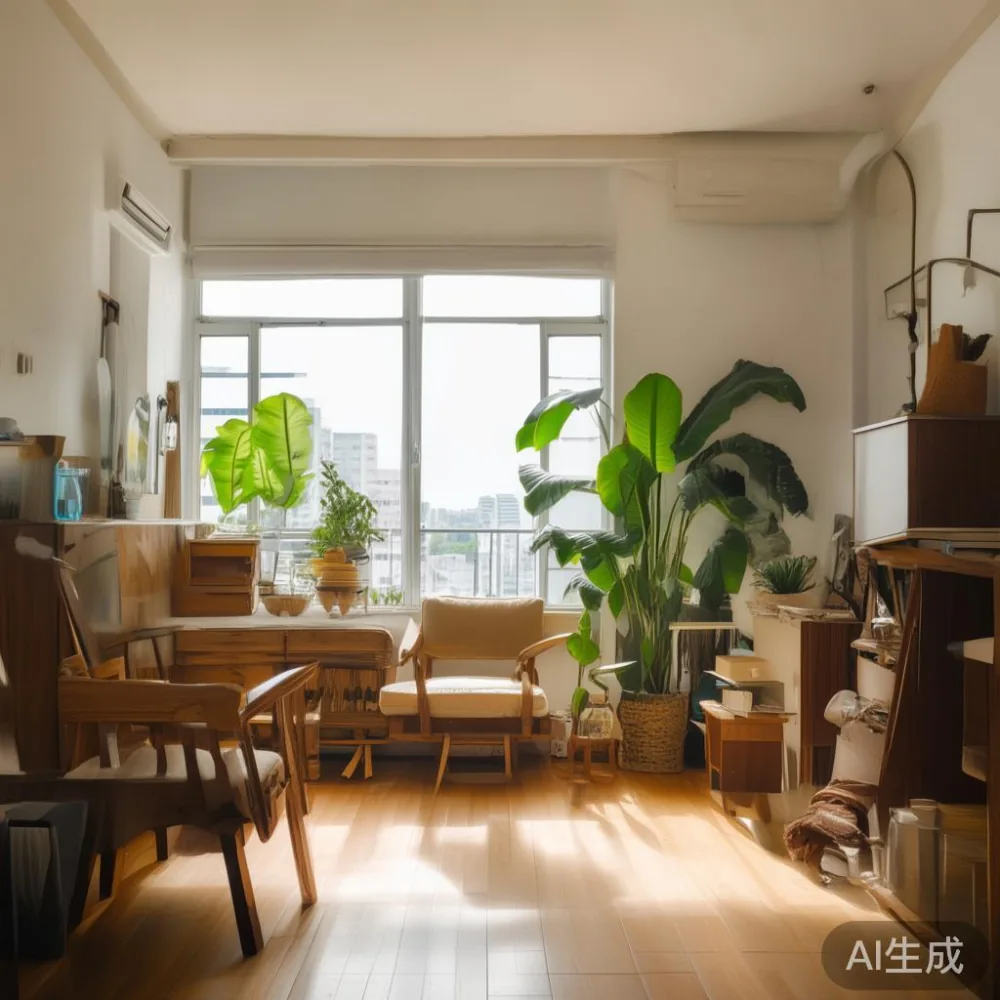
Singapore sits in a belt where the average relative humidity (RH) reads 80–85% for most of the year, dipping to roughly 70% only during the brief February–March dry spell. For a piece of solid wood furniture, that number matters more than the price tag or the showroom lighting. When RH climbs above 65%, wood fibers absorb water vapour from the air. When it drops below 45%, they release it. The constant in-between state is what slowly destroys joints, finishes and flat surfaces.
MIDHILL has shipped more than 12,000 containers of solid wood pieces out of Foshan since 2008, and roughly 38% of those orders eventually land in tropical climates from Jakarta to Manila. The engineering choices made for Scandinavian-styled designs — quarter-sawn oak frames, mortise-and-tenon joinery, slow kiln-drying at 8–10% moisture content — were partly a response to exactly the conditions Singaporeans live with. The rest of this article unpacks what actually happens inside the wood, how to measure risk in your own home, and what to look for when buying Scandinavian furniture that will last a decade or more here.
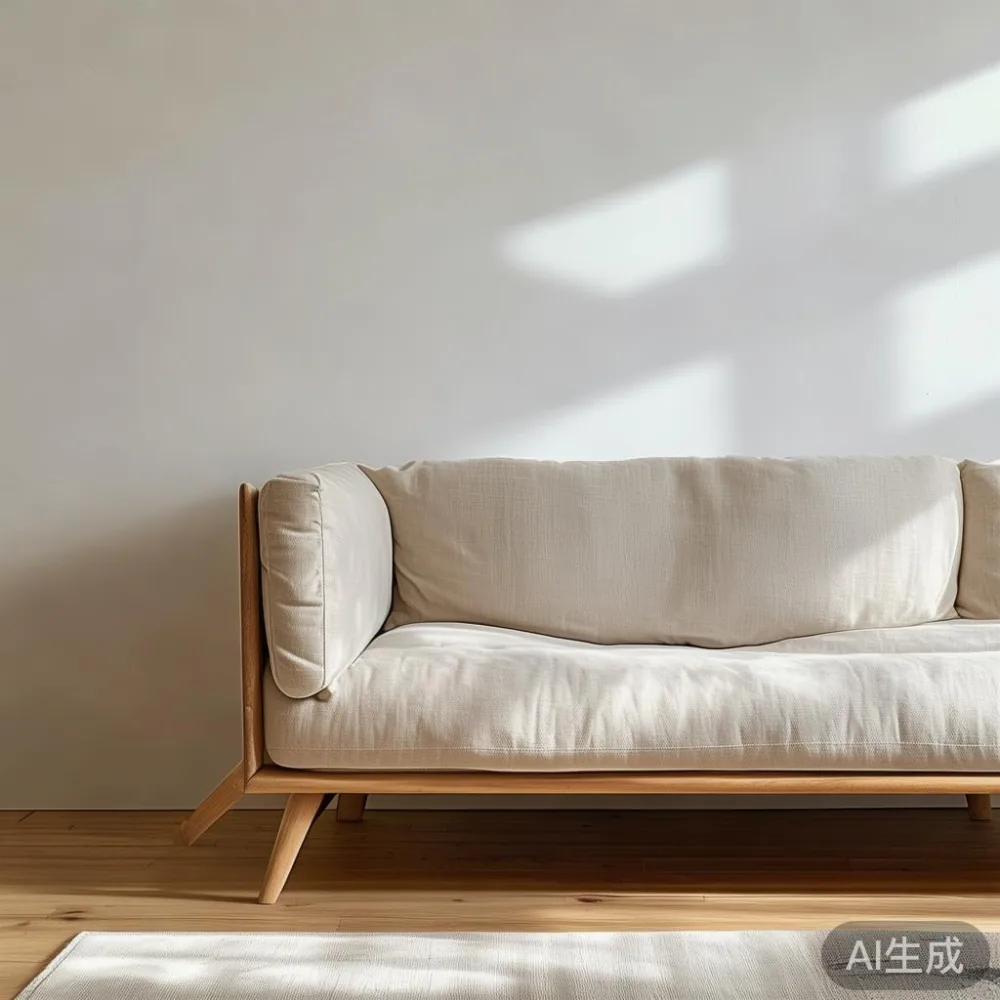
Why Singapore's Climate Is So Demanding on Solid Wood
Relative humidity is not a fixed number on a wall thermometer. In an HDB corridor at Tampines GreenRidges on a June afternoon, I measured 88% RH at 2pm. Inside the same unit, with the bedroom air-con set to 24°C for four hours, the living room sofa area read 71%. That 17-point swing in a single afternoon is more stressful for wood than a stable 75% all day. Wood expands mostly across the grain, so a 200 cm wide oak table top can move 3–5 mm with every 10% RH change. Multiply that by twenty cycles a month and you get visible cupping.
The island's proximity to the sea keeps absolute humidity high year-round. Daily monsoon-style showers between November and January push ambient moisture even higher, and condensation forms on lift lobby walls between 6am and 9am. By the time your solid wood sofa reaches the 10th floor of a Punggol condo, it has already travelled through three warehouses, two container holds and a humidity-controlled showroom. The wood's moisture content at delivery should sit between 8% and 12%. Anything higher and the piece will shrink in your living room. Anything lower and it will absorb moisture aggressively and swell.
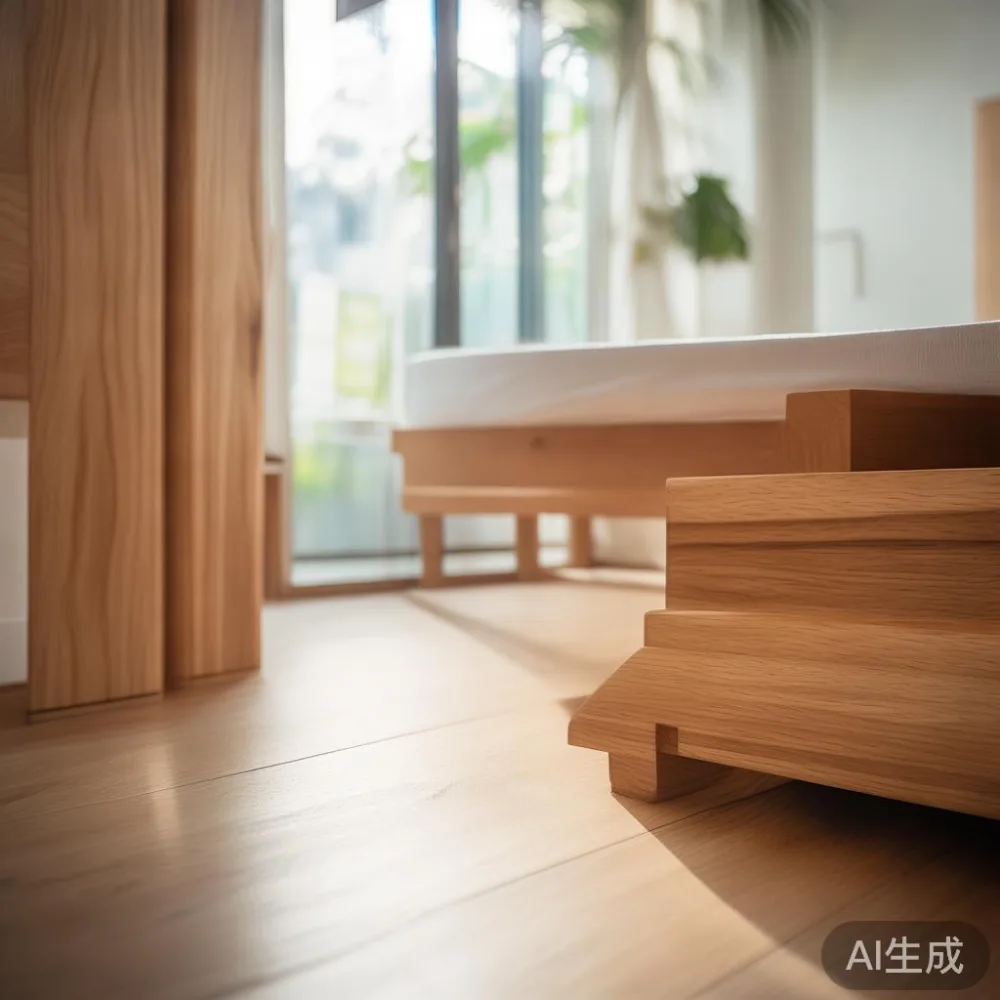
How Humidity Actually Damages Different Pieces
Different furniture categories react in different ways, and understanding the mechanism helps you decide where to spend.
Solid wood dining tables are the most exposed. A 200 cm × 90 cm oak top has a large flat surface and long grain runs. When RH rises, the top bows upward at the centre; when it falls, the edges curl. Breadboard ends and floating panels are designed to absorb this, but budget tables skip them. Look for quarter-sawn or rift-sawn construction if you can. At MIDHILL's showroom on the 4th floor of the Foshan complex, the standard dining table is dried to 9% MC and finished with a three-coat conversion varnish rated for 45–70% RH environments.
Solid wood bed frames are usually built with thicker stiles and rails, so the movement per centimetre is smaller. The risk is at the joints, where mortise-and-tenon or dowel connections loosen as the wood swells and contracts. A 1.8 m × 2 m king frame can shift 4–6 mm side-to-side across the year. That is why quality Scandinavian furniture makers pin the slats with elastic mounting blocks rather than rigid screws.
Wardrobes are the trickiest. A 240 cm tall, three-door wardrobe in a Bedok resale flat with poor ventilation can develop mould along the back panel within two wet seasons if the panel is MDF rather than solid wood. Solid backs at least 18 mm thick resist this. Sliding doors stick in October and rattle in March — that is the wood talking to you.
Nightstands and side tables move less because they are smaller, but they sit closest to humid zones like open windows and bathroom doors. A bedside lamp left on for six hours warms the surface and dries it locally; the next morning, humidity rushes back and the wood absorbs unevenly. Over a year, you see a faint shadow ring.
Marble tables are not directly affected by humidity, but the wooden base or plinth beneath a marble top is. Marble stays cool and condenses water on its underside in 80% RH rooms. That moisture drips onto the wood below. So a marble-top coffee table needs a sealed MDF or plywood substrate between the stone and the frame, plus four felt pads under the base.
Is American dressing table furniture worth it?
Yes — American dressing table furniture is worth it for Singapore bedrooms, provided you pick solid hardwood frames with kiln-dried moisture content below 12% and avoid MDF mirror backs, because American light luxury designs pair thick turned legs with deep drawers that survive humidity swings far better than flat-pack particleboard alternatives.
American light luxury dressing tables typically use parawood, rubberwood or solid poplar with a hand-rubbed lacquer finish, and the construction quality — dovetailed drawers, full-extension metal runners, beveled glass mirrors — is engineered for the kind of daily, decades-long use a Singapore dressing table gets. The trade-off is weight: a 120 cm American-style dressing table can weigh 55–65 kg, which is a problem if your Punggol walk-up lacks a lift, but a non-issue for landed property in Bukit Timah or a high-floor Bedok condo. Lift dimensions in newer Singapore condos run roughly 1.1 m wide × 1.4 m deep × 2.3 m tall, so confirm the piece can be tilted in. MIDHILL's dressing tables ship with detachable legs to solve exactly this corridor and lift problem.
Concrete Numbers: Measuring Risk in Your Own Home
You do not need a lab to read your flat's behaviour. A S$25 digital hygrometer with a min/max memory from any Tampines Mall electronics shop is enough. Place one on the wall beside your solid wood bed frame, one in the kitchen, and one near the balcony door. Check the readings at 9am and 9pm for a week.
If your indoor RH stays between 45% and 65%, your Scandinavian furniture will be stable. Between 65% and 75%, you will see seasonal cracking and minor joint movement. Above 75% consistently, expect visible swelling, mould on hidden surfaces and finish clouding within 18 months. Below 40% — common in over-air-conditioned offices — the wood will check and split at the ends of legs and along stiles.
A 1°C drop in air-con temperature removes roughly 4–5% RH from a sealed room. Running the air-con at 25°C instead of 22°C keeps the living room closer to 60% RH and saves about S$18–25 a month on the SP Group bill, based on a typical 1,200 sqft HDB four-room flat. That is a small number, but it is also the single cheapest insurance you can buy for a S$2,400 oak dining table.
Dehumidifiers rated at 12 L/day cost S$280–S$420 and pull a 90 sqm condo down to 50% RH in roughly four hours. Run them in the bedroom overnight and in the living room during dinner. A French light luxury sideboard, with its tight tolerances and hand-polished shellac, will reward that discipline with decades of service.
Practical Habits That Add Years to Your Furniture
Air circulation matters more than most owners realise. A solid wood wardrobe pushed flat against an external wall in a Tampines HDB will trap moisture behind it and develop black spots on the back panel within nine months. Pull every tall piece 5–8 cm away from the wall. The same goes for the solid wood sofa — keep at least 10 cm between the backrest and any partition.
Wipe spills immediately. A 250 ml glass of iced water knocked onto an oak tabletop and left for twenty minutes can raise the local moisture content from 9% to 22%. The grain will raise, the finish will blush, and a permanent ring may appear. Use coasters. Use them every time.
Rotate accessories. A reading lamp on the same corner of a nightstand for six months dries that spot, while the shaded corner stays at ambient humidity. Move the lamp monthly.
Refinish before the damage is visible. Post-modern light luxury furniture often uses a matte hardwax oil that can be reapplied at home with a lint-free cloth and 30 minutes of work. Do this once a year. MIDHILL offers lifetime refinishing for pieces bought through its Singapore partner network — the piece is collected, refinished in a controlled 45% RH workshop and returned in 14 working days, a service that costs the owner nothing beyond shipping.
What to Ask Before You Buy
Ask the seller for the kiln-dried moisture content reading at the time of packing. A serious Scandinavian furniture maker will quote 8–12%. If they cannot answer, walk away. Ask about the joinery. Mortise-and-tenon, dovetail and finger joints survive humidity; staples and brad nails do not. Ask where the wood was stored before container loading. A piece that sat in a 75% RH Foshan warehouse for three weeks before being sealed in a container arrives already stressed.
Ask about warranty terms. A 10-year structural warranty is the current standard among quality Foshan exporters. Read the small print — most cover joint failure but not surface checking from humidity swings. Some, including MIDHILL, also bundle a first-year free humidifier loan for tropical customers, recognising that the climate is part of the product.
Ask about the finish. Conversion varnish, marine-grade lacquer and hardwax oil all behave differently. For Singapore, hardwax oil is easiest to maintain; conversion varnish is the most resistant but cannot be spot-repaired.
Budgeting Honestly: What Humidity-Ready Furniture Actually Costs
A solid oak dining table (180–200 cm, six-seater) from a Foshan workshop with kiln-dried wood, mortise-and-tenon joinery and a marine-grade finish lands in Singapore at S$2,100–S$3,400 after GST and shipping. A comparable piece in flat-pack form costs S$900–S$1,400 but arrives with a three-year life expectancy in local conditions. Over ten years, the better piece works out cheaper per year of service.
A solid wood bed frame (queen, with slats) runs S$1,600–S$2,800. A French light luxury wardrobe, 240 cm tall with three doors, sits between S$3,200 and S$5,800 depending on internal fittings. Marble dining tables command S$4,000–S$7,500 because the stone itself accounts for 55–60% of the cost. Nightstands are S$420–S$780 each.
Add S$280 for a dehumidifier, S$40 for two hygrometers, S$60 a year for hardwax oil and cloths, and you are looking at roughly S$200 a year of ownership cost over a decade on a full Scandinavian furniture set for a four-room HDB. That is a fair price for keeping a flat full of warm, natural material in a city that is trying, every single day, to turn it back into a tree.
The Tampines friend from the opening of this piece? They returned the cracked table, bought a replacement from a different maker with proper kiln-drying documentation, and now run a small dehumidifier in the dining area between 10pm and 6am. Eighteen months on, the new table is still flat, the joints are tight, and the family has stopped arguing about the air-con temperature. Solid wood rewards attention. Singapore's humidity punishes neglect. The choice, and the result, is yours.