Combining Scandinavian Furniture with Warm Interiors
A warm minimal interior is not an empty room. It is a room where every object has breathing space, every touchable surface feels natural, and a restrained palette still feels inviting. Scandinavian furniture works particularly well in this setting because pale timber, honest proportions and simple silhouettes can carry the visual weight without filling the room. The difference between cool minimalism and warm minimalism often comes down to texture, lighting and the balance between rounded and linear forms.
In Singapore, that approach has to account for HDB flats and condos in Tampines, Bedok and Punggol. Many apartments are compact, while furniture still has to pass through common corridors, stairwells and lifts. A visually light piece may also have a very large physical footprint. Below, I explain how to measure, plan and mix pieces while keeping the final room calm rather than clinical.
What makes Scandinavian furniture feel warm rather than cold?
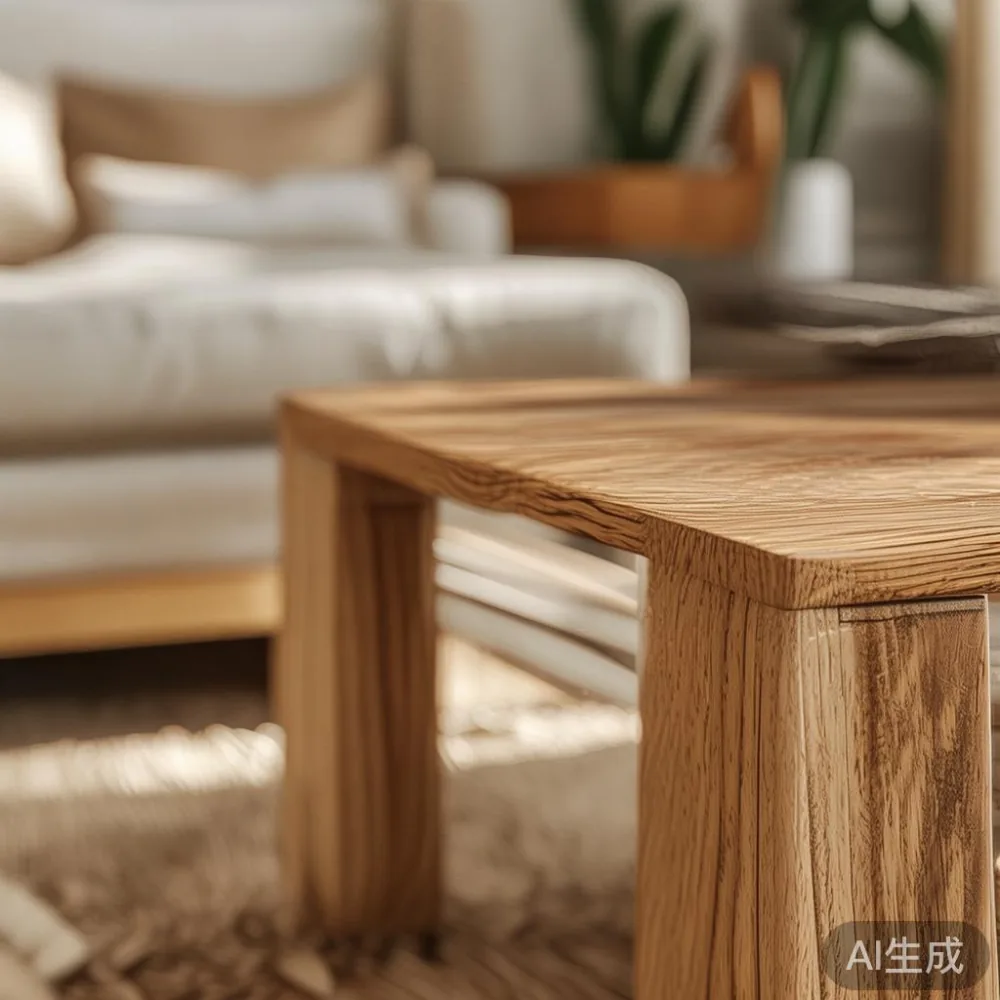
Scandinavian furniture usually begins with light woods, uncluttered shapes and practical storage. Those qualities suit a warm minimal interior, but a room made only from white walls and pale pieces can feel stark under Singapore’s strong ambient light. Warmth comes from adding enough variation for the eye to understand the room as layered.
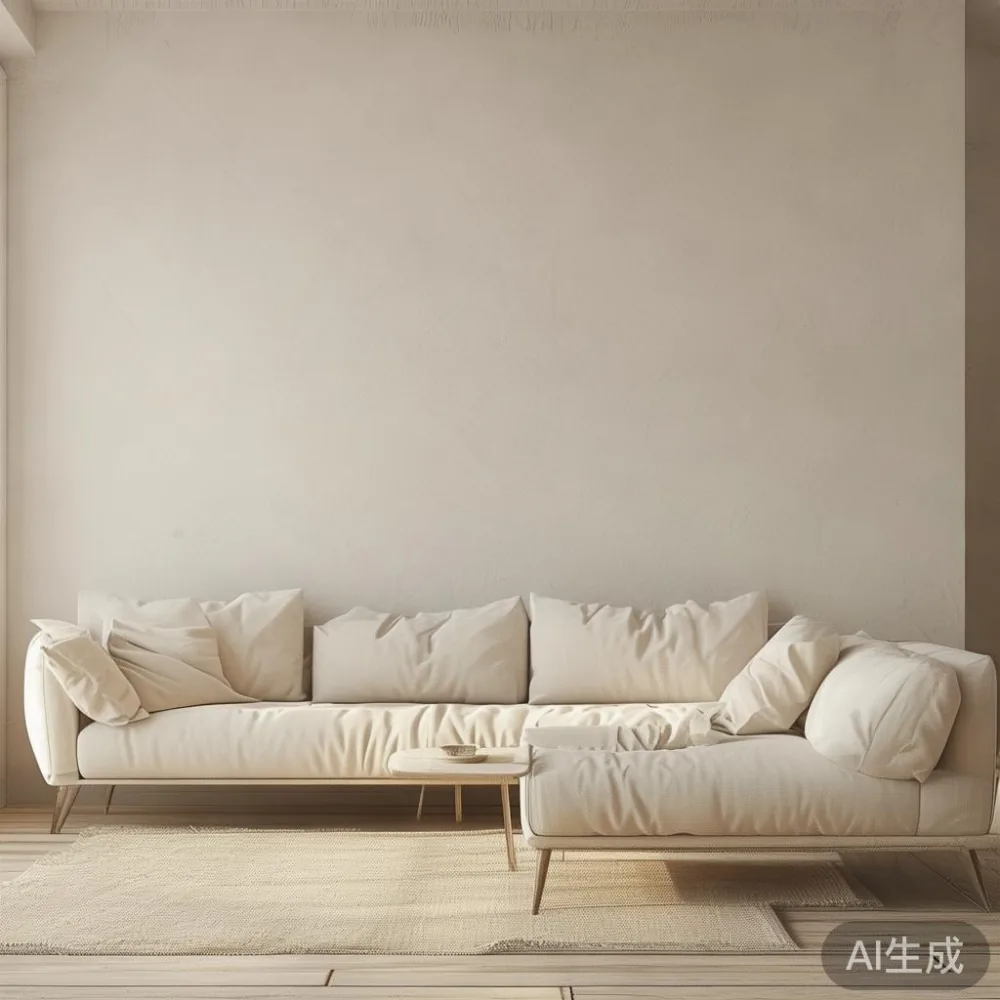
Think of a 3.2 m sofa against a wall, not as one enormous object, but as a horizontal base for a limited collection of materials. A chunky knit throw in oatmeal, a ceramic lamp with a linen shade and a tray in warm brown can soften the composition. A rug with visible fibres does the same for the floor. Avoid making every surface the same colour; use a 60-30-10 ratio across light, mid-tone and accent shades.
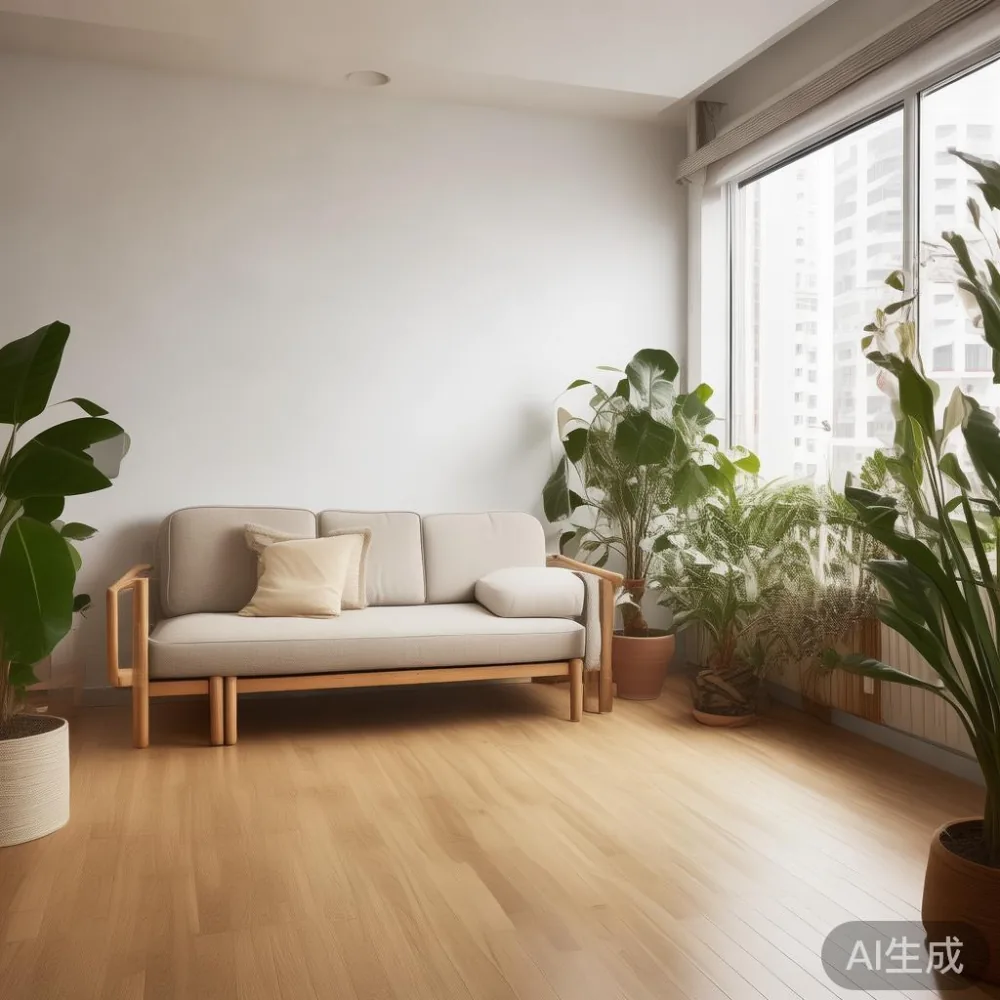
Shape matters just as much as colour. Scandinavian design often uses tapered legs, straight backs and compact frames, while warm minimalism benefits from one rounded counterpoint. A solid wood sofa with gently curved arms beside a rectangular dining table creates contrast without visual clutter. Likewise, a rounded dining table can make an otherwise linear living room feel more approachable.
For a coordinated but less predictable result, borrow from French light luxury or American light luxury. French influence might appear in a sculptural lamp, upholstered bed frame or marble table; American light luxury tends toward generous proportions, deep seating and tactile upholstery. Post-modern light luxury offers another route through mixed forms, provided the palette remains controlled. In all three directions, restraint matters more than quantity.
How do you measure a Singapore home before buying?
Measure the room before measuring individual pieces. Note the ceiling height, skirting depth, door swing and the position of sockets, vents and air-conditioning units. Leave a clear route of at least 75 cm along frequently used walkways, and try to preserve 90 cm in front of wardrobes or other pull-out storage. These figures are guides rather than universal rules, but they prevent a polished arrangement from becoming frustrating in daily use.
Next, investigate the building’s delivery constraints. HDB lift doors can be around 80–90 cm wide, while internal lift dimensions vary by block. A sofa with a 220 cm wide body may fit an HDB living room yet be impossible to angle into a narrower lift. Ask the delivery team for the packed dimensions and turning radius, and record corridor widths from the flat entrance to the lift. Do not assume that a product shown online fits simply because its assembled dimensions fit the room.
For example, a dining table may be comfortable at 180 × 90 cm for 4–6 diners, but its 180 cm length could block the only approach to a balcony door. A smaller 150 × 80 cm model may be more workable in a compact dining zone, with room to pull each chair out. Allow about 20 cm beyond the seated position for movement when practical.
Singapore’s tropical conditions also deserve attention. Choose solid wood furniture with a stable finish and ask whether indoor pieces are intended for air-conditioned rooms. Avoid placing untreated timber beside a frequently opened balcony door, where humidity changes quickly. Give wooden legs a protective felt layer, and use coasters on a marble table. Relative humidity in many interiors stays comfortably within the 40–60% range, but direct moisture should still be avoided.
Which pieces should anchor a warm minimal living room?
The anchor should usually be the largest daily-use object, not the most decorative one. A solid wood sofa establishes the room’s scale and tone. For a typical HDB living room, a width of 180–220 cm often works well, but check the wall, balcony connection and lift access first. Low-backed models create visual openness; a seat height around 40–45 cm can make the room feel grounded without becoming heavy.
Pair it with one low coffee table, preferably 90–110 cm long, and one side table rather than a suite of matching pieces. Leave approximately 40–45 cm between the sofa and coffee table for comfortable reach. If the sofa has loose cushions, allow another 5–10 cm behind it against the wall where possible. Those small allowances can make a narrow apartment feel more carefully planned.
Storage should disappear into the background. A wardrobe with flush fronts can support a calm wall, while a nightstand only needs to hold a lamp, book and phone. The MIDHILL TV console is another useful anchor when media is central, especially if its timber finish relates to the dining area rather than competing with the television. Keep décor limited to 3–5 meaningful items on a broad surface, and leave at least one area intentionally unfinished.
Light is a material too. Use at least 3 layers in a living room: a ceiling light, a floor or table lamp and a warm accent source at 2,700–3,000 K. This warm-neutral range complements oak and walnut tones. In a room with dark walls, place a light source near the ceiling to reduce the heavy effect. In a bright HDB flat, curtains rather than heavy drapes can soften daylight while retaining privacy.
Can a bedroom feel warm, minimal and practical at the same time?
Yes, by treating the bed as the centre of a small composition rather than covering every visible surface. A solid wood bed frame in natural oak, warm walnut or a muted stained finish gives the room a quiet focal point. A European bed vs Modern bed comparison usually comes down to ornament and profile: a European-style frame may use shaped headboards, upholstered panels or curved rails, while a modern bed generally relies on cleaner planes and sharper junctions.
That does not mean a European bed frame needs elaborate decoration. Choose one with restrained curves if the room already contains angular pieces. A modern bed can feel warmer with linen bedding and a rounded bedside lamp. The aim is not to label the room, but to balance its forms.
Wall-to-wall fitted wardrobes are common in Singapore because they use the perimeter efficiently. When selecting one, consider door opening and internal shelves rather than exterior handles alone. If you are comparing options, how to choose French wardrobe can be answered by focusing on proportion, pale finishes and decorative detail used sparingly. A French-inspired cabinet may have moulded edges or panelled fronts, but a plain carcase and limited hardware keep it aligned with Scandinavian furniture.
A bedroom wardrobe that reaches the ceiling can make the room feel orderly, but a 10 cm gap above a lower unit may allow a lamp or object to breathe. A nightstand around 40–50 cm wide is usually sufficient beside a Queen bed. It should align closely with the mattress top, or the arrangement can look improvised. Keep bedside items within arm’s reach, generally 45–60 cm, and use warm lamps below eye level.
In a guest room, a less demanding arrangement offers useful flexibility. The phrase Coastal for guest room describes a style direction rather than a literal requirement for nautical decoration. Pale timber, woven textures and soft blue-grey accents can suggest a coast without producing a themed effect. A slim daybed, folding table and 45 cm nightstand may work better than a full suite of permanent furniture.
How do I mix a dining table with chairs, lighting and storage?
A dining table sets the rhythm of the room. An oval or round table softens a rectangular living room and improves circulation, but straight edges often fit compact HDB dining areas more efficiently. For 4 people, a 120–140 cm round or 140–160 cm rectangular table is a practical starting point. Add 15–20 cm per additional place when space allows, and allow 75–90 cm around the table for chairs and movement.
Do not match every element. Scandinavian furniture often works because related pieces share material or geometry, not because the entire room is identical. A timber dining table can sit with upholstered chairs, simple timber stools or one sculptural chair as an accent. Keep the chair seat colours within 2 shades of one another so they read as a group.
Hang the dining pendant roughly 70–90 cm above the tabletop. This prevents heads from interrupting the view and creates a pool of light over the meal. A marble table may be better as the living-room accent, where its pattern can be appreciated without making the dining area visually busy. If you choose marble for dining, remember that it is heavy, cold to the touch and unforgiving of stains. A timber dining table is generally easier to maintain in a busy family home.
Storage along the dining wall should support, not compete. A shallow sideboard around 40–50 cm deep can hold tableware without narrowing the room. Display only 2–3 objects above it, perhaps a framed print and a ceramic vessel. In a condo, if you are considering under 2000 Mid-century modern furniture, the phrase should not pull the whole room into a retro theme. Select one sideboard or chair with tapered legs, then balance it with quiet contemporary pieces.
Which colours and materials should you repeat throughout the home?
Repeat one wood tone and one metal finish across rooms. If the living room uses pale oak, echo that in the bed frame or dining chairs rather than introducing a slightly different “similar” shade. Use walnut for a warmer feature instead: it can appear on a coffee table, bedside top or media cabinet while the larger pieces remain pale.
Metals should also be limited. Brushed brass, matte black and satin nickel each tell a different story. Brushed brass feels warm and works with beige linen; matte black creates sharper contrast; satin nickel fits cooler grey tones. Repeating the same finish in at least 2 rooms makes an apartment feel resolved even if the products were bought at different times.
For fabric, use performance upholstery in homes with children or pets and check cleaning instructions before purchase. A washable seat cover can preserve the calm palette while making a solid wood sofa practical. Curtains should fall close to the floor, with the hem about 1 cm above it, to avoid a chopped appearance. A rug should reach beneath the front legs of at least the sofa and dining chairs, where space permits.
If you want a fashion-forward reference while researching top 10 light luxury furniture, treat the list as a vocabulary exercise. Identify the materials, silhouettes and craftsmanship you prefer, then adapt them to your floor area and budget. Light luxury bed vs Modern bed is similarly useful only when it clarifies proportion and comfort. A sculptural headboard can offer the light luxury note, while the bed frame itself remains simple enough for a minimalist room.
What delivery, warranty and ownership details matter in Singapore?
Furniture is a long-term purchase, so the commercial details deserve the same attention as the visual plan. MIDHILL has operated since 2008 and exports to more than 15 countries, with a 10-year structural warranty and lifetime refinishing service. These are useful distinctions for solid wood products, although the warranty terms should be checked for the specific item and use. Confirm that refinishing covers the relevant surfaces and excludes accidental damage.
For local orders, ask for the estimated delivery window in working days, the packed dimensions and whether the quotation includes GST. Singapore prices should be shown in SGD so the final cost is easy to compare. The advertised free-shipping threshold of US$350 may apply to qualifying international orders, so a Singapore buyer should not assume it applies automatically. Clarify the local delivery charge before payment.
Returns within 14 days provide a useful inspection period, but customers should photograph packaging and pieces on arrival. Confirm whether a used or installed item can be returned, and check the condition required for collection. For a large wardrobe, make sure the return route is physically possible through the same corridor and lift used for delivery.
Earlier this month, I visited a colleague’s new 3-room HDB flat in Tampines and helped her place a 180 cm dining table, a 200 cm sofa and a 90 cm TV console. The sofa’s carton turned at a right angle outside the lift lobby, but its 86 cm package depth cleared the 90 cm door once turned vertically. The dining table had to be separated into two sections because its 160 cm top could not pass a narrow service corridor. It was a useful reminder that delivery planning changes the furniture arrangement more than many showroom images suggest.
How can you test a warm minimal plan before committing?
Create a scaled floor plan before purchasing. Use measurements at 1 cm for walls and 5 cm for major furniture. Mark the lift route, balcony door, sockets and television position, then move each piece as a simple rectangle. A 90 cm wide corridor should remain open from the flat entrance to the main rooms whenever possible.
Next, test the palette with removable materials. Place a large fabric swatch against the walls, a timber sample near the floor and a stone or marble sample beside a lamp at night. View the room at approximately 7 a.m., noon and 8 p.m. Natural light can reveal yellow or green undertones that disappear under showroom lighting.
Finally, live with the plan for 7 days. Walk the same route each morning, sit in the intended chair positions and check whether the 40–45 cm coffee-table gap feels right. Remove any object that does not earn its place. Warm minimalism is achieved through intention, not by adding more neutral-coloured furniture.
The strongest result comes from a limited material story, practical dimensions and a few tactile contrasts. Let pale Scandinavian furniture establish openness, then use warm lighting, rounded forms and natural textures to create comfort. In a Singapore apartment, that disciplined combination can feel both grounded and spacious without compromising everyday movement.