Humidity, Air-Conditioned Flats and Scandinavian Furniture: A Southeast Asian Care Guide
Humidity rarely damages solid wood furniture overnight. The visible movement usually begins with a change in moisture: a solid wood sofa frame tightens in a dry room, a dining table develops small checks along a grain line, and a wardrobe door may sit differently after several humid weeks. In Singapore, where outdoor air carries moisture throughout the year and many HDB flats and condos alternate between humid corridors and aggressively air-conditioned interiors, furniture must cope with two very different environments.
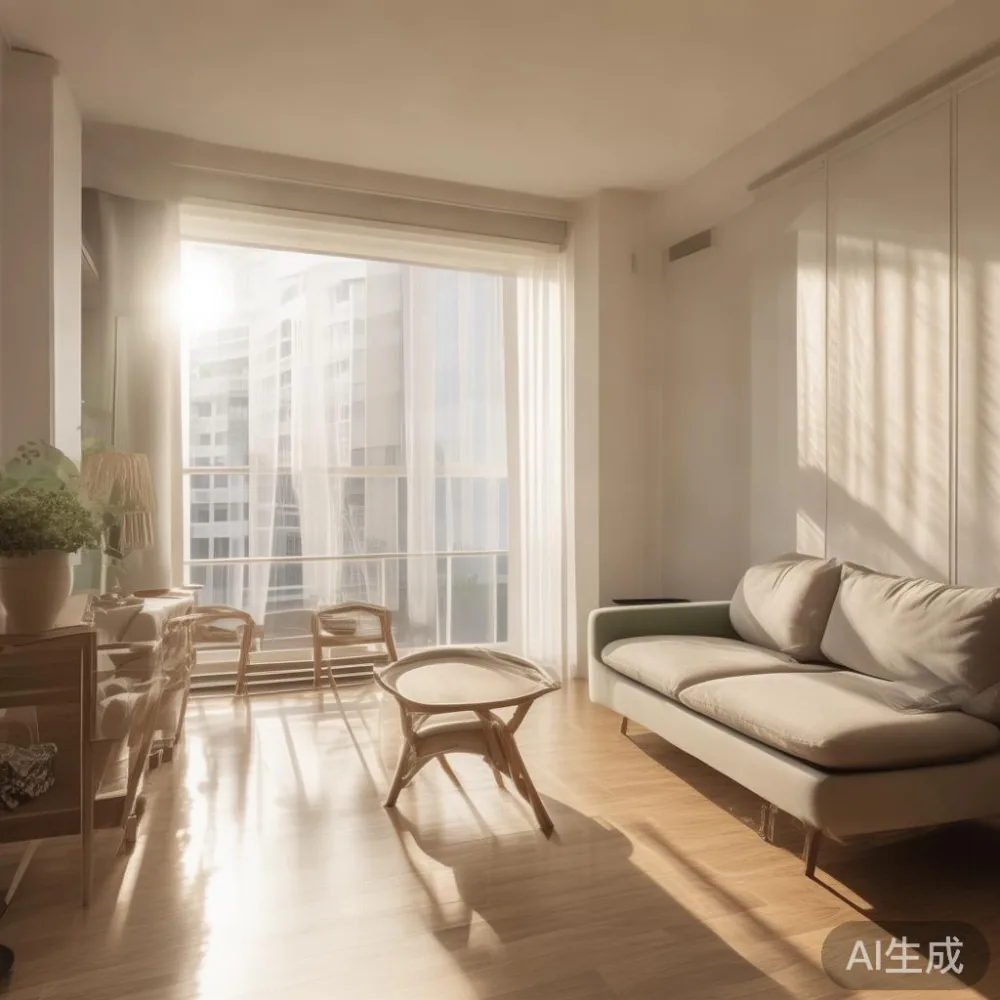
This matters for anyone considering Scandinavian furniture, especially a solid wood bed frame, dining table, wardrobe, nightstand, or marble table. Scandinavian design is often associated with pale oak, ash, beech, and restrained forms, but the timber still responds to relative humidity. A well-made piece should remain stable for years rather than merely look acceptable during delivery week.
MIDHILL has built solid wood furniture in Foshan since 2008 and exports to more than 15 countries. Its production approach is relevant here because furniture for tropical and subtropical markets needs controlled drying, sound joinery, and finishes that tolerate seasonal movement. The company provides a 10-year structural warranty, lifetime refinishing, a 14-day return period, and free shipping on orders over US$350. For Singapore buyers, that means checking the delivered dimensions, access route, and local care conditions as carefully as the finish itself.
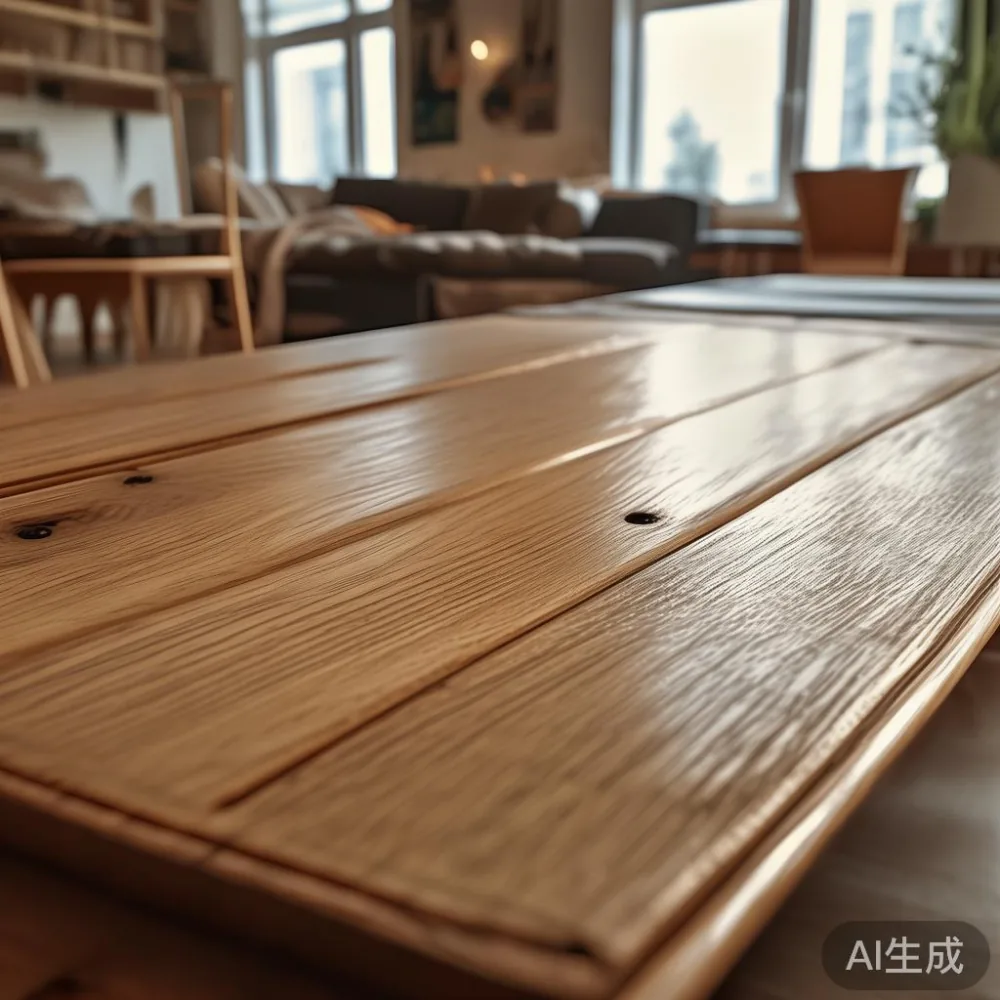
What does 70% relative humidity do to solid wood furniture?
Wood contains bound moisture as well as moisture held in the cell walls. As the surrounding relative humidity rises, the cell walls take up water and the timber swells. As humidity falls, the timber loses moisture and contracts. The movement is greatest across the grain and much smaller in the direction of the grain. A panel 180 cm wide might move by several millimetres across its width while changing very little along its 180 cm length.
Use a calibrated hygrometer rather than guessing from the weather app. Place it near the actual furniture, not beside a window or air-conditioning vent. As a practical guide, keep indoor relative humidity between about 45% and 60%, and avoid sustained readings above 70%. Below 35%, an air-conditioned room can become just as problematic as a humid balcony. Seasonal movement is normal; persistent swings of 25 to 30 percentage points are harder on timber, joints, veneer edges, and lacquer.
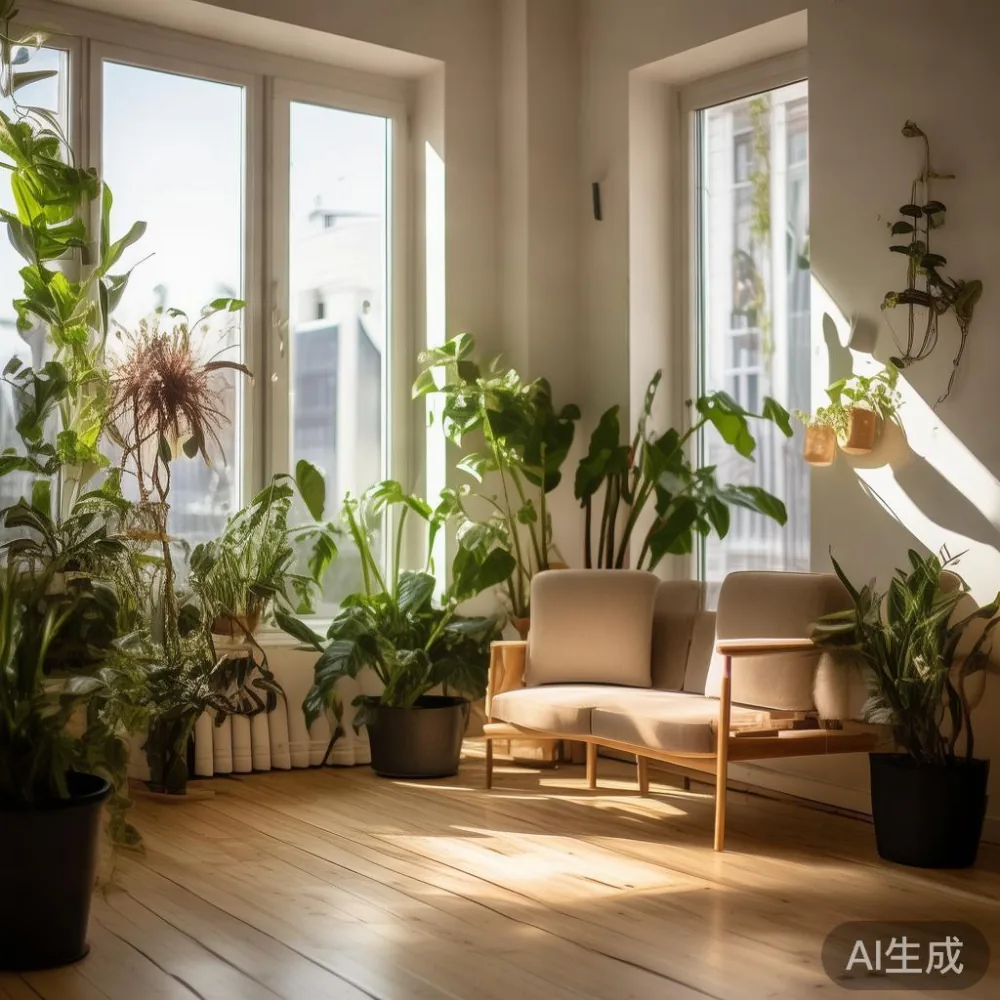
For a solid wood dining table, a modest movement of 2 to 4 mm across a wide top may be acceptable. A gap that opens 8 to 10 mm, a pronounced split, or a joint that repeatedly pulls loose deserves investigation. For a solid wood sofa or bed frame, watch the rails, legs, and joints rather than expecting the timber to remain perfectly dimensionally fixed.
Singapore’s HDB flats make this a domestic issue as well as a building-science issue. A unit near Tampines may face warm, moisture-laden air in an open corridor, then a dry living room after the air conditioner runs for 8 to 10 hours. Bedok homes can experience the same cycle. Condo owners in Punggol may have larger windows, stronger sun exposure, and balcony doors that remain open until late evening. The most useful setup is not a sealed room; it is a stable indoor environment with sensible ventilation.
Can air-conditioning prevent humidity damage?
Air-conditioning lowers temperature and often reduces relative humidity, but it does not make wood moisture-proof. A room cooled to 24°C at 60% relative humidity can still affect a table top. Cold surfaces can also collect condensation when warm, humid outdoor air enters. The risk rises if the furniture stands within about 1 metre of a supply vent, against an external wall, or directly below a window.
Position a solid wood bed frame away from the wall behind the headboard if there is condensation there. Leave roughly 5 to 8 cm between a dining table and a wall, allowing air to move behind it. A wardrobe should have ventilation gaps approved by the installer, commonly 3 to 5 cm at the top and sides where the design permits. A marble table needs particular care because polished stone can show water marks, etching, and cloudy patches even when its base is stable.
Air circulation matters more than constant cooling. In a typical HDB living room, run the air conditioner for 2 to 4 hours after the family returns, then allow the space to settle naturally. If mould appears on walls or the humidity reading remains above 70% for more than 8 hours, use a dehumidifier and have the room or balcony checked for water entry.
Do not place hot or damp objects directly on wood. A mug, coffee machine, plant pot, or bowl of wet fruit can leave a mark over 12 to 24 hours. Use a coaster with a base of at least 8 cm by 8 cm, wipe spills within 5 minutes, and move a potted plant off a nightstand if its saucer is damp.
Which Scandinavian furniture pieces suffer most in a humid climate?
A solid wood dining table is exposed to spills, meals, and frequent temperature changes. Look for solid timber panels joined with stable construction, a finish that can be renewed, and hardware that can be tightened. A light oak dining table can suit a Tampines HDB dining zone, but the manufacturer should explain whether the panels are laminated, finger-jointed, or solid, and how seasonal movement is treated.
A solid wood bed frame is less likely to be wiped with a wet cloth, yet its long rails, slats, headboard, and joint areas can move across the humidity cycle. For a 160 cm by 200 cm queen bed, leave about 5 cm from the headboard to the wall and 60 to 70 cm of circulation space on the main side where the room allows. A king frame measuring 180 cm by 200 cm needs about 90 cm at one side for comfortable use, although the final layout depends on the bed’s projection and the room door.
A wardrobe works continuously at the boundary between room air and enclosed cabinet air. In humid conditions, clothes may already carry moisture into the interior. Keep the 14-day return window in mind, but inspect the wardrobe after installation rather than leaving every hinge unadjusted. Confirm that doors can open through their intended arc; a wardrobe 120 cm wide may need 60 cm or more in front when two doors open at roughly 90 degrees.
A nightstand experiences repeated contact with warm devices and damp objects. Keep a 10 cm ventilation gap around a charging cable and avoid charging a power bank directly on the timber. A solid wood sofa should be checked for loose legs, frame creaks, and cushion movement. High-density foam cushions can soften slightly in humid conditions, so the frame should carry the structure rather than depend on tight upholstery.
A marble table should be treated as a stone-and-timber product. Marble may be used for a 90 cm side table, a 120 cm console, or a 140 cm dining table. Ask whether the top is natural marble, sintered stone, or a composite, and request clear care instructions. Coasters, felt pads, and an even indoor temperature are more useful than repeated chemical cleaning.
Is French bed worth it for a humid Singapore bedroom?
The question “is French bed worth it” is usually about style and comfort rather than moisture, but climate should enter the decision. A French-style bed can work in a Punggol condo with generous circulation, a European-inspired bedroom, or an HDB unit that uses a compact queen frame. Its carved details and pale finish may need more attentive cleaning than a simpler Nordic design, yet a well-finished frame can remain stable.
Buyers comparing European bed vs Nordic bed should compare timber, joinery, slat spacing, and after-sales support rather than nationality alone. A Nordic bed may suit a compact apartment because of restrained projections and visually lighter lines. A French provincial bed may suit a larger master bedroom with a 10 cm or greater gap from the side wall. In either case, avoid placing either bed against a cold external wall in a room that remains above 65% relative humidity.
Use this as a practical shortlist when comparing European bed vs Nordic bed options. For a queen frame, check the usable inner length against a person at least 180 cm tall, confirm the centre support arrangement, and ask whether the slats can be replaced individually. MIDHILL’s 10-year structural warranty gives a Singapore buyer a defined route for a manufacturing issue, while lifetime refinishing is relevant to scratches and surface wear rather than moisture-related movement.
How should a delivery crew move a solid wood wardrobe through a Singapore flat?
Measure before ordering, not after delivery. Record the corridor width, lift door width, lift depth, turning space, and the shortest route from the car park. HDB corridors may be about 120 to 150 cm wide, while a packaged wardrobe section can be 60 to 100 cm wide and 190 to 220 cm tall. A broad wardrobe assembled as one piece may pass a 90 cm lift door but fail at a 90-degree corridor turn.
Ask the supplier for the carton dimensions rather than estimating from the product page. A dining table may arrive as a 180 cm by 90 cm top with separate legs, but the top still needs to turn through the corridor. A solid wood bed frame may be easier to carry as two long rails, a headboard, footboard, and leg set. The delivery fee and whether stairs are included should be confirmed in writing.
Protect the route with cardboard, blankets, and corner guards. A 70 kg dining table will usually need 3 to 4 people, depending on the lift and stairs. A queen bed frame weighing 45 to 70 kg should be moved with at least 2 people and preferably a third for the headboard. Lift operators may impose a weight or load-protection rule, so book the slot early and avoid squeezing a package against the lift doors.
Check the floor and skirting before moving furniture. A 55 cm wide side table can pass a 52 cm door, but not if the handle projects another 6 cm. For a marble table, never lift the stone top by its edge without adequate support; stone can be heavier than visually expected. A 120 cm marble console may weigh 35 to 60 kg, so a two-person lift and the correct lifting points are necessary.
Singapore’s 9% GST should be shown clearly at checkout. USD pricing is also available on the MIDHILL site, but the final SGD total should include GST, delivery, lift, and any stair-carry charge. Buyers can compare the international range at www.midhill.co and use the 14-day return period to check the fit and finish. Free shipping over US$350 applies to qualifying orders, but a local delivery quote for a heavy wardrobe is still worth obtaining.
How do I compare a French sofa with an Italian light luxury sofa in a humid room?
For anyone asking how to choose European light luxury sofa, the practical comparison begins with frame construction, seat density, cover removal, and local service. In a search for French sofa vs Italian light luxury sofa, the same questions apply even though the visual references differ. French design may bring a softer, upholstered expression, while Italian light luxury often uses sharper lines, refined timber details, or coordinated stone surfaces. Neither label predicts humidity performance.
A solid wood sofa frame should have properly joined rails and legs, not only a decorative timber shell. Ask for the frame material, joint type, cushion density, and warranty period. A seat with 35 to 40 kg/m³ of high-density foam may offer a firmer feel, while a softer surface may use a layered fill. Upholstered joints and fabric edges can absorb moisture, so keep the sofa 20 to 30 cm from an exterior wall where space allows and clean with a dry or lightly damp method.
Buyers searching Japanese sofa vs French provincial sofa may also be comparing compactness and visual tone. A low Japanese-influenced sofa may fit a small HDB living room, but comfort still depends on seat depth, rear clearance, and frame stability. A French provincial sofa may need more floor area and careful fabric care. Measure the intended zone, including 60 to 90 cm of circulation space in the main path.
Style should meet access and climate requirements. In a 12 m² HDB living-dining room, a sofa up to 200 cm wide can work if the dining table and television path remain usable. In a larger condo, a deeper 95 to 105 cm sofa may suit the space. Ask for a fabric specification, care kit, and replacement cushion information. A light-luxury or French light luxury appearance does not remove the need for stable timber and restrained indoor humidity.
What care routine protects solid wood in Singapore?
Check the relative humidity once a week for the first 3 months, then once a month after the room settles. Aim for 45% to 60%. Keep the reading below 65% near a wardrobe or bed for at least 8 hours a day. If it remains higher, improve ventilation, relocate the piece, or run a dehumidifier. A compact unit may remove 10 to 20 litres of water per day, though actual output depends on the room temperature and humidity.
Clean timber with a soft cloth lightly dampened with water and a small amount of pH-neutral soap, then dry it immediately. Test an inconspicuous area over 24 hours. Avoid silicone sprays, ammonia, abrasive pads, and excess water around joints. A 30 cm by 10 cm spill should be removed within 5 minutes; if it seeps into a joint, dry the area slowly with airflow rather than applying more heat.
Re-oil or renew the finish according to the surface type and use, not a fixed internet rule. A lightly used nightstand may need attention every 12 to 18 months, while a dining table exposed to meals may need it every 6 to 12 months. Follow the supplier’s coating guidance and avoid applying an incompatible product over lacquer, wax, or oil.
Rotate small accessories so one patch does not darken repeatedly. Use felt pads under vases and coasters, and keep leather, paper, and fabric away from vents. Check the wardrobe every 3 months during the first year, tightening fittings only as necessary. Inspect the sofa and bed frame for creaks each humid season, roughly every 3 to 4 months.
Finally, watch the building rather than blaming the furniture. Brown streaks below a window, swollen skirting, peeling paint, or condensation on glass can indicate air leakage or dampness beyond normal tropical weather. Singapore’s heavy rainfall, nearby construction, and persistent humidity can magnify those conditions. A Singapore buyer who controls the environment, measures access, and maintains a stable finish can enjoy Scandinavian furniture for many years without treating solid wood as decorative-only.