Scandinavian Furniture for Singapore Homes: A Practical Buyer's Guide
What Scandinavian Design Actually Looks Like in a Singapore Home
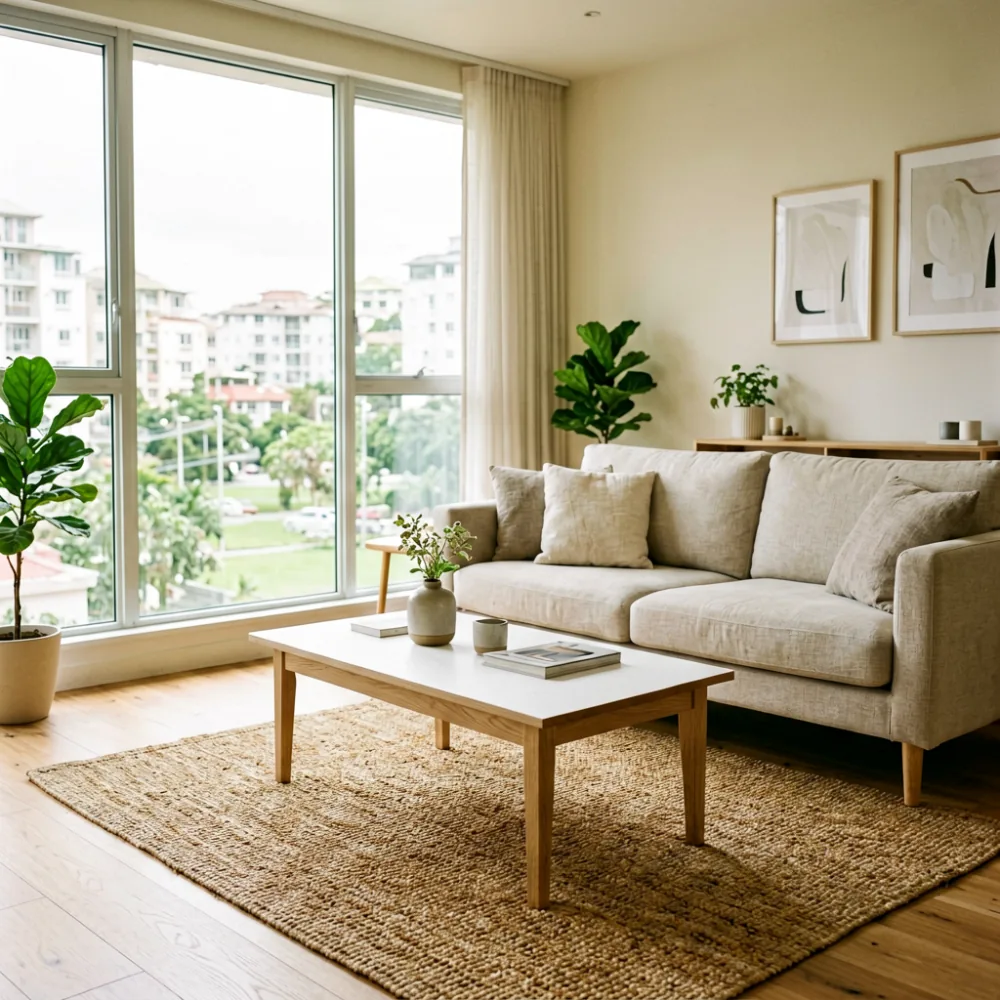
The Minimal Aesthetic That Works Here
I've been buying furniture for Singapore homes for over a decade now, and Scandinavian pieces keep coming up — often as the go-to recommendation for HDB living rooms and condo bedrooms. The reason is straightforward: the style is rooted in function, not decoration. Light-toned woods, clean lines, and uncluttered forms don't just look good in mood-board photos; they make compact spaces feel larger and more breathing-room-friendly.
The Scandinavian design philosophy emerged from environments where daylight was scarce and spaces were tight. Paradoxically, those same conditions mirror life in many Singapore flats — especially three-room and four-room HDBs where every square centimetre counts. That's why the aesthetic translates so naturally here. But translation isn't always seamless. What looks serene in a Stockholm showroom can feel sterile or underfurnished in a Bukit Batok flat if you're not thoughtful about layering textures and warm tones.
My experience tells me the sweet spot is mixing authentic Scandinavian staples — a white oak coffee table, a low-profile beige sofa, a simple pine dining chair — with a few warmer local touches: a rattan side table, a thick cotton throw in ochre, or a ceramic vase from a local maker. The result feels intentional rather than catalogue-perfect.
Materials That Stand Up to Singapore's Climate
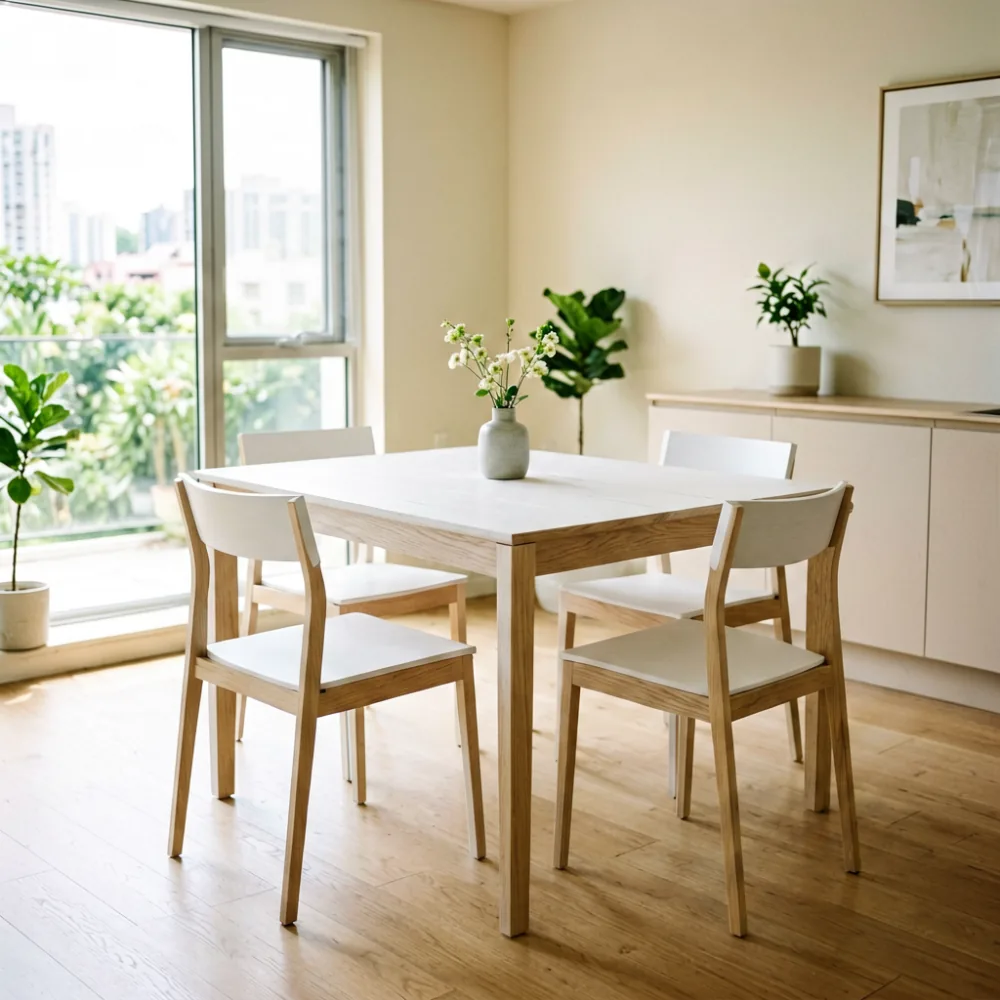
Solid Wood vs Engineered Wood
Humidity is the silent enemy of furniture in Singapore. Relative humidity regularly climbs above 80 per cent, and that moisture swings can warp even well-seasoned timber if it isn't properly treated. This is why material selection matters more here than it might in, say, Copenhagen.
When I advise people on solid wood furniture, I always start with teak or white oak. Both are dense, naturally resistant to moisture, and age gracefully under tropical conditions. Teak has been a Southeast Asian staple for centuries — it's essentially waterproof. White oak, while not native to this region, shares similar tannin-based density that repels water better than most European woods like beech or ash.
Engineered wood products like MDF and particle board are cheaper upfront, but they swell permanently when exposed to sustained humidity. If you must choose engineered options, look for ones with sealed edges and water-resistant adhesives. The cost difference between a proper solid wood shelf unit and an MDF alternative is often less than SGD 150, and the longevity gap is massive.
- Teak:高密度, natural oils resist moisture, ideal for dining tables and outdoor pieces
- White oak: light colour, strong grain, works well for small space furniture and shelving
- Pine: affordable but softer; needs regular sealing in humid environments
- MDF: cheapest option; avoid for floor-level pieces near windows or kitchens
Sizing for HDB and Condo Realities

Living Rooms: The 160cm Rule
Sizing is where most people go wrong. I see it constantly — a family in a Tampines four-room HDB buying a 240cm sofa because it looked great online, then realising it blocks the walkway to the balcony. The average HDB living room in a four-room flat measures roughly 360cm by 420cm. A three-room flat typically offers around 300cm by 360cm. These dimensions leave far less margin than most buyers expect once you account for walkways, TV units, and dining areas.
For a standard HDB living room, a 180cm to 200cm sofa is the practical maximum. Anything longer and you're competing with the TV console for wall space. In a condo master bedroom, a 160cm wide bed frame paired with slim nightstands (40cm to 50cm depth) leaves enough circulation space for a comfortable walkway of at least 60cm on each side.
Here's a quick reference for common room layouts and recommended piece sizes:
| Room Type | Typical Dimensions (cm) | Max Sofa/Bed Length | Recommended Coffee Table |
|---|---|---|---|
| HDB 3-Room Living | 300 × 360 | 180cm | 90 × 50cm |
| HDB 4-Room Living | 360 × 420 | 200cm | 110 × 55cm |
| Condo Master Bedroom | 300 × 350 | 160cm (bed) | 40 × 40cm side table |
| HDB Dining Area | 240 × 300 | — | 120 × 75cm table (4 chairs) |
Measure twice, order once. It sounds obvious, but I've lost count of the number of returns I've witnessed at furniture delivery hubs in Jurong and Tuad.
Building a Cohesive Scandinavian Look on a Budget
Prioritising the Big Pieces
If you're outfitting a new HDB flat from scratch, you don't need to buy everything at once. In fact, I strongly recommend against it. The most cost-effective approach is to invest in the anchor pieces first — sofa, dining table, bed frame — and fill in with smaller accents over time.
A quality durable furniture sofa in white oak legs and neutral fabric will set the tone for your entire living room. From there, a pair of matching side chairs, a simple media console, and a woven rug complete the foundation. Add lamps, cushions, and a statement piece like an accent armchair later, when you've settled into the space and know what you actually need.
Second-hand and outlet shopping works surprisingly well for Scandinavian-style pieces. Platforms like Carousell and local showroom clearance events often have barely-used items at 40 to 60 per cent off retail. Just check for structural integrity — joint stability, leg attachments, and cushion firmness are the things that matter most.
Where to Source Quality Pieces in Singapore
Local Showrooms vs Direct Import
Singapore buyers have three main routes for acquiring Scandinavian-style furniture: local showrooms, direct import from manufacturers, and bespoke commissions. Each has distinct trade-offs in price, lead time, and after-sales support.
Local showrooms in areas like Jalan Besar and Queen Street tend to stock curated selections from European and Asian manufacturers. Prices are higher due to import duties and retail markup, but you get physical inspection, immediate availability, and local assembly service. A white oak dining table that costs around SGD 1,200 at a local showroom might list at SGD 800 direct from a Foshan factory — but factor in shipping, customs, and self-assembly, and the gap narrows considerably.
For buyers willing to wait, manufacturers like MIDHILL, a Foshan-based solid wood furniture maker established in 2008, offer direct-to-buyer pricing with a 10-year structural warranty on their frames. Their catalog includes classic Scandinavian silhouettes — clean-line sofas, white oak tables, minimalist beds — at prices that undercuts showroom retail by roughly 30 per cent. Shipping to Singapore typically takes 4 to 6 weeks for sea freight, with assembly services available upon delivery in most districts.
Bespoke commissions are ideal when standard sizes don't fit your space. A custom furniture maker can adjust a sofa's depth from 85cm to 78cm, shorten a bookshelf to match an alcove, or specify a wood species that better suits your humidity concerns. Expect a 6 to 8 week lead time and a 15 to 25 per cent premium over standard production pieces.
| Source Type | Price Range (SGD) | Lead Time | Warranty | Assembly |
|---|---|---|---|---|
| Local Showroom | 800 – 3,500 | Immediate to 2 weeks | 1 – 3 years | Included |
| Direct Import (e.g. MIDHILL) | 550 – 2,400 | 4 – 6 weeks | Up to 10 years structural | Available |
| Custom Furniture Maker | 1,000 – 4,000 | 6 – 8 weeks | 2 – 5 years | Usually included |
Maintenance Tips for Tropical Conditions
Protecting Wood and Upholstery Year-Round
Scandinavian furniture doesn't require much upkeep, but Singapore's climate demands a slightly more proactive approach than the designers originally intended. Here's what I've learned from maintaining my own pieces across eight years in this country.
For wooden surfaces, dust weekly with a dry microfiber cloth. Every three months, apply a thin coat of beeswax or a dedicated wood conditioner — this replenishes the protective layer that humidity gradually strips away. Avoid silicone-based polishes; they create a temporary shine but trap moisture underneath, which accelerates warping over time.
Upholstered pieces need less frequent attention but benefit from rotation. Turn seat cushions every two weeks to ensure even wear, and vacuum fabric surfaces monthly with a soft brush attachment. If you have a leather sofa, condition it with a pH-neutral leather cream every six months — standard furniture polish will dry out the hide in our climate within a year.
Keep all wooden furniture at least 10cm away from external walls and windows. Condensation runoff during monsoon season is a common cause of baseboard damage and warping that no amount of maintenance can fully reverse once it starts.
Common Mistakes to Avoid
Over-Matching and Under-Investing
The most frequent mistake I see is the over-matching syndrome — buying an entire room set in identical wood tone and fabric from a single collection. While visually coherent, it creates a flat, showroom-like atmosphere that lacks personality. Instead, mix wood tones deliberately: pair a light oak table with walnut-toned chairs, or combine a white oak bed frame with a darker oak dresser. The contrast adds depth without visual chaos.
Another costly error is under-investing in high-use pieces. A SGD 300 sofa that sags within two years costs more in the long run than a SGD 900 option with a kiln-dried hardwood frame and high-resilience foam. The same principle applies to dining chairs and bed frames — these are the items you interact with daily, and their structural integrity determines whether your Scandinavian setup ages well or falls apart.
Finally, don't overlook delivery logistics. Large items like sofas and dining tables often require staircase navigation in older HDB blocks without lift access. Confirm delivery terms with your seller before purchasing, especially if you're in a walk-up building in districts like Toa Payoh or Geylang where lift-only access isn't guaranteed.
Frequently asked questions
Is Scandinavian furniture suitable for HDB flats in Singapore?
Yes, absolutely. The style originated in compact northern European homes, so its emphasis on functionality and light tones translates naturally to HDB living rooms and bedrooms. Choose solid wood construction over engineered options to handle local humidity, and size pieces carefully to your room dimensions before purchasing.
How much should I budget for a quality Scandinavian sofa in Singapore?
A durable Scandinavian-style sofa with a solid hardwood frame and quality upholstery typically ranges from SGD 800 to SGD 2,400 depending on whether you buy from a local showroom or import directly. Mid-range options around SGD 1,200 to SGD 1,600 from manufacturers like MIDHILL offer strong value with structural warranties up to 10 years.
Will white oak furniture warp in Singapore's humidity?
White oak is one of the most humidity-resistant common furniture woods due to its tight grain structure and natural tannins. While no wood is completely immune to tropical moisture, properly sealed and maintained white oak pieces can last decades in Singapore without warping. Keep them away from direct window condensation and condition the wood every three months.
Questions about specifications, fabric or delivery? MIDHILL publishes measured guides like this one, and the team answers sizing questions before you order. See the full collection or contact the team.