Warm Minimalism: Solid Wood Furniture Matching Tips for Interiors
If you have spent any Saturday afternoon walking through the HDB Hub in Tampines, you already know the same problem repeats itself on every level: another row of glossy laminates, another showroom of grey-and-white sets, and almost no one willing to tell you whether that bed frame will still look honest five years from now. After a decade of shipping solid wood pieces from Foshan to living rooms in fifteen or more countries, the team at MIDHILL has seen this hesitation often enough to write a proper answer. This guide is built around the warm minimal interior — a softened Scandinavian direction that suits Singapore's flat layouts, lift dimensions, and frankly, the way natural light behaves when filtered through a north-facing Bedok or Punggol window.
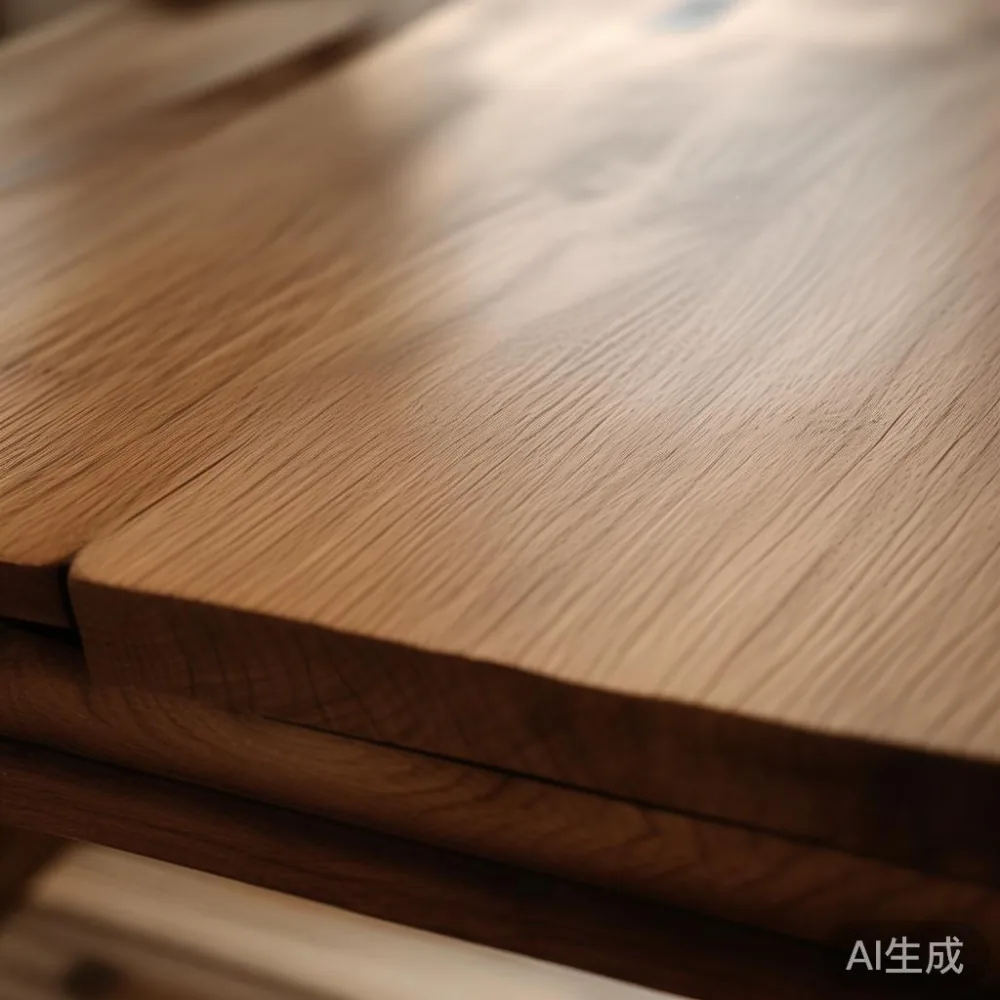
What does a warm minimal interior actually look like in a Singapore HDB?
A warm minimal interior is not a contradiction in terms. It is the moment a Scandinavian layout language — long lines, low visual noise, pale walls, and unornamented joinery — meets warm wood tones, brushed brass hardware, and a single tactile fabric such as bouclé or raw linen. Think white walls at 9 percent off-white, an oak-veneer console, a cream bouclé solid wood sofa, a travertine-look marble table, and exactly one large-format artwork above the TV console. Nothing more, nothing less.
The reason this style travels so well into local flats is practical. A standard 4-room HDB living room is roughly 4.2 m by 3.6 m, and the corridor outside your unit measures about 1.2 m wide. Most warm minimal layouts keep furniture to a footprint of 2.6 m by 0.95 m for the sofa, a 1.4 m dining table, and a 1.8 m by 2 m bed frame in the master. Those numbers are not arbitrary — they leave a 70 cm walking lane and still allow a single side table plus a wardrobe of 180 cm in height without scraping the false ceiling.
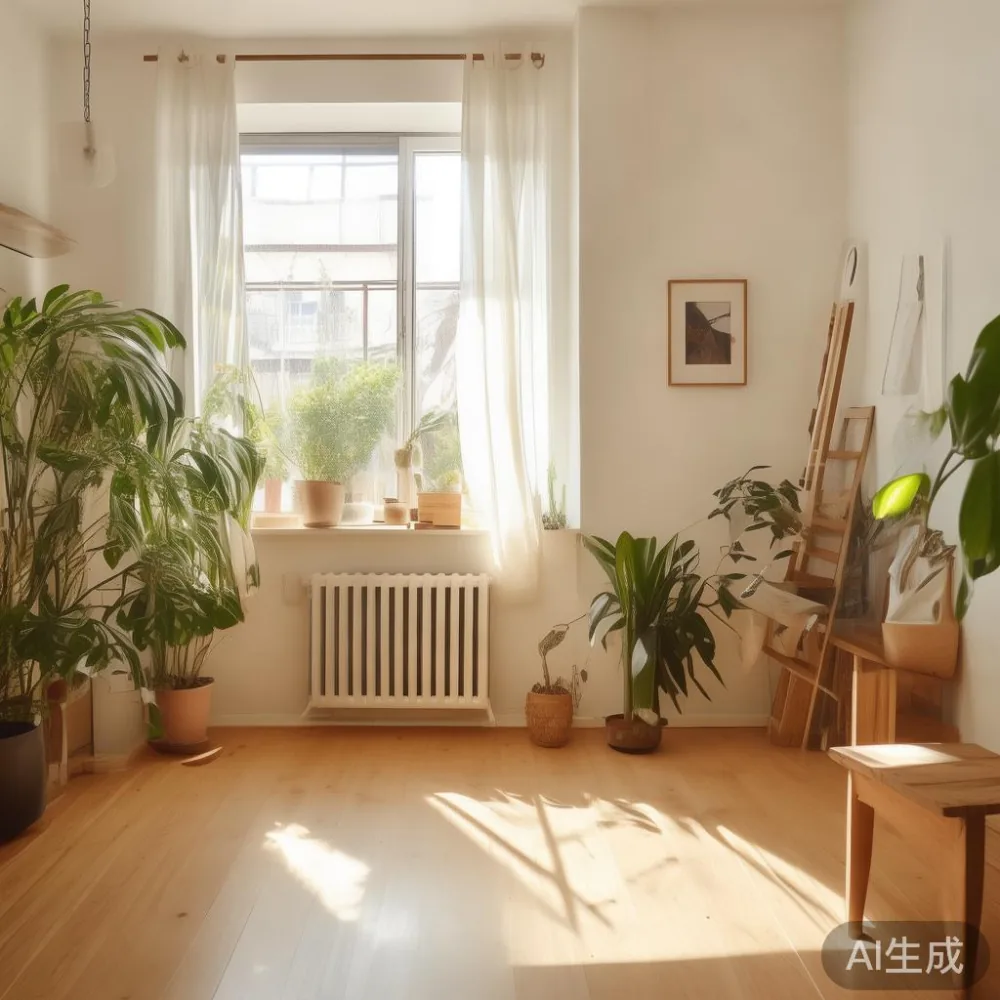
Is the Japandi bed worth it for a small master bedroom?
The honest answer for a 3.6 m by 3.2 m master in a Punggol Build-to-Order flat is usually yes, with one condition. A Japandi bed combines Japanese platform proportions (low slat height, around 18 to 25 cm from the floor) with Scandinavian material honesty (visible solid wood grain, no plastic trim, no MDF core). For a queen-sized room where every centimetre counts, the lower visual profile of a 22 cm platform makes the ceiling feel taller and the room feel wider.
On the comparison question, the American bed vs Japandi bed debate comes down to weight and silhouette. American bed frames tend to favour tall headboards (110 to 140 cm), thicker footboard posts, and a heavier visual mass. They suit a 5-room condo in District 15 with 3.2 m ceilings; they overpower a standard HDB master. A Japandi platform, by contrast, reads as a single horizontal plane. For Singapore buyers, the most important number is the side clearance: a queen Japandi bed should leave at least 60 cm on each side so you can still tuck a 45 cm nightstand without blocking the door swing.
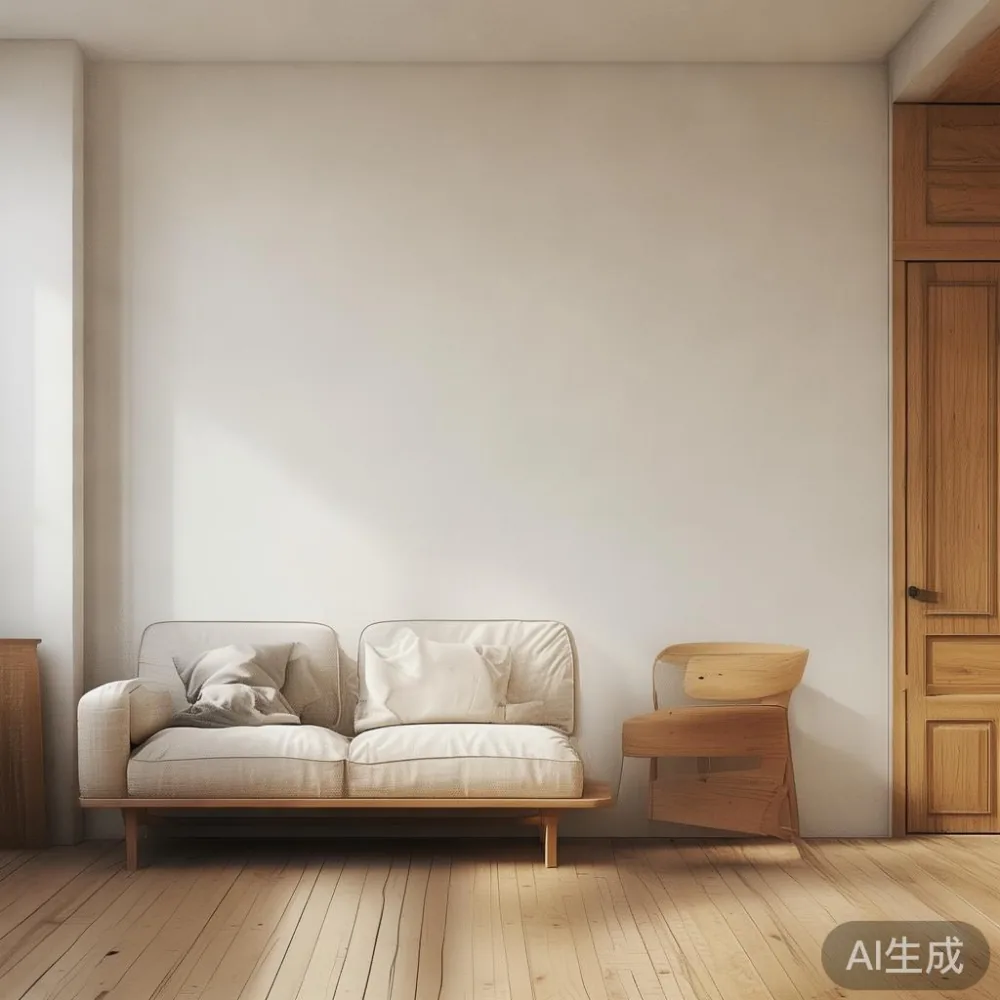
Price context, since we are shopping in SGD: a solid oak Japandi queen platform from a Foshan workshop lands between S$1,150 and S$1,650 landed, while an American-style upholstered bed in the same size runs S$1,800 to S$2,400. Add in 9 percent GST, and the Japandi math looks reasonable. You can also pre-check the lift opening in your block — most HDB passenger lifts in Tampines and Bedok measure 1.1 m by 1.4 m internally, which clears a 2 m long slat pack if it is delivered flat-packed and assembled in-room.
Where to buy wardrobe from MIDHILL when you do not have a walk-in closet?
This is one of the questions that arrives in the inbox at midhillco@gmail.com more often than any other from Singapore buyers. A walk-in closet is a luxury in a 4-room flat, so the wardrobe is doing the heavy lifting. The honest answer for a warm minimal room is a 180 cm to 200 cm tall, three-door solid wood wardrobe in white oak or natural ash, with flush fronts and no visible handles (or a single recessed brass channel).
For HDB buyers, the sizing discipline is strict. A 200 cm wardrobe will not fit under the standard 2.4 m ceiling if you have a 5 cm false ceiling and a 3 cm cornice — that leaves 2.32 m, which is workable. If your block has the newer 2.6 m ceiling height found in some Punggol and Sengkang BTOs, you can step up to a 220 cm unit and gain 20 percent more hanging volume. Internally, plan for at least 55 cm of hanging depth (a standard hanger is 48 cm), two soft-close drawers between 12 cm and 18 cm deep, and one shelf at 32 cm height for folded knits. Most buyers ask, quite reasonably, is Japanese wardrobe worth it in a 4-room flat? The honest answer: only if you can find one in the 180 to 200 cm range with sliding rather than swing doors, because a swing door needs 55 cm of clear floor space to open, and that is half a metre of usable bedroom that a Singapore household rarely has to spare.
Which light luxury direction suits a Tampines or Bedok condo without looking dated in three years?
Three light luxury sub-styles compete for the warm minimal room, and each behaves differently under Singapore's tropical light. French light luxury leans into soft taupe, curved silhouettes, brushed champagne hardware, and a single marble table as the visual anchor. American light luxury is more architectural: low-profile sofas, walnut tones, recessed lighting channels, and one statement artwork. Post-modern light luxury — the one designers in Tiong Bahru and Cairnhill are quietly adopting — combines chunky solid wood bases, a single curved accent chair in boucle, and a fluted travertine-look bedside.
For most HDB and mid-tier condo owners, post-modern light luxury offers the best return because it absorbs wear. A solid wood sofa in the 2.6 m range, paired with a 1.4 m walnut dining table, will photograph well for the next five to seven years without looking tied to a specific decade. The French direction can read as slightly precious if executed in a 92 sqm unit; the American direction can read as cold if the room does not get direct morning sun. If you are browsing catalogues and see the phrase top 10 French furniture lists online, treat them as inspiration rather than a shopping list — most of those pieces are designed for Parisian Haussmannian rooms with 3.5 m ceilings and 4 m tall windows, neither of which Tampines offers.
How do you keep a warm minimal room from sliding into beige-on-beige?
This is where most warm minimal rooms in Singapore quietly fail. The base palette — off-white walls, light oak furniture, cream upholstery — is correct, but without one or two contrast points the room reads as washed out, especially under the 3000K warm white downlights that electricians in Bedok still default to. The fix is small but specific. Add one dark element (a charcoal solid wood side table, a black steel reading lamp, a framed 60 cm by 80 cm print with a black mat) and one reflective element (a marble table, a brass-trimmed mirror, a brushed gold pendant).
Concrete rules that have worked across the flats I have visited over the past year: keep wall colour at most 2.5 shades away from pure white (anything darker starts to absorb the limited daylight in a corridor-facing unit). Choose a solid wood bed frame in white oak rather than red oak for visual softness. Pick one tactile fabric per room — bouclé on the sofa, linen on the headboard cushion, wool on a single 200 cm by 300 cm rug. And if you are going to spend on one surface, spend it on the dining table. A 1.4 m by 0.8 m solid wood dining table in ash, with a single marble table runner in cream travertine, will carry the room in a way that no sofa cushion can.
What does a real Singapore delivery look like for solid wood pieces?
Last month, a colleague visited a 5-room BTO in Punggol to see how a customer's order had landed. The unit is on the 14th floor of a block with two passenger lifts, each 1.2 m by 1.6 m internally, and a service lift of 1.8 m by 2.4 m. The order was a queen solid wood bed frame, two 45 cm nightstands, a 1.8 m by 0.9 m wardrobe, and a 1.4 m solid wood dining table — all flat-packed, all from MIDHILL. The delivery team used the service lift for the wardrobe and the dining table, and the passenger lift for the bed slats. Total time from doorstep to fully assembled bedroom was 2 hours 40 minutes, with no scratches on the corridor walls and no need to remove the front door.
That kind of number matters because, in Singapore, a single scratch on a corridor wall can cost S$80 to S$150 to repaint, and a damaged front door frame can run S$400 or more to repair. The other practical detail is GST: a S$2,400 order attracts S$216 in GST, which is included in the checkout total at most licensed retailers, so you are not paying it separately on delivery. Shipping over S$350 is free on most Foshan-to-Singapore lanes, sea freight from Shenzhen or Guangzhou to Tuas typically takes 14 to 21 days, and the 14-day return window starts the day the cartons reach your unit, not the day they leave the warehouse.
How do you decide between a solid wood sofa, a fabric sofa, and a leather sofa in a warm minimal room?
For Singapore's humidity, the answer is almost always a solid wood frame with removable fabric covers, in either bouclé or a tight-weave linen blend. A solid wood sofa, by definition, has a kiln-dried hardwood frame (typically ash, oak, or beech) with mortise-and-tenon or dowelled joinery. That construction outlasts a plywood frame by roughly two to three times the lifespan in our climate, and the slats and springs are replaceable. A 2.6 m solid wood sofa in cream bouclé lands between S$1,950 and S$2,800 depending on the cushion fill, while a comparable leather piece starts around S$3,200 and goes up quickly.
If you are hunting for a best European light luxury bed for 2026 comparison, run the same longevity math on the bed frame. A European light luxury bed in oak, with a 22 cm platform and a 90 cm headboard, will be on trend in 2026 and still photograph acceptably in 2031. A trend-led upholstered bed with a curved headboard will look fresh in 2026 and tired by 2029. The 10-year structural warranty that comes with MIDHILL solid wood pieces covers the joinery, not the fabric, and that is the right way to structure it: the wood is the long-life component, the textile is the replaceable one.
What is the smallest set of pieces a warm minimal HDB needs to feel finished?
Six pieces, no more. A 2.6 m solid wood sofa in cream bouclé. A 1.4 m solid wood dining table with four ash chairs. A queen 1.8 m by 2 m Japandi bed frame. A 180 cm three-door wardrobe in white oak. Two 45 cm nightstands in matching ash. And one marble table — a round 80 cm travertine-look piece in the living room, used as a coffee table. That set fills a 4-room HDB without crowding it, leaves the corridor outside the master clear, and gives you one room that can be photographed for a sublet listing or a long-stay tenant handover without re-styling.
The total landed cost of those six pieces, including 9 percent GST and free shipping above S$350, sits between S$6,400 and S$8,200 depending on fabric grade and whether you opt for the post-modern light luxury hardware or the cleaner Scandinavian direction. The same set in a Singapore high-street showroom, with comparable solid wood construction and similar warranty, runs S$11,000 to S$14,000. The difference is not quality, it is the number of middlemen between the Foshan workshop floor and your Tampines living room.
Final thoughts on building a warm minimal room that lasts
A warm minimal interior is not a catalogue page, it is a series of small, honest choices about what stays in the room and what leaves. The pieces that survive the move from one BTO to the next, from Tampines to Punggol to a future EC upgrade, are almost always the ones with solid wood frames, replaceable textiles, and a silhouette that does not belong to a single year. Choose the Japandi bed, the sliding-door wardrobe, the cream solid wood sofa, and one marble table. Skip the curved headboard, the velvet accent chair, and the glossy lacquer console — they will look like 2025 in 2028, and that is the part no showroom will tell you. If a specific question is keeping you up at night, write to midhillco@gmail.com with your floor plan and a photo of your corridor, and the team can usually sketch a layout that fits in a single reply.