How to Match Furniture to a Warm Minimal Interior
Warm minimalism is the style most Singapore homeowners quietly default to without naming it. It is the look you see in the new BTOs at Tampines GreenRidges, the resale flats along Bedok Reservoir Road, and the shoebox condos rising above the MRT tracks in Punggol Northshore. White walls, beige floors, a single linen curtain, and one or two pieces of solid wood furniture that visibly warm the room. The aesthetic borrows heavily from Scandinavian furniture traditions, but it adds a layer of what designers often call French light luxury or post-modern light luxury: a softer palette, a brushed brass handle here, a fluted marble table there, a curved-back armchair instead of a straight one. Done well, the room reads as quiet and expensive. Done badly, it reads as an empty showflat.
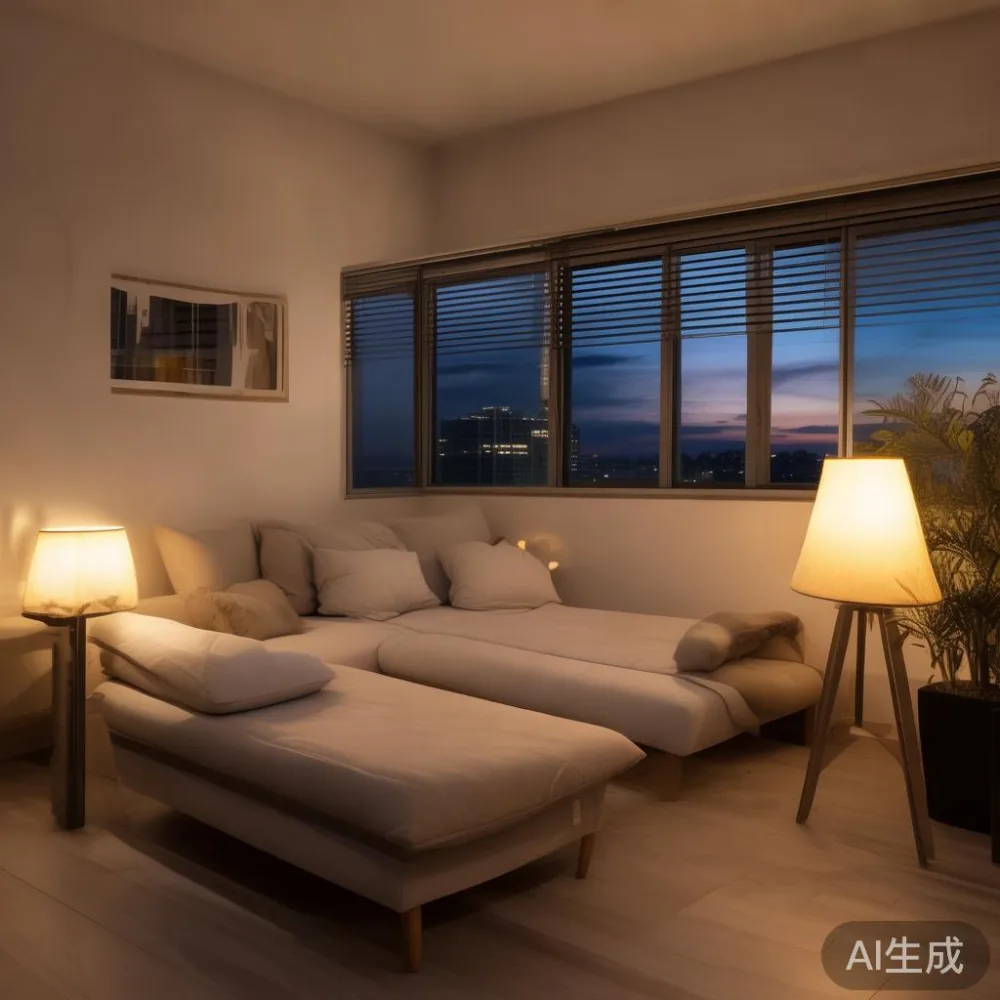
I visited a friend's 92 sqm BTO in Punggol last month and watched her agonise over the gap between her Pinterest saves and her actual living room. Her mistake was treating the warm minimal look as a paint colour, when it is really a system of proportions, materials, and negative space. This guide is the checklist I gave her, calibrated for Singapore ceiling heights of 2.4 m to 2.8 m, lift openings of about 1.0 m by 1.2 m, and the narrow corridor turning circles in older HDB blocks where a 2.4 m sofa simply will not come up the stairs.
What does a warm minimal interior actually look like?
A warm minimal interior is a room where roughly 70% of the visual surface is calm (white, cream, soft taupe, light oak, brushed plaster) and the remaining 30% carries the warmth. The warmth usually arrives through wood grain, woven cane, wool bouclé, travertine, or unlacquered brass. The Scandinavian furniture vocabulary supplies most of the shapes: a low-profile solid wood sofa on tapered legs, a rectangular dining table with rounded corners, a bed frame in white oiled ash, and wardrobes with flat fronts rather than moulded panels.
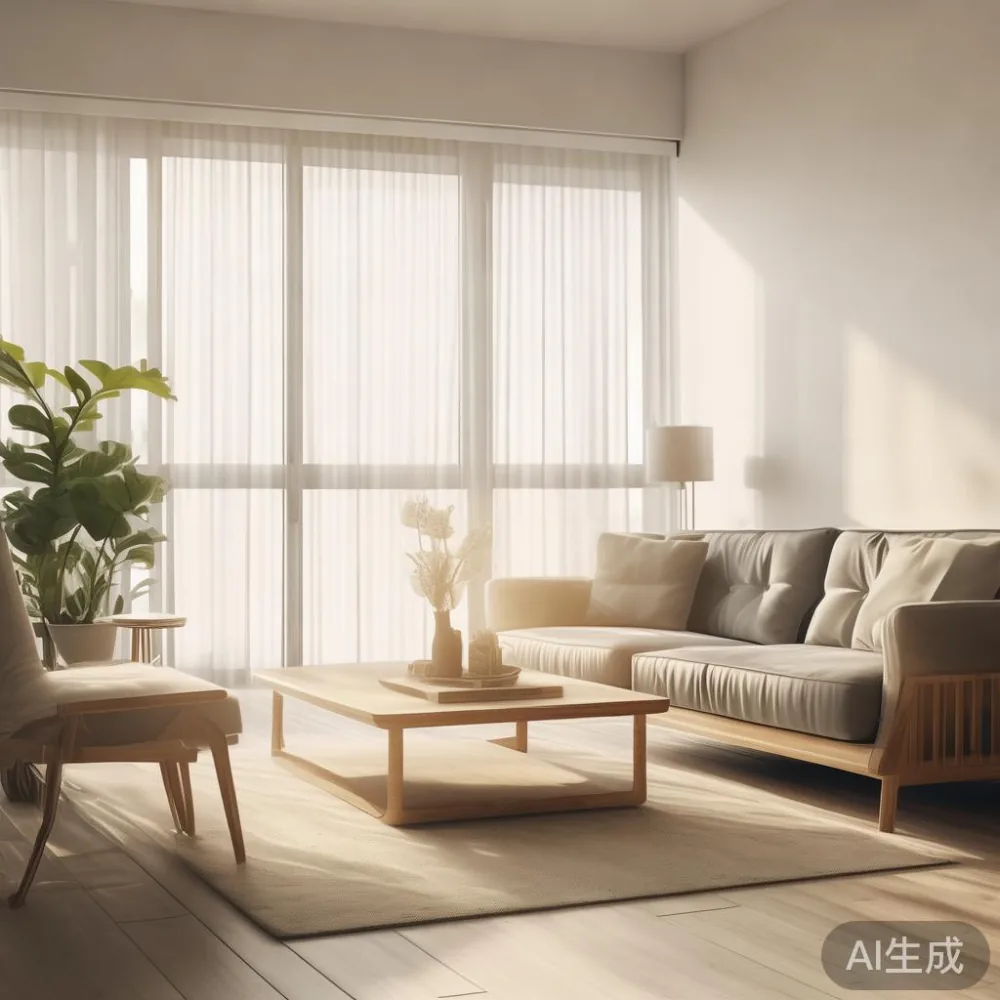
The light-luxury layer sits on top of that base. In a French light luxury version, expect a small marble table beside the sofa, a velvet cushion in muted olive, and a single antique-style gilt mirror over the console. In an American light luxury version, expect deeper walnut tones, larger sofas (often 2.6 m to 3.0 m wide), and slightly chunkier nightstands. The post-modern light luxury version mixes these, throwing a curved backrest and a fluted ribbed front on a Scandinavian silhouette. Whichever direction you lean, the rule is the same: one or two hero pieces per room, the rest recedes.
How do I choose a furniture for a small space?
Choose furniture for a small space by measuring the room and the access route first, then selecting pieces under 75 cm deep for walkways and under 2.2 m long for anything that must clear an HDB lift or a condo service corridor. In Singapore, the practical rule is that any piece longer than 2.0 m must be checked against the lift door (commonly 0.9 m wide by 2.1 m tall) and the corridor turning radius (usually 1.5 m to 2.0 m), or it simply will not arrive.
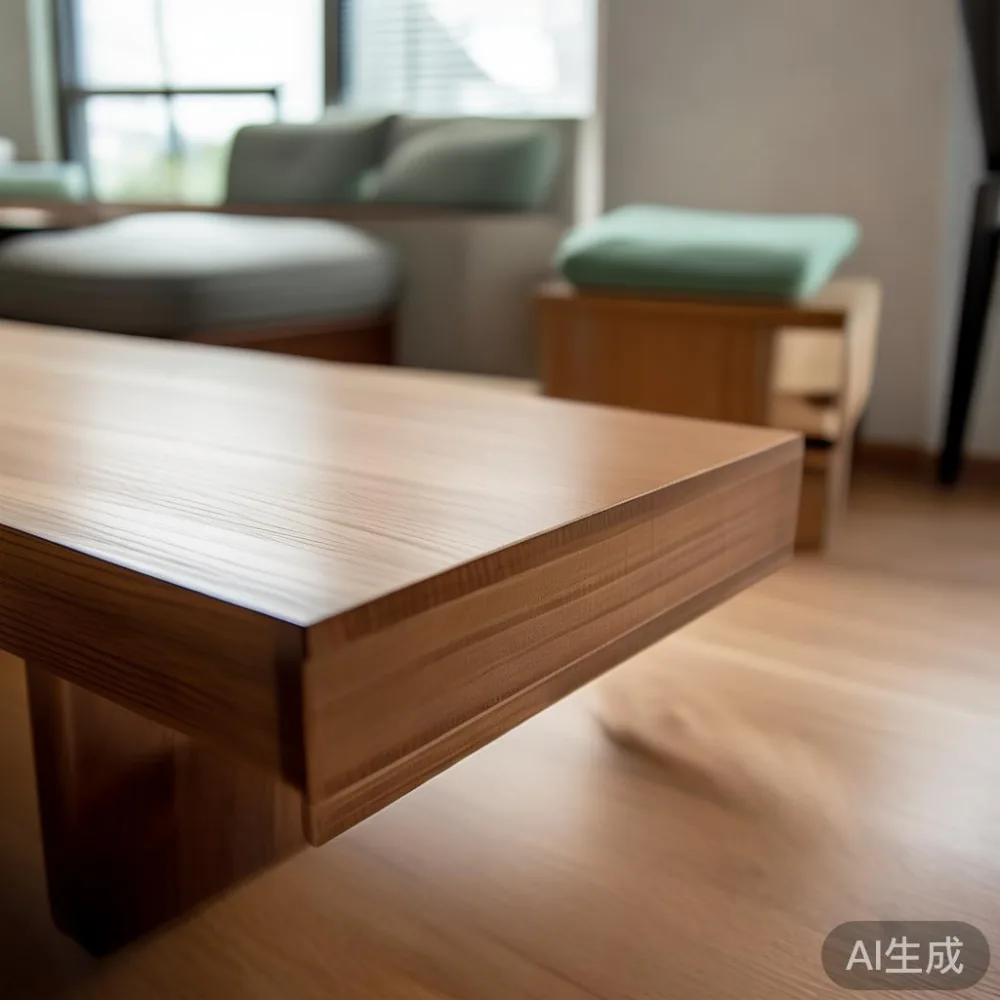
Concretely, for a 4-room HDB living room of about 18 sqm, I would size the sofa at 2.0 m to 2.2 m, the coffee table at 1.2 m by 0.6 m, the TV console at 1.6 m wide, and the rug at 2.0 m by 2.8 m. Anything larger starts eating into the 0.9 m walkway the SCDF guidelines expect, and the room begins to feel like a storage unit. For bedrooms of 10 sqm to 12 sqm, a queen bed frame at 1.5 m by 2.0 m leaves room for a 0.45 m deep nightstand on each side and a 0.55 m wide wardrobe aisle.
This is also where considering sofa bed pros and cons matters for Singapore families. A sofa bed gives you a 1.4 m or 1.6 m sleeping surface for the occasional relative from Kuala Lumpur or a friend crashing after a CNY gathering, but the mechanism adds 8 cm to 12 cm of seat depth and typically 18 kg to 25 kg of weight, which changes how the piece sits in the room. If the sofa bed will only be used three nights a year, a regular 2.0 m solid wood sofa usually looks better and lasts longer.
Which wood tones and finishes match a warm minimal palette?
For a warm minimal interior, choose woods in the honey to caramel range: light white oak with a matte oil finish, natural ash, light walnut, or beech. Avoid very dark mahogany, high-gloss lacquers, and any finish with a strong orange or red cast. In Singapore's equatorial light, a 9% matte oil on white oak will read as soft beige by day and a quiet gold by night, which is exactly the warmth the style is built on.
Solid wood is non-negotiable for the hero pieces. A solid wood dining table in white oak, around 1.4 m by 0.8 m, seats four comfortably and six at a squeeze. A solid wood bed frame in ash, around 1.6 m wide for a queen, grounds the bedroom. A solid wood sofa frame (rather than a plywood-and-foam box) keeps the silhouette from sagging after two humid years, which matters because Singapore's average RH of 70% to 85% is unforgiving to compressed wood. For wardrobes, a flat-front solid wood carcass on a plinth base reads more minimal than mirrored or paneled doors, and a nightstand in the same wood ties the room together at a glance.
Finishes should be matte. Anything with a sheen over 15% will pick up the afternoon glare coming through the west-facing windows in a Punggol or Clementi unit and turn the room shiny. Brushed brass or black metal legs are the safest hardware choices; chrome reads too cold for warm minimal and too 2010s for light luxury.
What are the price realities in SGD for a warm minimal set?
A complete warm minimal set for a 4-room HDB, bought in Singapore dollars, typically breaks down as follows. A 2.0 m solid wood sofa frame (you supply your own fabric, or pay SGD 280 to SGD 450 for upholstery) runs SGD 1,400 to SGD 2,200. A 1.4 m white oak dining table with four beech chairs runs SGD 2,200 to SGD 3,800. A queen solid wood bed frame with slatted base runs SGD 900 to SGD 1,600. A 1.8 m three-door wardrobe in ash or oak veneer over solid wood frame runs SGD 1,800 to SGD 3,200. A pair of nightstands runs SGD 350 to SGD 600 each. A 1.2 m marble table (MDF core with marble top, which is what most Singapore retailers actually ship) runs SGD 900 to SGD 1,800.
Add it up and the core set, before GST and before delivery, sits between SGD 7,500 and SGD 13,000. Add 9% GST, add delivery at SGD 80 to SGD 220 depending on lift access, and a typical homeowner lands at SGD 8,500 to SGD 14,800. That is a wide range because the swing between a flat-pack particleboard set and a proper solid wood set is enormous. The cheaper end will need replacing within 5 to 7 years; the solid wood end should still be in your home in 15 years. MIDHILL, a Foshan maker focused on solid wood Scandinavian furniture since 2008, ships directly to Singapore with quoted lead times of 35 to 55 days and a 10-year structural warranty, which is worth comparing against local warranties that often stop at 3 years.
How do I avoid the three most common warm minimal mistakes?
The three most common warm minimal mistakes in Singapore homes are over-scaling, under-texturing, and ignoring the corridor. Over-scaling happens when a couple buys a 2.6 m sofa for a 16 sqm living room because the showroom felt spacious. The sofa arrives, the room shrinks, and the rug no longer fits. The fix is simple: in any HDB living room under 20 sqm, keep the sofa at or under 2.2 m, and keep the TV console at or under 1.6 m.
Under-texturing is the opposite problem. A homeowner buys a Scandinavian furniture set, sticks it in a white room, and wonders why the place feels sterile. Warm minimal is not the same as cold minimal. You need at least three warm textures in every room: a woven jute rug, a linen throw, and either a wooden bowl, a ceramic vase, or a marble table. Without those, the room will look like a clinic.
The corridor mistake is uniquely Singaporean. I have watched three separate delivery teams on separate occasions refuse to bring a wardrobe up a fifth-floor walk-up because the corridor was 1.1 m wide and the wardrobe was 2.4 m long. Measure your lift, measure your corridor, measure the turn at the top of the stairs, and buy furniture that clears all three with at least 5 cm to spare. If a piece is borderline, ask the seller for the packed carton dimensions before paying the SGD 80 to SGD 220 delivery fee; many local retailers and most direct-from-Foshan sellers like MIDHILL will confirm within 24 hours.
What about delivery, warranty, and aftercare in Singapore?
Delivery, warranty, and aftercare matter more than the showroom photo once the furniture is in your home. For a warm minimal solid wood set shipped from Foshan to Singapore, expect sea freight of 14 to 21 days plus 2 to 5 days for last-mile delivery, so a realistic door-to-door timeline is 35 to 55 days. Air freight is possible at SGD 1.20 to SGD 1.80 per kg, but a full dining set at 90 kg to 120 kg makes that option uneconomical for most pieces except the marble table.
Warranty is where solid wood separates itself from the alternatives. The industry standard for flat-pack is 1 to 3 years. Better Scandinavian furniture makers, including the Foshan-based MIDHILL, offer 10 years on structural joints, which covers the things that actually fail: dowels loosening, slats cracking, frames racking. Lifetime refinishing, which a few makers offer, lets you sand and re-oil the dining table every 7 to 10 years for a fee of around SGD 280 to SGD 450 per piece, effectively making the table a 30-year piece.
Returns are the final filter. A 14-day return window with the seller paying return freight on defective items is the baseline to expect. Anything less, and you are taking the risk yourself. Free shipping above a certain order value (commonly US$350 for cross-border sellers, which is roughly SGD 480) is worth pursuing because a single 90 kg dining table will otherwise add SGD 180 to SGD 260 to your bill.
Putting it together: a warm minimal living room in one afternoon
Start with the floor: lay a 2.0 m by 2.8 m wool or wool-blend rug in oatmeal or undyed beige. Against the longest wall, place a 2.0 m to 2.2 m solid wood sofa in a cream or warm grey fabric, with two bolsters and one linen throw. In front of it, set a 1.2 m by 0.6 m wooden coffee table with rounded corners, and beside the sofa, a 0.45 m round marble table for the lamp and the coffee cup. On the opposite wall, a 1.6 m white oak TV console with two closed doors and two open shelves for a stack of books and a single ceramic vase. One piece of wall art, hung at 1.45 m centre height. One floor lamp with a paper or linen shade. That is the room.
Total spend for that single room, in solid wood, lands between SGD 4,500 and SGD 7,500 before GST, depending on whether the sofa is upholstered locally or overseas. Add the dining table, the bed frame, the wardrobe, and the nightstands, and the apartment is set. The room will photograph better than it felt during the renovation, and it will still look considered five years from now when the novelty of moving in has worn off.
Warm minimal is not a trend you adopt for a season. It is a 10-year commitment to fewer, better pieces, calibrated to a Singapore home that is smaller than the furniture industry assumes. Measure twice, buy solid wood, and leave 10% of the room empty.